Veneers made of porcelain usually cost about $900 to $2,500 per tooth in the Chicago suburbs. This page shows what veneers really cost around Lemont and Downers Grove, why two quotes can look so different, and how people pay for them. Dentique Dental Care put it together so you can plan calmly. Here is the short answer first.
How much do veneers cost near Lemont and Downers Grove
- Veneers near Lemont and Downers Grove typically cost about $900 to $2,500 per tooth for porcelain veneers and roughly $250 to $1,500 per tooth for composite veneers, per published estimates from Zocdoc and Nolan & Freund. These are area figures, not Dentique Dental Care prices.
- One estimate site, Dentists Ranked, puts veneers in Lemont at $1,035 to $2,875 per tooth, with an average of $1,725.
- Insurance usually treats veneers as cosmetic, so most plans do not pay for them.
- Financing through CareCredit, Cherry or Sunbit can spread the cost into monthly payments.
- At Dentique Dental Care, your exact cost is confirmed in writing at your consultation.
The sections below explain why the range is so wide.
Table of Contents
How much do veneers cost in Illinois, per tooth
A single porcelain veneer costs about $900 to $2,500 in the Chicago area, according to a Zocdoc cost guide from February 2026. A composite veneer costs less, with one Glenview practice, Nolan & Freund, listing $250 to $1,500 per tooth.
Those are the numbers to hold onto when you think about the cost in Illinois. National articles often quote wider or older figures, so local sources give you a steadier budget.
| Source | Area | Estimate per tooth |
| Zocdoc (February 2026) | Chicago | $900 to $2,500, porcelain |
| Dentists Ranked (2026 estimate) | Lemont | $1,035 to $2,875, average $1,725 |
| Nolan & Freund (date not listed) | Glenview | $250 to $1,500 composite; $925 to $2,500 porcelain |
Every figure here is an estimate from a third party. Dentique Dental Care’s own fee is , and your price is confirmed in writing at your consultation. Across all of these sources, the material makes the biggest difference.
Porcelain vs composite: why is one veneer so much more than another
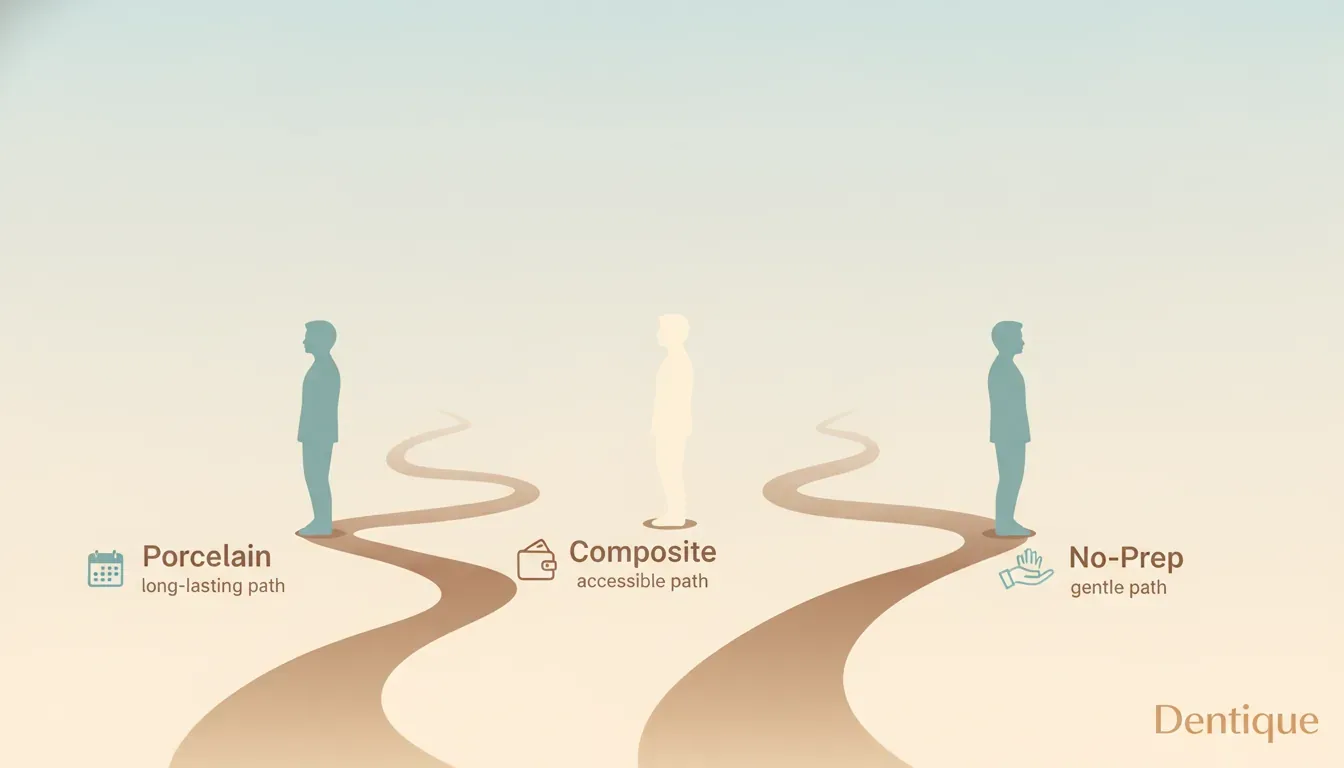
Porcelain veneers are custom-made from ceramic in a dental lab, so they cost more per tooth than composite veneers, which are shaped from composite resin right on the tooth, often in one visit.
Composite veneers usually cost less and are easier to repair, but they tend not to last as long as porcelain. Porcelain veneers can last many years with good care; ask your dentist how long to expect for your own teeth.
Dentique Dental Care offers both veneers and cosmetic bonding, so you can talk through porcelain and composite with the same dentist. Material is one part of the number. The other part is what a veneer quote covers.
What is included in the price of veneers
A veneer quote usually covers the exam and X-rays, planning, tooth preparation, the veneer itself, and bonding it in place, so ask what yours includes.
Some offices also include temporary veneers while the lab makes the final ones, a trial look at the new shape, and a follow-up visit. Other offices list each of those separately. That is why one quote can look much higher than another for the same work: one price is all-in, and the other is itemized.
At Dentique Dental Care, your veneer price is confirmed in writing at the consultation, so you can see what is included before anything starts.
If you have not been to Dentique Dental Care before, the New Patient Special is $250 for a checkup, X-rays and a cleaning, and it cannot be combined with insurance. That is a first visit, not a veneer price. From there, a few things push the number up or down.
What changes the price of veneers
The price of veneers changes with the material, the number of teeth, whether your teeth need work first, and the dental lab and planning involved.
- Porcelain costs more per tooth than composite.
- The number of teeth adds up fast, since most offices price veneers one tooth at a time.
- Gum disease or tooth decay has to be treated first, and that care is priced on its own.
- Porcelain cases carry dental lab fees and design time that composite cases do not.
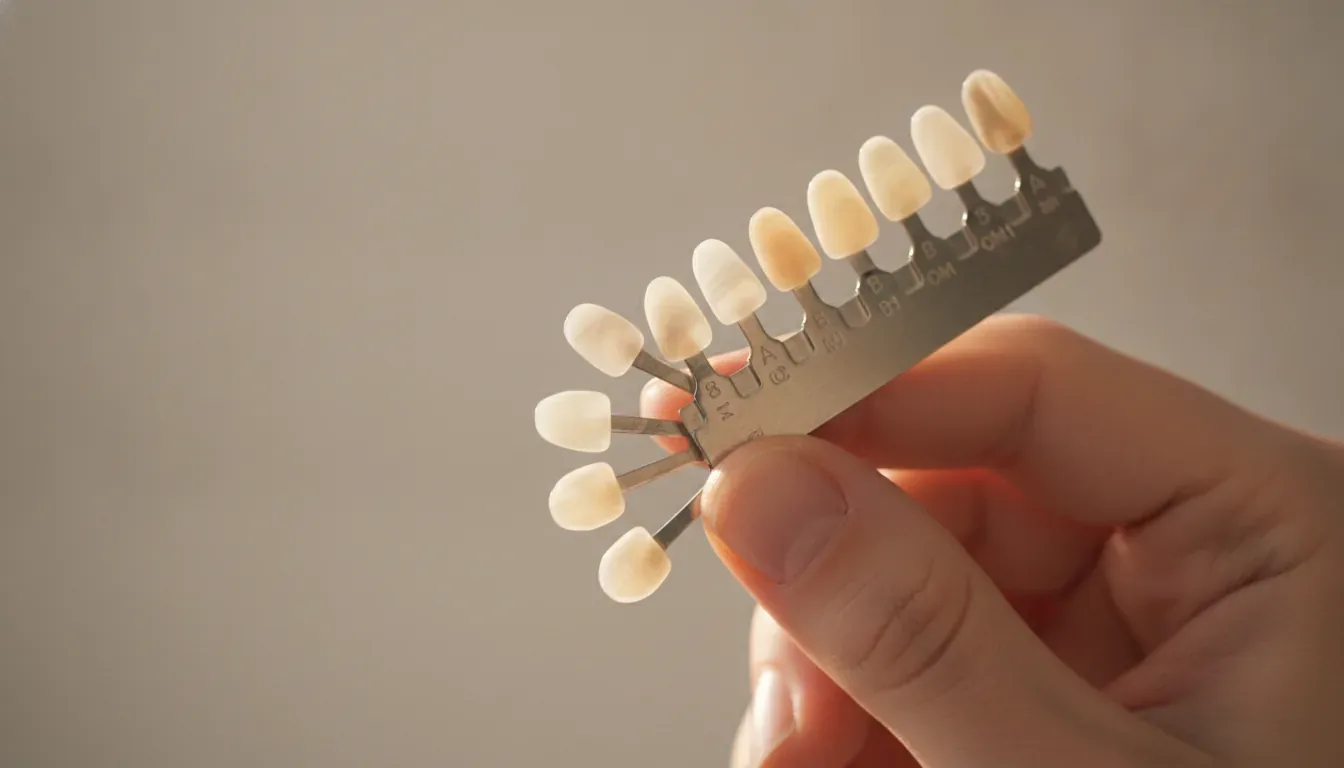
Veneers need healthy teeth and gums underneath them. If whitening is part of the plan, it is often done before veneers so the veneer shade matches your other teeth.
Once you know those drivers, it is easier to see how the numbers add up for more than one tooth.
How much will 4 veneers, or a full set of veneers, cost
Four porcelain veneers would total about $3,600 to $10,000 at $900 to $2,500 each. The same math gives these totals for larger cases:
| Number of porcelain veneers | Total at $900 to $2,500 each |
| 4 veneers | $3,600 to $10,000 |
| 8 veneers | $7,200 to $20,000 |
| 10 veneers | $9,000 to $25,000 |
This is plain arithmetic on the published per-tooth range, not a quote. Composite veneers would come in lower. A full set of veneers usually means the teeth that show when you smile, not every tooth in your mouth, and some offices price larger cases differently from single teeth.
How much you end up paying also depends on whether insurance helps with any of this.
Will insurance pay for veneers
Dental insurance usually treats veneers as cosmetic, so most plans will not pay for them. The exception is when a veneer or crown is restoring a damaged tooth: some plans may then pay part of the cost, so check your plan.
Plan your budget as if insurance pay toward veneers will be zero, and treat anything it covers as a bonus. If there is a chance of coverage, ask for a pre-authorization before treatment starts. Also check your annual maximum, the most your plan pays in a year, because one veneer case can use much of it.
Dentique Dental Care works with most major PPO plans, including Delta Dental, MetLife, Cigna, Aetna, Blue Cross Blue Shield of Illinois, UnitedHealthcare, Guardian and Humana. If insurance leaves a gap, the next step is spreading the cost out.
How can you pay for veneers if the full cost is too much at once
Dentique Dental Care offers financing for veneers through third-party partners CareCredit, Cherry and Sunbit, so you can pay for veneers in monthly payments instead of all at once.
Terms depend on the lender and your approval, so check the rate and the length of the plan before you sign. You can also ask your dentist whether it makes sense to do a few teeth now and more later.
If the total still feels high, there are options that cost less than veneers.
What are cheaper alternatives to veneers
Teeth whitening and cosmetic bonding usually cost less than veneers and can fix color or small chips. They are the cheaper place to start if your teeth are healthy and the change you want is small.
For gaps or crowded teeth, Invisalign moves the teeth themselves instead of covering them. For a tooth that is weak or badly damaged, a dental crown may be the better fit, and crowns are typically priced higher per tooth.
Dentique Dental Care offers teeth whitening, cosmetic bonding, Invisalign and crowns, so the plan can start from what your teeth need. Choosing among alternatives to veneers is one decision. Comparing two quotes for the same veneer is another, and that is where people wonder why the lowest quote is not always the best one.
Is the lowest price worth it – What to ask before you say yes
A low veneer price is not a problem by itself, but ask what material it is, what the quote includes, and whether your teeth and gums were checked first.
- Is this porcelain or composite?
- What does the price include, and can I have it in writing?
- Were my teeth and gums checked for decay or gum disease first?
- Who does the work, and how long have they been doing it?
Clear answers to those questions tell you more than the lowest price alone. At Dentique Dental Care, Dr. Xhelo Shuaipaj has more than 30 years of experience, treatment planning is no-pressure, and you get a written estimate before anything starts.
A few more common questions come up often.
Veneer cost questions, answered
How long do veneers typically last?
Veneers can last many years with good care, and porcelain usually lasts longer than composite. Your dentist can tell you what to expect for your teeth and habits.
Are veneers painful to get?
Veneer prep is done after the tooth is numbed, so getting veneers is usually not painful. If you feel nervous, Dentique Dental Care offers laughing gas (nitrous oxide) or a pill to relax (oral conscious sedation).
What is the 4-8-10 rule for veneers?
The 4-8-10 rule is a common way people describe how many upper teeth show in a smile, and so how many veneers they might need: 4, 8 or 10. Ask your dentist how many would suit your smile.