
A sip of ice water, a spoonful of ice cream, or a breath of cold air on the walk to the car, and one tooth (or a few) gives you a sharp zing. Once an Illinois winter sets in, a lot of people notice it more. Cold sensitivity is common and usually manageable, but it can also be the first sign of a problem that is easier to treat early.
Here is what causes it, how to tell a minor twinge from something that needs a dentist, and what helps.
In this article
What makes a tooth sensitive to cold
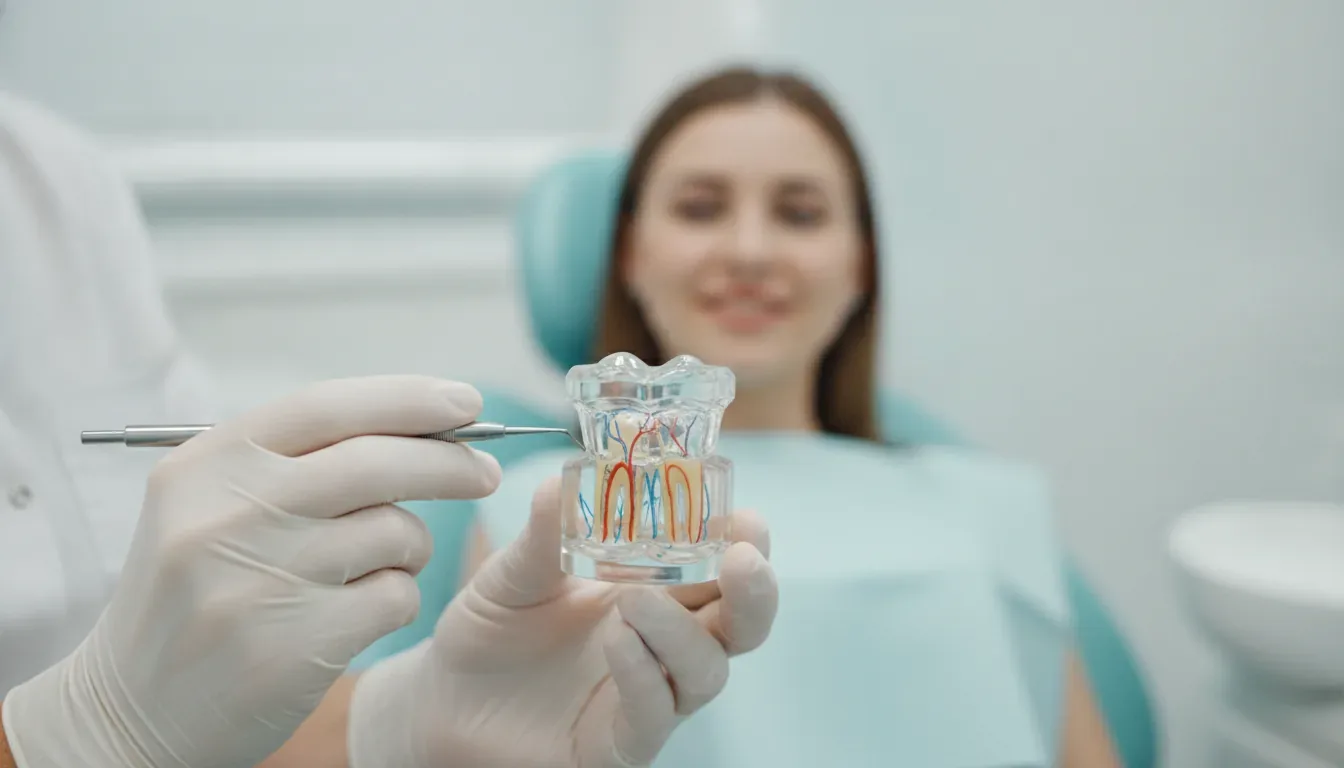
Teeth get sensitive to cold when the layer under the enamel, called dentin, is left exposed. Dentin is full of tiny channels that lead toward the nerve inside the tooth. Above the gumline, enamel covers it. Below, the gums cover the roots.
When enamel wears thin or gums pull back, cold can reach those channels and set off a quick, sharp pain. Mayo Clinic names worn enamel and exposed tooth roots as the two main reasons teeth become sensitive.
What are the common causes of cold sensitivity
Several everyday things can expose dentin or irritate the nerve:
- Brushing hard, especially with a hard-bristled brush, which can wear enamel down over time (Healthline).
- Receding gums, which leave the root surface uncovered. Roots have no enamel of their own.
- Grinding or clenching your teeth at night, which wears enamel away (Healthline).
- Acidic food and drinks such as soda, citrus and sports drinks, which soften enamel (Healthline).
- A cavity, or a filling that has worn down (Mayo Clinic).
- A cracked or chipped tooth (Mayo Clinic).
- Gum disease (Mayo Clinic).
- Teeth whitening products. This kind of sensitivity tends to settle once treatment ends.
- Recent dental work, like a new filling, which can leave a tooth sensitive for a short time.
Is it a quick twinge or something more
How the pain behaves gives you a useful clue. This table is a guide, not a diagnosis:
| What you feel | What it often points to | What to do |
|---|---|---|
| A short, sharp twinge that stops soon after the cold is gone, often in more than one tooth | Exposed dentin from worn enamel or gum recession | Try a sensitivity toothpaste and gentler brushing, and mention it at your next visit |
| Sensitivity in one tooth, or pain when you bite down | A cavity, a crack, or a worn filling | Book an exam |
| Pain that lingers or throbs after the cold is gone, or wakes you at night | A deeper problem, such as decay close to the nerve or an infection | Call your dentist soon |
| Pain with swelling in the gum or face, or a fever | A possible infection | Call right away. Go to the ER if swelling spreads or you have trouble breathing or swallowing |
What helps sensitive teeth at home
For mild, short twinges, a few changes often help:
- Switch to a toothpaste made for sensitive teeth and use it every time you brush. Mayo Clinic notes they can help dull the pain, but only with steady daily use, not after a single brushing.
- Use a soft-bristled brush and gentle strokes along the gumline.
- Cut back on acidic drinks. When you do have them, rinse with water afterward.
- If you clench or grind, ask your dentist whether a night guard makes sense (Healthline).
- On cold days, breathing through your nose and keeping a scarf over your mouth can spare your teeth the blast of cold air.
If one spot keeps hurting even with these changes, it is time to have it checked. Toothpaste will not fix a cavity or a cracked tooth.
What can a dentist do for sensitive teeth
The right treatment depends on the cause. Depending on what the exam shows, your dentist may suggest (Mayo Clinic; Healthline):
- Fluoride painted onto the sensitive area to strengthen enamel, sometimes with a prescription-strength fluoride toothpaste or rinse for home.
- A bonding resin or sealant over exposed root surfaces to cover the dentin.
- A filling for a cavity, or replacing a filling that has worn down.
- Treating gum disease, or a gum graft to cover a root that has lost its gum tissue.
- A custom night guard if grinding is part of the problem.
- A root canal when decay or infection has reached the nerve and other treatments are not enough.
Worried the visit itself will hurt
If your teeth are already sensitive, a cleaning or an exam can feel like one more reason to stay away. Tell us before we start, and we will work at a pace that feels manageable to you.
For people who feel anxious about dental visits, Dentique Dental Care offers laughing gas (nitrous oxide) and oral conscious sedation, which is a pill that helps you relax. Dr. Xhelo Shuaipaj has cared for patients for more than 30 years, and many of them first came in after avoiding the dentist for a long time. There is no judgment here.
New patients can start with our New Patient Special: a checkup, X-rays and a cleaning for $250 (cannot be combined with insurance). We also work with most major PPO plans, including Delta Dental, MetLife, Cigna, Aetna, Blue Cross Blue Shield of Illinois, UnitedHealthcare, Guardian and Humana.
Frequently asked questions
Why did my teeth suddenly become sensitive to cold?
Sudden sensitivity usually means something has changed: a new cavity, a cracked tooth, a filling that has worn down, gums that have pulled back, or recent whitening or dental work. If it came on suddenly and stays in one tooth, have it checked.
Is sensitivity to cold a sign of a cavity?
It can be. A cavity is one common cause, especially when the sensitivity is in a single tooth. Worn enamel and receding gums are other common causes, and an exam with X-rays can tell them apart.
Can sensitive teeth go away on their own?
Sensitivity after whitening or a new filling often settles by itself. Sensitivity from worn enamel, receding gums or a cavity usually needs a change in routine or treatment from a dentist.
Does toothpaste for sensitive teeth work?
For sensitivity caused by exposed dentin, it can help when used every day (Mayo Clinic). It will not repair a cavity or a cracked tooth, so a spot that keeps hurting needs an exam.