
You brush every morning, keep mints in the car, and still catch yourself turning your head a little when you talk to someone up close. Maybe nobody has said a word, but you notice it yourself by mid-afternoon. Bad breath that keeps coming back is one of the things people feel most awkward bringing up with a dentist. It is also one of the easier problems for a dentist to look into.
This guide covers where stubborn bad breath usually comes from, what you can try at home this week, and the signs that mean it is time to have someone take a look.
In this article
What causes bad breath that won’t go away
For most people, the smell comes from the mouth itself. Bacteria feed on bits of food and plaque left on the teeth, gums and tongue, and the gases they give off are what other people notice (Mayo Clinic).
When the smell sticks around no matter how often you brush, one of these is usually behind it:
- Plaque that builds up along and under the gums. Over time it can lead to gingivitis and then periodontitis, and the pockets that form under the gums hold bacteria a toothbrush cannot reach.
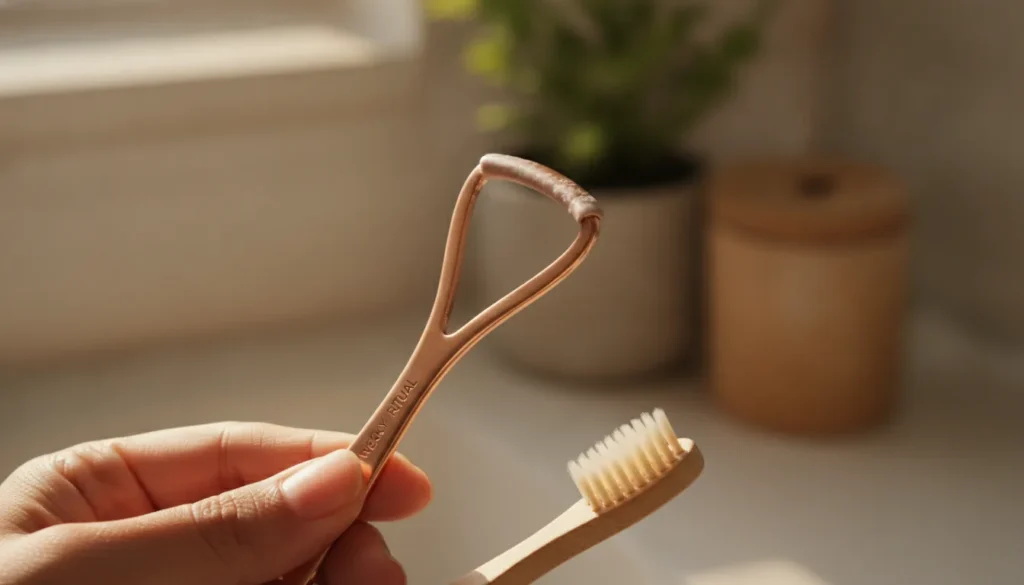
- The back of your tongue, whose rough surface traps bacteria and food. Many people never clean it.
- Dry mouth. Saliva rinses the mouth, so when there is less of it (from sleeping with your mouth open, from certain medicines, or from not drinking enough water) odor builds faster. Morning breath is the everyday version of this.
- A cavity, a broken filling or a mouth infection, all of which give food and bacteria a place to collect. A healing extraction site can do the same for a short while.
- Dentures or clear aligners that are not cleaned every day, or dentures that no longer fit well.
- Smoking and other tobacco use, which leave their own odor and raise the risk of gum disease.
- Garlic, onions and other strong foods. These are absorbed into the bloodstream and reach your lungs, so you breathe the smell out until your body clears it.
A few causes sit outside the mouth: postnasal drip, tonsil stones, acid reflux (GERD) and some other medical conditions (Mayo Clinic). These are less common, which is why a dental check is usually the first step.
Why doesn’t mouthwash fix it
Mouthwash and mints cover the smell for a while, but they do not remove what is causing it. A rinse cannot clear hardened plaque below the gumline, fill a cavity, or fix a denture that has stopped fitting. If the odor is back soon after you rinse, that is a good hint the source is still there.
A rinse can still be part of your routine. Your dentist can tell you whether an antibacterial rinse makes sense for you, or whether the real answer is a cleaning or treating one problem tooth.
What can you do at home this week
Give these habits a week or two and pay attention to what changes:
- Brush twice a day for two minutes with a fluoride toothpaste (American Dental Association).
- Clean your tongue each time you brush, with your toothbrush or a tongue scraper, working from back to front.
- Floss or use a small interdental brush once a day to clear food from between your teeth.
- Sip water through the day. If your mouth feels dry, sugar-free gum after meals helps keep saliva flowing.
- Take out dentures or aligners and clean them every day, the way you were shown.
- If you smoke or use tobacco, this is one more good reason to cut back.
It is hard to judge your own breath. If you are not sure whether anything has improved, ask someone you trust to give you an honest answer (Mayo Clinic).
When should you see a dentist about bad breath
If your breath is still a problem after a couple of weeks of better habits, book a visit. Come in sooner if you also notice:
- gums that bleed when you brush or floss
- red, puffy or receding gums
- a bad taste that does not go away
- a tooth that hurts, feels loose, or is sore when you bite
- a mouth that feels dry most of the time
At the visit, the dentist checks your teeth, gums and tongue, looks over older fillings, crowns and any dentures, and measures the space between your gums and teeth to check for gum disease. X-rays may be taken to look for decay you cannot see. A professional cleaning removes the hardened plaque (tartar) that a toothbrush cannot.
If your mouth turns out to be healthy, your dentist may suggest seeing your physician to rule out causes such as reflux or sinus problems (Mayo Clinic).
Embarrassed to bring it up – You don’t need to be
A lot of people put off the dentist because they worry about being judged: for how long it has been, for the state of their teeth, or for something like bad breath. Our practice was built around exactly those patients, including people who have stayed away for years. You will get a plain explanation of what we find and what your options are, with no lecture and no pressure. You decide what happens next.
If the dental chair makes you tense, we offer laughing gas (nitrous oxide) and oral conscious sedation, which is a pill that helps you relax. Mention it when you call.
New patients can start with our New Patient Special: a checkup, X-rays and a cleaning for $250. It cannot be combined with insurance. If you would rather use your insurance, we work with most major PPO plans, including Delta Dental, MetLife, Cigna, Aetna, Blue Cross Blue Shield of Illinois, UnitedHealthcare, Guardian and Humana. Financing is available through CareCredit, Cherry and Sunbit.
Frequently asked questions
Can bad breath come from your stomach?
Sometimes. Acid reflux (GERD) can play a part, but most bad breath starts in the mouth (Mayo Clinic). That is why a dental exam is usually the first place to look.
Does cleaning your tongue help bad breath?
For many people, yes. The back of the tongue collects bacteria and food debris, so brushing or scraping it every time you brush is one of the simplest changes you can make.
Can dry mouth cause bad breath?
Yes. Saliva washes away food and bacteria, so with less of it, odor builds faster. Some medicines cause ongoing dry mouth, so tell your dentist about any prescriptions you take.
Is bad breath a sign of gum disease?
It can be. Bad breath that hangs on, along with gums that bleed or look swollen, is a common reason to check for gum disease. Only an exam can confirm it.