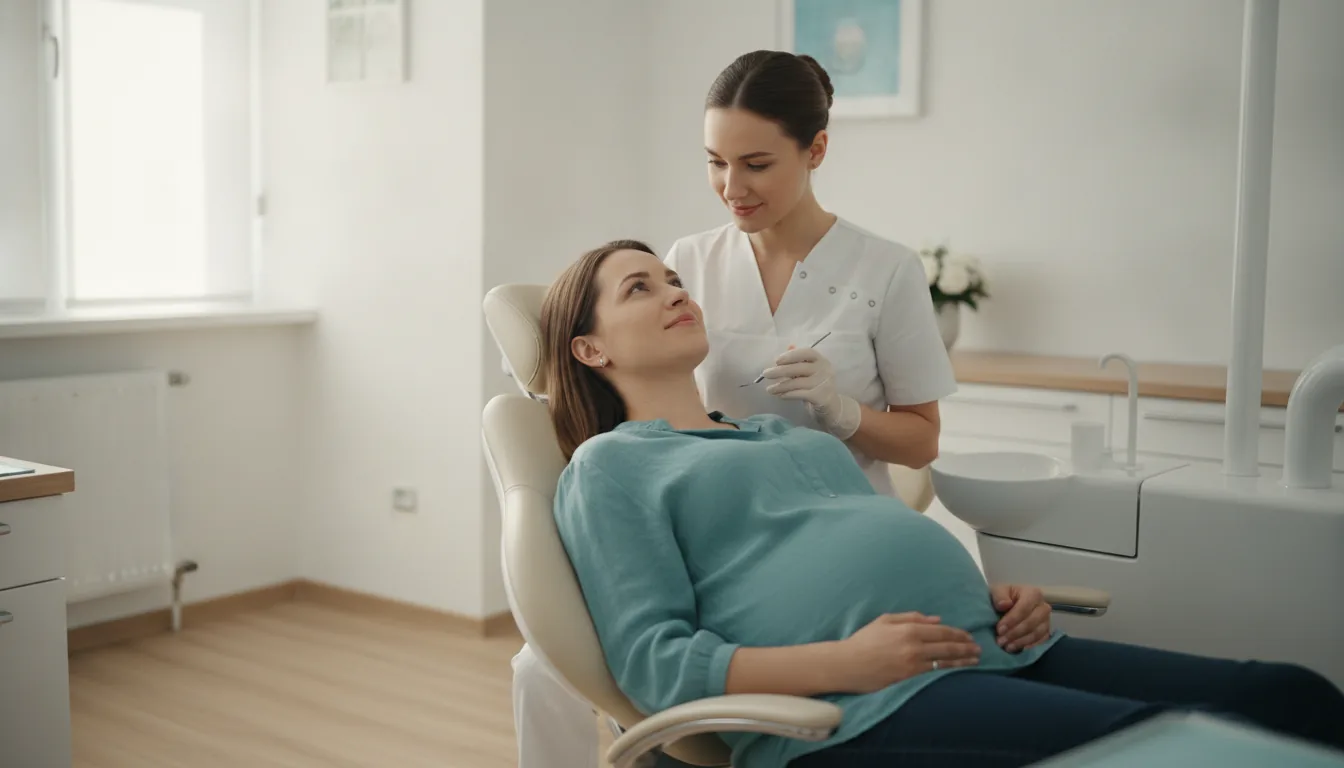
A lot of people put off the dentist once they find out they are pregnant, usually because they are not sure what is safe for the baby. That is a fair thing to wonder about. The American College of Obstetricians and Gynecologists (ACOG) has a clear answer: routine dental care is safe during pregnancy, and putting off treatment you need can lead to bigger problems later.
Here is what is safe, how pregnancy affects your teeth and gums, and how to make your visits easier.
In this article
Is it safe to go to the dentist while pregnant
Yes. ACOG states that routine cleanings, dental X-rays and local anesthesia (the numbing shot) are safe during pregnancy, and that pregnancy is not a reason to delay fillings or root canals you need (ACOG Committee Opinion 569). The American Dental Association and ACOG both say preventive, diagnostic, restorative and emergency dental care can be provided during pregnancy (ADA News).
When you book, and again at your visit, tell your dentist that you are pregnant and how many weeks along you are (ADA News).
Is there a best time during pregnancy for dental work
Cleanings and checkups can happen at any stage. For treatment that can safely wait, the second trimester is usually considered the best window (AAFP).
Urgent problems are different. Pain, infection or a broken tooth should be treated when they come up, at any point in pregnancy (AAFP; ACOG).
How does pregnancy affect your teeth and gums
Pregnancy changes more than you might expect in your mouth:
- Pregnancy gingivitis. Hormone changes make gums more likely to swell, redden and bleed. Gingivitis is the most common oral problem in pregnancy, affecting an estimated 60 to 75 percent of pregnant women (AAFP).
- Pregnancy tumors. Some people develop a small red lump on the gums. Despite the name, it is benign (not cancer), it usually shrinks after delivery, and it shows up in up to 5 percent of pregnancies (AAFP). Tell your dentist if one bleeds or gets in the way of eating.
- Morning sickness brings stomach acid into the mouth, and repeated vomiting or reflux can wear away tooth enamel (AAFP).
- Snacking more often, or sipping sugary drinks to settle nausea, gives cavity-causing bacteria more to feed on.

Researchers have also looked at whether gum infections are linked to pregnancy problems such as preterm birth, and the findings so far are mixed. Keeping your gums healthy is still worth it for your own comfort and health.
What should you do about a toothache during pregnancy
Do not wait it out. A toothache can mean a cavity, a cracked tooth or an infection, and ACOG is clear that needed fillings and root canals should not be put off because of pregnancy.
Call your dentist, and check with your OB before taking any pain reliever, including over-the-counter ones. If you have swelling in your face or jaw, or a fever, call right away.
Simple ways to protect your teeth while pregnant
- Brush twice a day with a fluoride toothpaste and floss once a day (ACOG).
- Use a soft-bristled toothbrush if your gums are tender (ADA News).
- After vomiting, rinse with a teaspoon of baking soda mixed into a cup of water to neutralize the acid, and wait a while before you brush (ACOG; AAFP).
- Drink water after sugary food or drinks (ADA News), and reach for snacks like fruit and vegetables when you can.
- Keep your regular checkups. ACOG recommends seeing a dentist twice a year.
Your visit at Dentique Dental Care
When you call, let us know you are pregnant and your due date. It helps to bring a list of the medicines and prenatal vitamins you take, plus your OB’s name and phone number in case we need to coordinate. If lying back gets uncomfortable at any point, tell us and we will stop so you can sit up or shift position.
If you usually rely on laughing gas or a relaxing pill to get through dental visits, talk with us and with your OB before the appointment. Any decision about sedation during pregnancy is made together with your OB, case by case.
If you have not seen a dentist in a long time, nobody here will judge you for it. Dr. Xhelo Shuaipaj has cared for patients for more than 30 years, and many of them came to us after avoiding the dentist for a long time. New patients can start with our New Patient Special: a checkup, X-rays and a cleaning for $250 (cannot be combined with insurance). We also work with most major PPO plans, including Delta Dental, MetLife, Cigna, Aetna, Blue Cross Blue Shield of Illinois, UnitedHealthcare, Guardian and Humana.
Frequently asked questions
Are dental X-rays safe during pregnancy?
Yes. ACOG considers dental X-rays safe during pregnancy. If an X-ray is not needed right away, you and your dentist can talk about timing.
Is the numbing shot safe while pregnant?
Yes. ACOG considers local anesthesia safe during pregnancy, and commonly used local anesthetics such as lidocaine are safe when dosed appropriately (AAFP).
Can I get a filling or a root canal while pregnant?
Yes. Pregnancy is not a reason to delay a filling or root canal you need, and leaving a problem untreated can lead to further complications (ACOG).
Can I have laughing gas while pregnant?
That is a decision for you, your OB and your dentist to make together. Tell us you are pregnant before any visit where you would normally use sedation, and we will talk through the options first.
Is it normal for gums to bleed during pregnancy?
It is common. Pregnancy gingivitis affects an estimated 60 to 75 percent of pregnant women (AAFP). Keep brushing and flossing gently, and see a dentist if the bleeding or swelling gets worse.