Veneers are what many people start reading about when they want a smile they do not think twice about, whether that is in a photo, across the dinner table, or halfway through a laugh. If that sounds like you, this page explains in plain English what getting veneers involves, including the honest trade-offs that the glossy pages tend to skip, so you can decide calmly and in your own time.
We are Dentique Dental Care, a family practice with offices in Downers Grove and Lemont. Our treatment planning is no pressure: you get the facts, you ask your questions, and the decision about your own teeth stays with you. First, the plainest possible definition.
What are veneers, in plain English
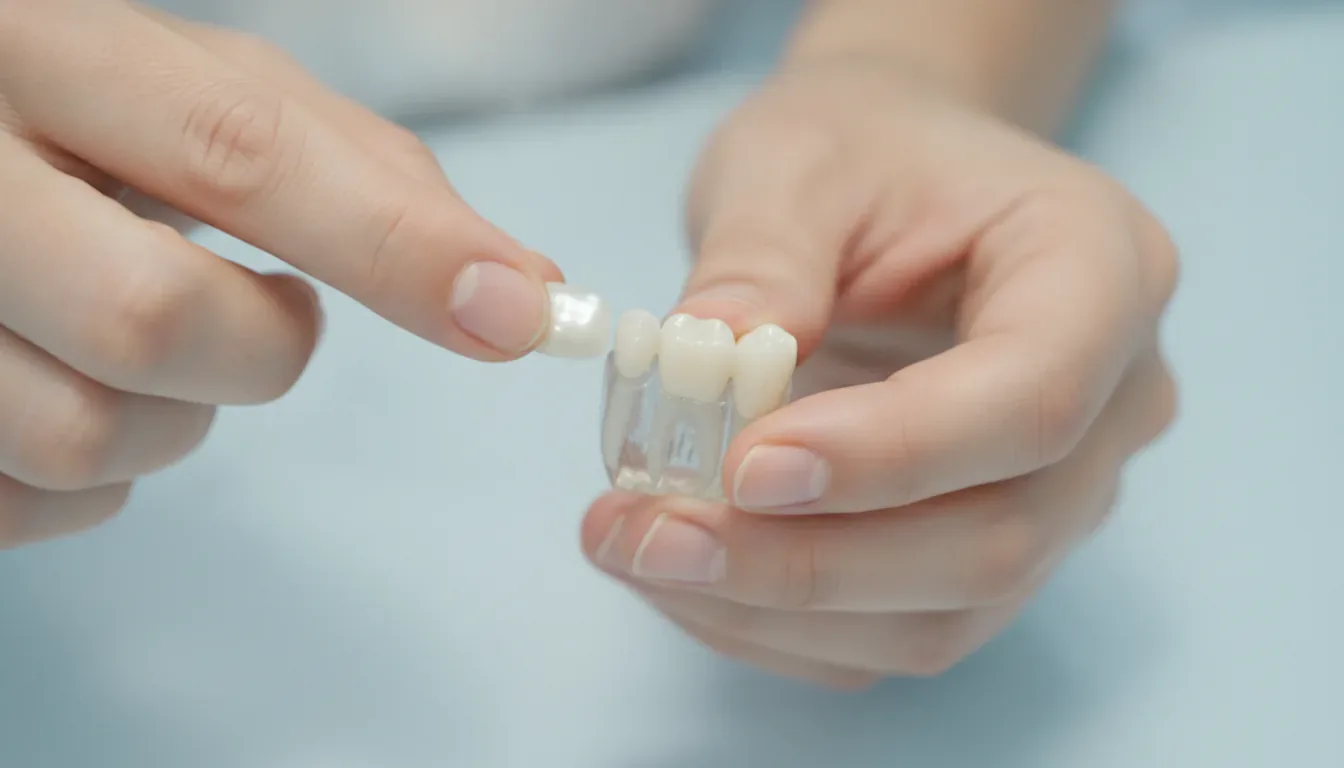
Dental veneers are thin, custom-made covers made of porcelain or tooth-colored composite, bonded to the front surface of a tooth to change how it looks: its color, shape or size. The American Dental Association (ADA) and Cleveland Clinic both describe them as coverings that fit over the front surfaces of your teeth.
Key takeaways
- Veneers cover the front surface of a tooth you already have. They change how a tooth looks, not how it works.
- The two main materials are porcelain and tooth-colored composite.
- For most veneers, a small amount of enamel is removed. The ADA says this makes the treatment not reversible.
- You can still get cavities under or around a veneer, so brushing, cleaning between your teeth and checkups still matter.
On this page
What can veneers fix, and what can they not do
Veneers are a cosmetic cover for the front of a tooth that is already there, and they can hide chips, stains, small gaps and teeth that are slightly uneven or misshapen. The ADA lists chipped or broken teeth, stained teeth, crooked or misshapen teeth, and gaps between teeth as problems veneers can cover. Cleveland Clinic adds that they are often used for stains that do not improve with teeth whitening.
What veneers cannot do is just as useful to know:
- A veneer does not replace a missing tooth. It covers an existing tooth, so there has to be a real tooth underneath it.
- A veneer is not a dental crown. Cleveland Clinic explains that a veneer covers only the front surface of a tooth, while a crown covers the whole tooth to add strength and protection.
- Veneers change how teeth look rather than where they sit in your mouth.
Your dentist will talk about all of this in dental vocabulary, and those words are worth knowing before you sit in the chair.
What do the veneer words your dentist uses actually mean
Most veneer conversations use a handful of dental words that nobody stops to explain. Here is what each one means, in a line or two, and why it matters to you. The placement terms follow the way the ADA describes how veneers are made and fitted.
Enamel: the hard outer layer of your tooth. For most veneers, a small amount is removed from the front and sides, and it does not grow back.
Prep (tooth preparation): short for preparation. It means gently shaping the tooth, including removing that small amount of enamel, so the veneer sits flush instead of looking bulky.
Impression or scan: a mold of your teeth, or a scanner that builds a 3D computer model of them. Either one goes to the dental lab that makes the veneer.
Dental lab: where a dental technician makes a porcelain veneer to fit your tooth. This is why porcelain takes more than one visit.
Temporaries: temporary veneers you may wear while your permanent ones are being made.
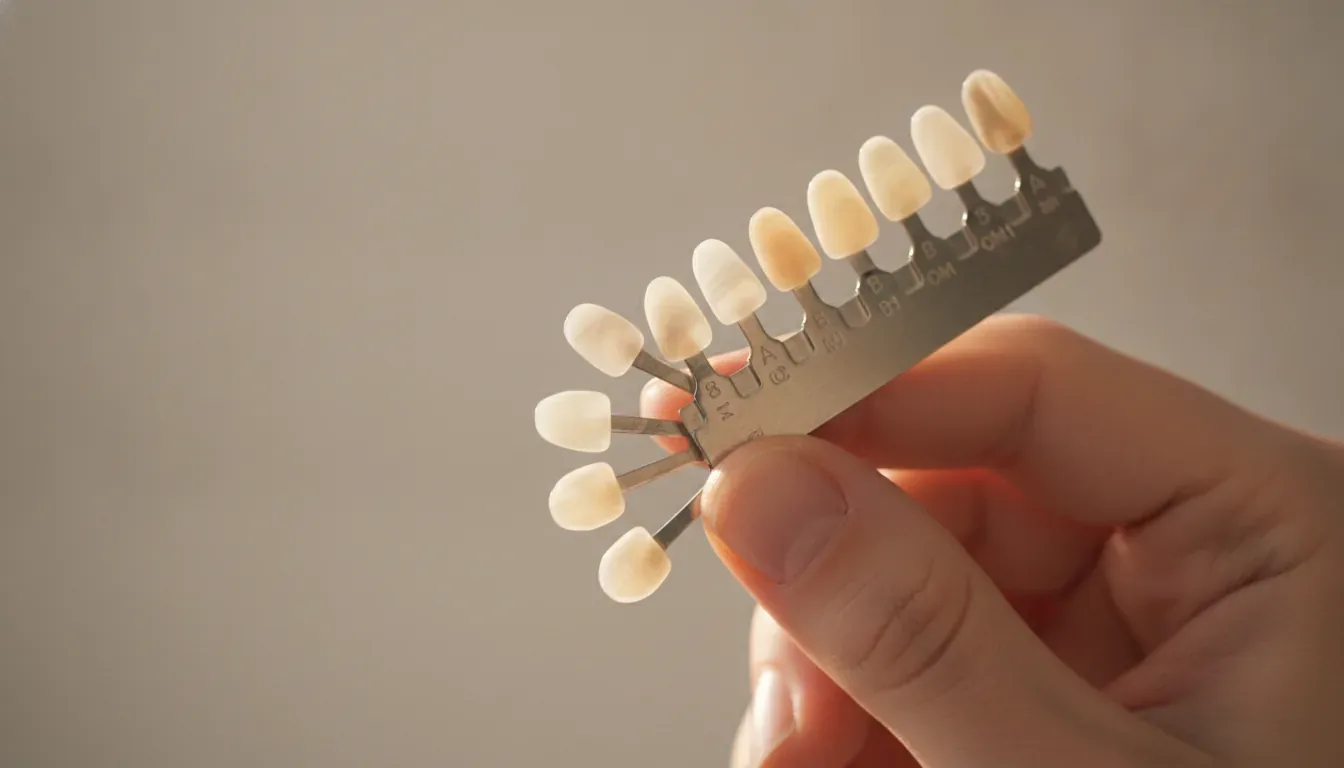
Shade: the exact color picked so the veneer matches your other teeth. You and your dentist choose it together.
Etch (etching): a gel put on the tooth surface to roughen it slightly, so the bond grips better. [VERIFY: clinical reviewer to confirm this wording]
Bond, bonding cement and curing light: bonding cement is the dental adhesive that holds the veneer on, and the curing light is the lamp used to harden it.
Laminate: another word some people use for a veneer. If you hear it, it means the same thing.
Bite: how your top and bottom teeth meet. Your dentist checks it after the veneers go on.
Bruxism: the clinical word for clenching or grinding your teeth. It matters because the ADA says veneers may not be a good choice if you do it.
Three more words come up as soon as anyone mentions the type of veneer: porcelain, composite and no-prep.
Porcelain, composite, no-prep: what do those words mean
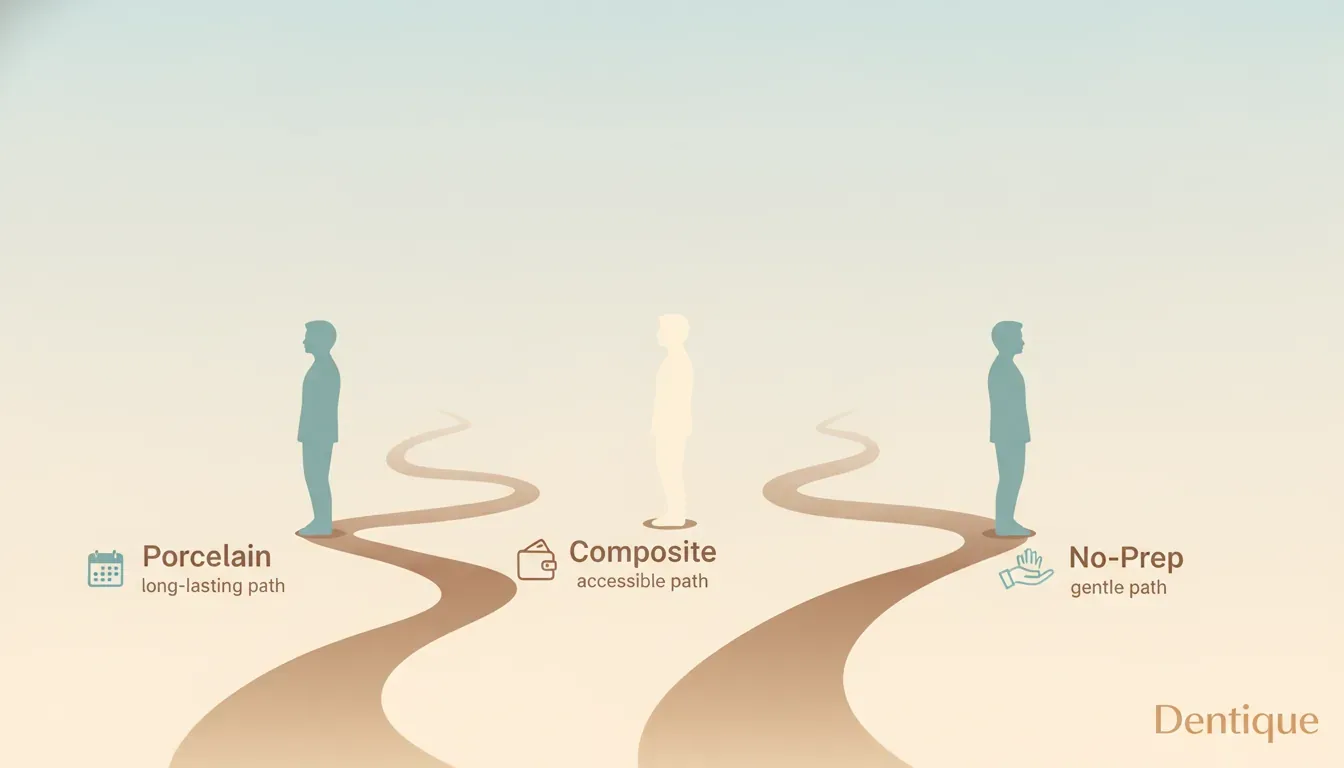
Porcelain veneers are thin shells made by a dental lab to fit your tooth, and the ADA describes them as strong, long-lasting and natural-looking, and usually the more expensive option.
Composite veneers are made from a tooth-colored filling material that is bonded and shaped directly on your tooth. Cleveland Clinic points out that it is the same material used for dental bonding. The ADA says composite may need less enamel removed and fewer visits, and is easier to fix if damaged, but it is not as stain- or wear-resistant as porcelain.
No-prep veneers, sometimes called minimal-prep veneers, are veneers that need less enamel removal than traditional ones. The name promises a little more than it delivers: Cleveland Clinic says they still require some enamel removal, and that they are not right for everyone.
At Dentique Dental Care, the veneers we offer are porcelain and composite. Which type suits you is a conversation with your dentist, and the type also decides how many visits the process takes.
What actually happens when you get veneers, visit by visit
Porcelain veneers usually take two main visits a few weeks apart: one to prepare the teeth and take an impression, and one to check the fit and bond the veneers on. If you have wondered how are veneers put on teeth, this is the usual order, following the steps the ADA and Cleveland Clinic describe.
- An exam first. Your dentist checks your teeth and gums to see whether veneers suit you. Any decay or gum disease is treated before anything else.
- The first visit: preparing the teeth. The area is numbed with a local anesthetic, a small amount of enamel is removed from the front and sides, and an impression or scan is taken.
- Choosing the shade. Every veneer process includes picking a color to match your natural teeth.
- Lab time. Cleveland Clinic says the lab takes a few weeks, and you may wear temporary veneers in the meantime.
- The second visit: try-in and bonding. Your dentist checks the shape, color and fit, cleans the teeth, bonds the veneers on with dental cement, hardens it with a curing light, and checks your bite.
One detail many people find reassuring: if you want a change to the shape or color, you can tell your dentist at the try-in, before the veneers are bonded.
Composite veneers take a shorter route. They are shaped directly on the tooth, hardened with a special light, then smoothed and polished. No impressions are needed.
That numbing step in the first visit answers the question most people are really asking: will it hurt?
Does getting veneers hurt
Getting veneers is done with the tooth numbed by a local anesthetic, the same kind of numbing used for a filling, so most people feel pressure rather than pain [VERIFY: clinical reviewer to confirm this phrasing]. Afterward, Cleveland Clinic notes that your teeth may become more sensitive to hot and cold.
So if your question is simply “do veneers hurt?”, the honest answer is that the preparation is numbed and the common aftermath is some sensitivity. Cleveland Clinic says there is no downtime: you can go back to your normal day and eat once the numbness wears off.
For some people, the painful part is not the tooth at all. It is being in the chair. If you are nervous about the dentist, Dentique Dental Care offers two comfort options as a routine part of care, not an upsell: nitrous oxide (laughing gas), and oral conscious sedation (a pill to relax you). You can ask about either one before anything starts.
Once the fear question is settled, the next one is usually about the tooth itself, and what happens to it under there.
What happens to your real teeth under veneers
Your natural tooth stays in place under the veneer, with a thin layer of its front enamel removed, and that enamel does not grow back, which is why the ADA describes veneer treatment as not reversible. The amount removed is small, less than a millimeter.
Veneers do not actively damage your teeth, according to Cleveland Clinic, but the natural tooth underneath can still decay. The ADA says it plainly: you can still get cavities under or around a veneer. Brushing, cleaning between your teeth and regular checkups matter just as much after veneers as before.
This is also why a dentist treats decay or gum disease first. The ADA warns that placing veneers over unhealthy teeth may worsen existing dental problems.
So what happens to teeth under veneers is less dramatic than some online stories suggest, but it is permanent. Your real teeth are still there and still need looking after. If the treatment cannot be undone, the next fair question is how long a veneer lasts.
Are veneers permanent, and how long do they last
Veneers are permanent in one sense and not in another: the treatment cannot be undone because enamel is removed, but each veneer usually lasts many years and may one day need to be repaired or replaced.
The treatment is the permanent part. Cleveland Clinic says most types of veneers are not reversible.
The veneer itself is long-lasting, not forever. As for how long do veneers last, Cleveland Clinic gives an average of 10 to 15 years with proper care. That is an average across many people, not a promise for any one mouth.
Over time, the ADA says a veneer may chip, crack, wear down or loosen, and your dentist can re-bond, repair or replace it. The two materials wear differently: composite veneers are easier to fix if damaged, but the ADA notes they are not as stain- or wear-resistant as porcelain.
So when people ask “are veneers permanent?”, the fair answer is that the decision is permanent and the veneer is long-lasting. How long it lasts depends partly on your daily habits, which is where aftercare comes in.
What is normal after veneers, and how do you look after them
New veneers can take a few days to get used to, and the ADA says to tell your dentist if your bite does not feel right, so it can be adjusted. Some sensitivity to hot and cold is also normal for a while.
What is not normal is a veneer that feels loose, or anything that does not feel quite right. Cleveland Clinic notes that a veneer can occasionally come loose or fall off, so call your dentist rather than waiting it out.
Looking after veneers is mostly the routine you already know:
- Brush twice a day with fluoride toothpaste and a soft-bristled toothbrush.
- Floss, or clean between your teeth another way, once a day.
- Skip biting your fingernails, chewing hard objects, or using your teeth to open things.
- Wear a mouthguard for sports.
- Go easy on coffee, tea and red wine, which can stain veneers over time.
- Avoid whitening products. Cleveland Clinic says they can scratch veneers.
Hard foods need a little care too. Rather than biting straight into an apple, cut it up and chew with your back teeth.
Good habits help veneers last. For some people, though, veneers are not the right choice in the first place.
Who should not get veneers
Veneers are not the right choice for everyone, and the ADA says they may not be a good choice if you clench or grind your teeth or have a deep overbite. Any tooth decay or gum disease has to be treated first; Cleveland Clinic says veneers are only an option if you are free of extensive cavities and gum disease.
That is the honest answer to why do dentists advise against veneers. The downside list from Cleveland Clinic is short and worth reading slowly:
- You lose at least some of your natural enamel.
- Most types are not reversible.
- Your teeth may become more sensitive to heat and cold.
- A veneer can come loose or fall off.
Grinding needs special attention, since bruxism puts extra force on veneers. Dr. Xhelo Shuaipaj evaluates grinding patterns before recommending veneers, and in some cases a night guard worn after placement can help protect them.
Because the change cannot be undone, take your time. Feeling unsure is a reason to ask more questions, not a reason to hurry. A good dentist will sometimes say “not yet” or “not this”, and that is part of honest planning.
Some people, put off by all this, look for a way to skip the dentist altogether. That usually means snap-on veneers or so-called veneer technicians.
What are snap-on veneers and “veneer technicians”, and are they safe
Snap-on veneers, also called removable or pop-on veneers, are covers you take in and out like a retainer, and Cleveland Clinic notes that there is not much research on them and that they can make eating and speaking harder. If you have searched for snap on veneers, know that they are a different product from the veneers a dentist bonds to your teeth.
Veneer technicians are a separate concern. These are people who place veneers without being a licensed dentist. The ADA urges the public to be cautious of services that eliminate the role of the dentist, and warns that veneers from unlicensed individuals carry potential risks for infection and nerve damage. They may also be placed over teeth that are not healthy enough for them.
Veneers are dental treatment, so the safe route is a licensed dentist who has examined your teeth and gums first. Here is what asking a licensed local dentist about veneers looks like.
What is it like asking about veneers at Dentique in Downers Grove or Lemont
At Dentique Dental Care, a veneers conversation starts with Dr. Xhelo Shuaipaj looking at your teeth and asking what bothers you about your smile, and you leave with an honest view of whether veneers suit you, with no pressure to decide that day.
Dr. Shuaipaj is the only dentist at the practice. He has more than 30 years in practice and works at both our Downers Grove and Lemont offices, so the person who assesses you is the person who would treat you.
A few things you can count on:
- No judgment, including if you have not seen a dentist in years.
- No pressure. Patients tell us, without being asked, that they did not feel upsold.
- An honest answer, even if that answer is that veneers are not for you.
- Your price in writing at the consultation, before anything starts.
- Comfort options if you are nervous: nitrous oxide or oral conscious sedation.
The veneers we offer are porcelain veneers and composite veneers.
A few quick questions come up in almost every veneers conversation.
Common questions about veneers
Can I bite an apple with veneers?
Biting an apple with veneers is best done with care. Cleveland Clinic advises cutting apples and other hard foods into pieces and chewing them with your back teeth, rather than biting straight into them.
How much do veneers cost?
The cost of veneers depends mainly on the material and the number of teeth involved. At Dentique Dental Care, your price is confirmed in writing at the consultation, before any treatment starts.
Does insurance cover veneers?
Dental insurance usually treats veneers as cosmetic, and the ADA notes they may not be covered unless they are deemed medically necessary. Your own plan decides what applies to you.
Can veneers be whitened?
Veneers do not change color with whitening products [VERIFY: clinical reviewer to confirm], and Cleveland Clinic advises avoiding those products because they can scratch veneers. That is why the shade is chosen with you before the veneers are made.
Can a veneer fall off?
A veneer can occasionally loosen or come off. If that happens, call your dentist; the ADA says a dentist can re-bond, repair or replace a veneer that has loosened or been damaged.
What are veneers made of?
Veneers are made of porcelain or a tooth-colored composite, which is the same kind of material used for dental bonding, according to the ADA and Cleveland Clinic.