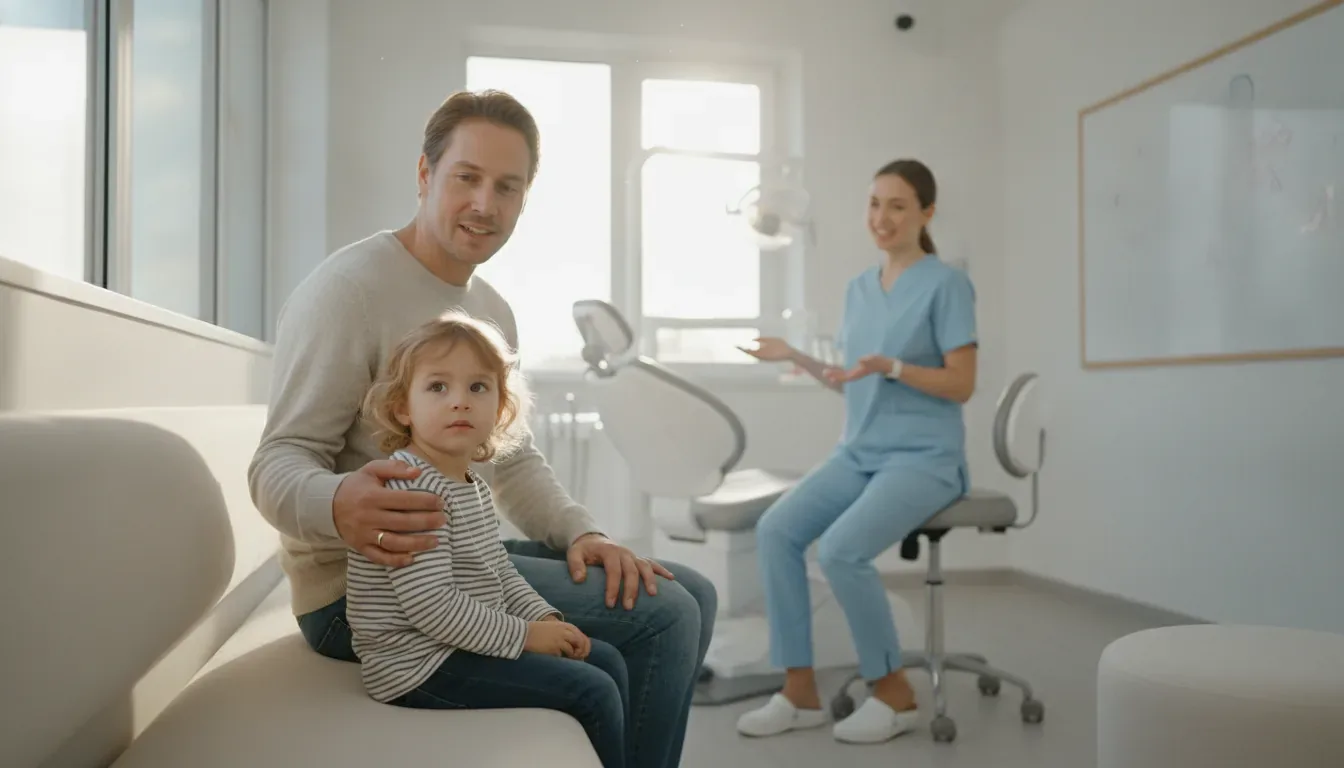

Laughing gas, also called nitrous oxide, is the light sedation you breathe through a small nose mask, and for most people it is the most affordable way to stay calm in the dentist’s chair. It is charged separately from the dental work itself, so its cost is its own line on your bill.
If you have been putting off a visit because you are anxious about the chair, the cost, and whether insurance will help, this guide gives you a straight answer without a lecture. At Dentique Dental Care in Downers Grove and Lemont, the approach is plain: we start where you are and work forward, with no judgment about how long it has been.
Picture walking out calm, with no surprise about what you owe. Here is the short answer first, then the detail behind it.
Table of Contents
So how much is laughing gas at the dentist, with insurance
SHORT ANSWER
Laughing gas is a typical out-of-pocket fee at the dentist, commonly about $50 to $150 per visit on top of the cost of the procedure. Most dental insurance plans do not treat it as a standard benefit, so you often pay the fee yourself. At Dentique Dental Care, your exact price is confirmed in writing before you agree to anything.
Delta Dental says much the same: laughing gas is usually not covered by most plans, so the fee often falls to you (Delta Dental, 2026). We break that number down below.
How much does laughing gas cost at the dentist
Laughing gas has a typical fee at US dental offices of about $50 to $150 per visit, and some offices bill it per hour or in 15 minute blocks instead. That is a national range, not a Dentique price. Across dental practices that publish their fees, the broader spread runs from roughly $25 to $200 per visit, with most landing in that $50 to $150 band.
Offices charge for nitrous oxide in a few ways: a flat fee for the visit, an hourly rate, or a first hour fee plus a smaller charge for each extra 15 minutes. Whichever method your dentist uses, the laughing gas fee is added on top of the dental procedure, not folded into it. The filling, extraction, or cleaning sits on its own line, and the gas sits on another. Which brings up a fair question about what that fee does and does not include.
What is actually included in that price, and what is billed separately
The laughing-gas fee covers the nitrous oxide itself, plus the equipment and the monitoring time for that visit. It does not cover the dental work. Your tooth treatment and any numbing are billed separately, on their own lines.
It helps to see the parts of the bill as different jobs. The procedure fixes the tooth. The local anesthetic, the numbing shot, blocks pain in the area. The laughing gas relaxes you and eases your awareness while the dentist works. Because they do different jobs, they are charged as separate items, and the total cost is the sum of them.
Once you can see the separate lines, the next question is whether insurance helps with any of them.
Does dental insurance cover laughing gas
Most dental plans do not cover laughing gas as a standard benefit, so you often pay the fee yourself. Dental insurance rarely lists it as a covered service, and that is the part most cost guides skip over.
There is one exception. Some plans pay toward nitrous oxide when it is documented as medically necessary, for example for a patient with a diagnosed anxiety condition, or for some children who cannot safely have treatment otherwise. Other plans exclude sedation that is used mainly for anxiety. Coverage varies from one plan to the next, so the only reliable answer is the one written in your own plan booklet. Delta Dental, one of the carriers Dentique works with, states plainly that laughing gas is usually not a covered benefit and the fee may be yours to pay (Delta Dental, 2026), while pediatric-focused guidance notes some policies may cover it when it is considered medically necessary (Clifton and Mauney, 2026).
Dentique Dental Care works with most major PPO plans, including Delta Dental, and the team can help you check what your plan says before you commit. Either way, the next step is the same: find out what your own plan will pay.
How do I find out what my own plan will pay
A pre-treatment estimate is a written estimate your dental office requests from your insurer before the visit, showing what your plan will and will not pay toward your care. Ask for one, and you find out your share before you are in the chair.
Two steps get you there:
- Read your dental plan booklet, or your plan’s member portal, and look for how it handles sedation or nitrous oxide.
- Ask the dental office to verify your coverage and request the pre-treatment estimate for you.
One more thing shapes what insurance pays: your annual maximum, the yearly cap your plan will pay out. If you have already used most of that cap on other treatment this year, more of any added fee, including sedation, falls to you.
Dentique Dental Care works with most major PPO plans, including Delta Dental, MetLife, Cigna, Aetna, Blue Cross Blue Shield of Illinois, UnitedHealthcare, Guardian, and Humana, and the team will help verify your coverage. A few things also move the final number, which is worth understanding before you decide.
What changes the price of laughing gas
The laughing-gas fee changes mainly with how long you breathe it, because many offices bill by time. A short appointment with a few minutes of gas costs less than a long one where you are on nitrous oxide for an hour.
A few things change the price:
- How long you are on the gas. Time-based billing means a longer appointment raises the fee.
- How the office bills. A flat per-visit fee, an hourly rate, and a first-hour-plus-increments model can produce different totals for the same visit.
- Where the office is. Local cost of care shifts dental fees up or down by region.
- The length and complexity of the appointment. A quick filling and a longer procedure are not the same amount of chair time.
Knowing which of these apply to you helps you predict whether you land at the low or high end of that range. It also sets up a fair comparison: how does laughing gas measure up against the other calm-in-the-chair option Dentique offers?
Laughing gas vs oral conscious sedation: which costs more, and when
Laughing gas, or nitrous oxide, is usually the lower-cost, lightest way to stay calm, and it wears off within minutes, so you can drive yourself home. That makes it the cheaper of the two sedation options Dentique Dental Care offers.
Oral conscious sedation is the other option, and it usually costs more. It is a prescription pill you take about an hour before the visit for a deeper, steadier calm. The drowsiness lasts several hours afterward, so you need a ride home. Nationally, oral sedation is often quoted in the range of about $150 to $500 per visit, which is a national range, not a Dentique price.
Which one fits depends on the visit and on you. For a routine filling or cleaning when you are a little on edge, laughing gas is often enough, and it costs less. For a longer appointment, or when anxiety runs high, oral conscious sedation may compare better even though the fee is higher. These are the only two sedation options in this comparison, and a short conversation with the dentist is the way to choose between them.
There are also a few ways to bring the cost down, whichever option you choose.
How can I lower the cost of laughing gas
You can lower the cost of laughing gas in a few honest ways, without cutting corners on care. Start by asking for a pre-treatment estimate so there are no surprises about your share. Ask whether a shorter appointment would reduce a time-based nitrous fee. And if the total is more than you want to pay at once, use financing to spread the payment.
The levers that exist at Dentique Dental Care:
- Ask for the pre-treatment estimate. It confirms your out-of-pocket amount before you commit, so you can plan.
- Ask about appointment length. If the office bills nitrous by time, a shorter visit can mean a smaller fee.
- Use financing to spread the payment. Dentique works with CareCredit, Cherry, and Sunbit, so you can pay over time rather than all at once and keep care within reach of what you can afford.
If you are also due for a check-up, the New Patient Special is $250 for a checkup, X-rays, and cleaning. It cannot be combined with insurance and it does not include sedation, so treat it as a separate offer, not a way to discount the gas. Whatever you choose, your exact price is confirmed in writing before anything goes ahead. Below are quick answers to the other questions people ask about laughing gas and cost.
Frequently Asked Questions
Do you still feel pain on laughing gas?
Laughing gas relaxes you and dulls pain and awareness, but it is not a numbing agent on its own. Your dentist still uses a local anesthetic to numb the area being treated, so the two work together: the gas keeps you calm, and the local anesthetic blocks the pain. It is not a promise of zero sensation, so tell your dentist if you feel anything during the visit (American Dental Association guidance on nitrous oxide; Delta Dental, 2026).
Is nitrous oxide at the dentist worth it?
Nitrous oxide is worth it for many anxious patients because it makes routine care possible and then wears off within minutes, so you can drive yourself home. Whether it is right for you is a short conversation with your dentist, not a fixed rule. If mild nerves are what keep you from the chair, laughing gas is often the simplest first step.
What is the safest sedation for dental work?
Laughing gas is widely regarded as one of the safest forms of dental sedation, including for children, because it is light and leaves your body quickly. It is not right for everyone, though: people with certain lung conditions, or a sensitivity to nitrous oxide, may need a different approach. The safest choice is the one your dentist recommends after reviewing your health history (American Academy of Pediatric Dentistry on nitrous oxide for children; Delta Dental, 2026).
What do dentists use instead of nitrous oxide?
When nitrous oxide is not enough, the in-scope alternative Dentique offers is oral conscious sedation, a prescription pill taken before the visit for a deeper calm. It is the second of the two sedation options here, and it needs a ride home because the drowsiness lasts several hours. Your dentist helps you decide which one fits the visit.
Can you feel your tooth being treated under conscious sedation?
Under oral conscious sedation you are relaxed and drowsy, and the dentist also numbs the area with a local anesthetic, so most people feel pressure rather than pain. The sedation calms you; the local anesthetic handles the sensation. Tell your dentist if anything feels sharp, and they can adjust before continuing.
Every answer here was reviewed by the dentist who leads both Dentique offices, which is who you meet if you come in.
Reviewed by
Dr. Xhelo Shuaipaj, DDS, FDOCS, FICOI, is the sole dentist at Dentique Dental Care, with more than 30 years in practice and sedation training through DOCS Education, and reviewed this guide for accuracy. He rotates between the Downers Grove and Lemont offices, so he is the dentist you meet at either location.
The letters after his name are earned fellowships. FDOCS means Fellow of DOCS Education, the sedation training body. FICOI means Fellow of the International Congress of Oral Implantologists. Together they reflect formal training in the sedation and restorative care Dentique provides.
Talk to a Dentique dentist
Dentique Dental Care is a judgment-free practice in Downers Grove and Lemont that offers laughing gas and oral conscious sedation. Talk to us, and we will confirm your exact price in writing before anything is booked, with no pressure to decide on the spot.
If you have been putting off care because of nerves or cost, this is the low-key first step. Ask what sedation would suit you, and what it would cost with your plan.
TALK TO A DENTIQUE DENTIST
- Downers Grove: (630) 454-9299
- Lemont: (630) 685-0017