
Being told you need a deep cleaning is unsettling, especially if it has been a while since your last visit. This guide walks through exactly what happens, in order, what it feels like, and what is normal afterwards.
Two worries usually arrive together. The first is that it will hurt. The second is quieter, that you are being sold something you do not really need. Both are fair, and both get a straight answer here, alongside what to expect at every stage of gum disease treatment.
At Dentique Dental Care in Downers Grove and Lemont, Illinois, the starting point is judgment-free care for people who have avoided the dentist for years. Nobody is going to lecture you about the gap since your last cleaning. Here is what actually happens, step by step.
What actually happens when gum disease is treated
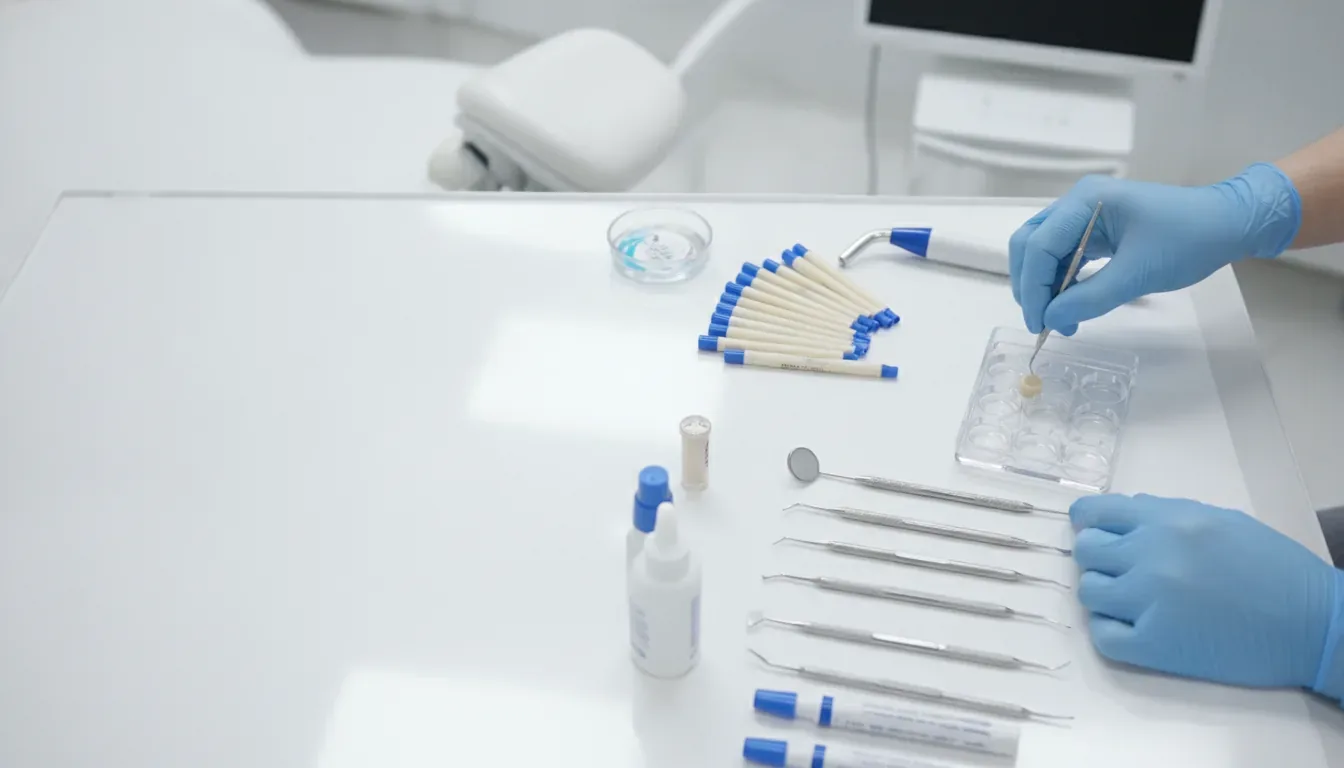
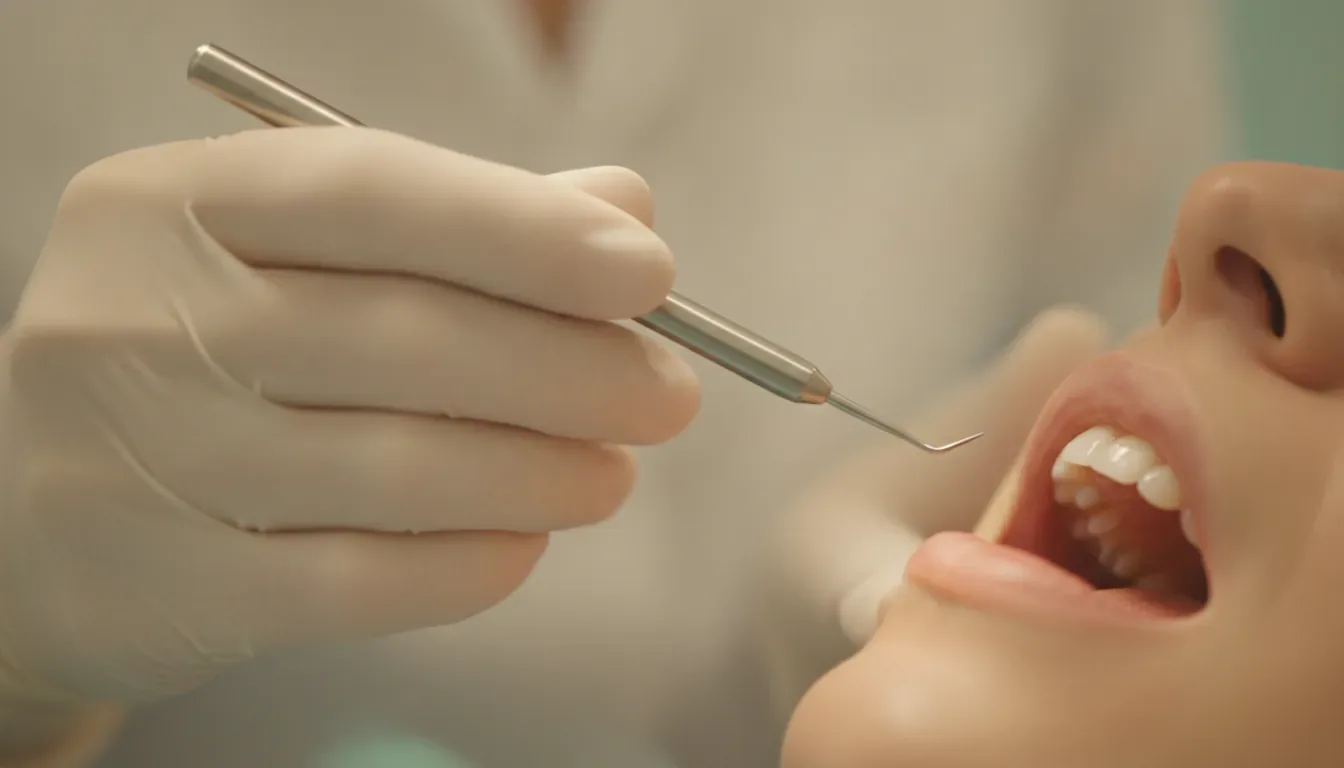
Gum disease treatment usually starts with a deep cleaning called scaling and root planing. Your dentist or hygienist numbs the area, clears plaque and tartar from below the gumline, smooths the tooth roots, and checks how the gums have healed a few weeks later. Periodontal maintenance cleanings then keep the gums stable.
That is what happens in outline. The American Dental Association describes scaling and root planing as a deep cleaning below the gumline used to treat gum disease. The Centers for Disease Control and Prevention, in guidance updated 15 May 2024, records that this non-surgical treatment is commonly known as scaling and root planing or deep cleaning. Cleveland Clinic, last updated 2 December 2024, puts the appointment itself at one to two hours, as a general pattern rather than a fixed rule.
The rest of this guide takes each part step by step, starting with why one has been recommended for you.
What this guide covers
What is a deep cleaning, and why has one been recommended for me
A deep cleaning, also called scaling and root planing, cleans below the gumline, where a regular cleaning does not reach. One is recommended when gum disease has let pockets form between the gums and the teeth.
A regular cleaning polishes the tooth surfaces you can see and the area just under the gum edge. The American Dental Association describes scaling and root planing as a deep cleaning below the gumline used to treat gum disease, and it has two parts. Scaling removes plaque and tartar from above and below the gumline. Root planing smooths the tooth roots so the gums can reattach.
Gum disease has two stages, and the stage decides the treatment. Gingivitis is the mildest form of gum disease, according to Mayo Clinic guidance reviewed 24 February 2023. At that stage the gums become red, puffy and bleed easily, and gingivitis is fully reversible.
Periodontitis is further along. The gums begin to pull away from the teeth, forming pockets that trap bacteria, and the bone that anchors the teeth starts to break down. Mayo Clinic describes periodontitis as a serious gum infection that damages the soft tissue around teeth and can destroy the supporting bone. Once periodontal pockets have formed, a regular cleaning cannot reach the bacteria inside them, which is why a deep cleaning gets recommended instead.
That recommendation is not an opinion. It comes from measurements.
How do I know I really need a deep cleaning, and not just a regular cleaning
A deep cleaning is recommended on measurements, not opinion. Your dentist or hygienist records the depth of the pocket around each tooth in millimetres, notes where the gums bleed when the pocket is measured, and checks the bone level on your X-rays. You can ask to see those numbers.
Those readings go onto a periodontal chart, tooth by tooth. Bleeding on probing is recorded next to the pocket depths, because gums that bleed when they are measured are inflamed. Healthy gum tissue sits tight against the tooth. Deeper periodontal pockets, bleeding when measured, and bone loss visible on the X-rays together are the signs that a regular cleaning can no longer reach the problem. Whether a deep cleaning is necessary comes down to what the chart shows.
The measurements are also how you check the treatment worked. The American Dental Association notes that your dentist will schedule another visit to see how the gums have healed and to measure the depth of the pockets. The same numbers, taken again. The American Academy of Periodontology describes the clinical purpose plainly, to scale beneath the gumline and remove plaque and bacterial toxins from periodontal pockets, and to smooth the tooth root so plaque and toxins do not re-adhere.
If you are wondering whether you really need a deep cleaning rather than a regular cleaning, the numbers are the place to look, and you are entitled to see them. Ask what your pocket depths are, ask where the gums bleed when they are measured, and ask what the X-rays show. Wanting a second opinion is also reasonable, and asking for one is not rude.
At Dentique Dental Care, treatment planning is no pressure, and your price is confirmed in writing at the consultation before anything is booked. Patients say, unprompted, that they were not upsold. If you decide you want to wait and think about it, that is a real option.
Once you have decided, the next question is what the appointment itself involves.
What happens step by step during the treatment
A deep cleaning follows the same sequence every time. The area is measured and numbed, the plaque and tartar are cleared from below the gum line, the roots are smoothed, the pockets are rinsed, and a follow-up is booked to check the healing.
Here is what happens at each step, and what you will feel while it happens.
- The check. Your dentist or hygienist measures the pockets around each tooth with a periodontal probe and reviews your X-rays. Cleveland Clinic (2 December 2024) lists this examination as the opening step, and the American Dental Association describes the same pocket-depth measurement being repeated later at the follow-up. The probe is thin and blunt, and you feel light pressure at the gum edge while the numbers are read out.
- Numbing. Local anesthesia is given to numb the gums before the cleaning starts (Cleveland Clinic, 2 December 2024), and the American Dental Association notes that scaling and root planing may require a local anesthetic. You feel the pinch of the injection, then the lip and gum go heavy and dull within a few minutes.
- Scaling. Plaque and tartar are removed from the teeth, above and below the gums, using hand scalers or ultrasonic instruments (Cleveland Clinic, 2 December 2024). An ultrasonic scaler vibrates and sprays a fine mist of water, so the sound is a high buzz and the sensation is vibration. A hand scaler is quieter and feels like firm scraping.
- Root planing. The tooth roots are smoothed so the gums can reattach to the teeth, as the American Dental Association describes, and the American Academy of Periodontology adds that smoothing the root stops plaque and toxins re-adhering to it. Root planing is the slower half of the appointment and feels like steady pressure rather than sharpness.
- Rinsing and medication. The periodontal pockets may be rinsed out, and the provider may inject antibiotics around the tooth roots or prescribe oral antibiotics (Cleveland Clinic, 2 December 2024). The American Dental Association notes that a dentist may also place subantimicrobial-dose doxycycline into the cleaned pockets. Rinsing feels like cool water and suction.
- The follow-up. Your dentist schedules another visit to see how the gums have healed and to measure the depth of the pockets (American Dental Association). Same probe, same chart, so the new numbers can be set against the ones taken at the start.
How much of the mouth is treated at one sitting varies. Cleveland Clinic describes the treatment being completed in a single visit or split across two appointments, with half the teeth cleaned per session, and the American Dental Association states that scaling and root planing may take more than one visit to complete. Both are general patterns rather than a Dentique commitment.
The question most people want answered before any of this begins is whether it hurts.
Will it hurt, and can I be sedated for it
A deep cleaning is done with the gums fully numbed. Most people feel pressure and vibration rather than pain, and if you are anxious you can ask about laughing gas or a sedative pill so you can relax through the appointment.
Will it hurt is the first thing most people ask. Whether a deep cleaning is painful depends mostly on the numbing, and the numbing is the first thing that happens. Local anesthesia is given to numb the gums before the cleaning starts (Cleveland Clinic, 2 December 2024), and the American Dental Association notes that the procedure may require a local anesthetic. At Dentique Dental Care the area is numbed and patients feel pressure, not pain.
Nobody can promise you will feel nothing. What is true is that the nerve is numbed, and the sensations people report are pressure and scraping rather than sharpness. Soreness afterwards, once the numbness wears off, is normal and is covered further down this guide.
If being in the chair is the harder part, sedation is an option here. Many people assume sedation is reserved for surgery, and at Dentique Dental Care it is available for a routine deep cleaning as well. The practice offers nitrous oxide, which most people call laughing gas, and oral conscious sedation, a sedative tablet taken before the visit. Nitrous oxide is breathed through a small nose mask, takes the edge off within minutes, and wears off quickly at the end. Oral conscious sedation leaves you drowsy and relaxed while still able to respond.
Dr. Xhelo Shuaipaj DDS FDOCS FICOI holds a fellowship with DOCS Education in sedation dentistry, and sedation at Dentique is a routine pathway for anxious patients rather than an upsell. Ask when you book if you want either option, so the appointment can be set up for it.
With comfort settled, the practical questions are how long the appointment takes and how many visits you will need.

How long does it take, and how many visits will I need
A deep cleaning usually takes one to two hours, and may be done in a single visit or split across two appointments, treating half the mouth at a time, depending on how much needs cleaning.
The one to two hours figure comes from Cleveland Clinic, last updated 2 December 2024, which also describes the treatment being split across two appointments with half the teeth cleaned per session. The American Dental Association states only that scaling and root planing may take more than one visit to complete. Some practices divide the mouth into quadrants, the four corners, and treat one or two of them at a sitting instead of halves.
How long does it take for you, and how many visits you will need, depends on how many teeth have deep pockets and how much tartar has built up below the gumline. Your own plan is confirmed at the visit, once the measurements have been taken.
Whether the treatment ever needs repeating is a fair question too. Cleveland Clinic states that in the ideal case scaling and root planing is needed only once, followed by regular cleanings and good home care. That is the ideal rather than a promise, and what happens next depends heavily on the maintenance covered later in this guide.
The first two days after the appointment are the part most people ask about next.
What will the first 24 to 48 hours feel like
For the first day or two after a deep cleaning, sore or tender gums, some sensitivity, and a little bleeding when you brush are all normal. Most people return to their normal routines the same day, according to Cleveland Clinic (2 December 2024).
Across the first 24 to 48 hours, the numbness from the local anesthesia wears off over the first few hours, and the gums feel bruised as it goes. The American Dental Association lists pain for a day or two, teeth sensitivity for up to a week, and gums that may be swollen, feel tender and bleed, as the expected experience after scaling and root planing.
Wait until the numbness has fully worn off before you eat, so you do not bite your cheek or tongue without feeling it. Softer foods are easier for the first day or two, and warm rather than hot is kinder on tooth sensitivity. Keep brushing, gently, with a soft brush. A little bleeding at the gum line while you brush is expected in this period.
That is general post-operative guidance drawn from the American Dental Association and Cleveland Clinic. Your practice gives you its own instructions before you leave, and those take precedence.
After the first couple of days, the picture changes to a slower kind of healing.
What does healing look like over the following weeks
Your gums heal gradually over the weeks after a deep cleaning. Tenderness settles within a few days, sensitivity to hot and cold usually eases over the following weeks, and teeth that felt slightly loose firm up as the gums tighten back.
Two things worry people more than anything else during this period, and both are usually normal.
The first is loose teeth. Cleveland Clinic (2 December 2024) notes that teeth may feel a little loose right after the procedure, and that this settles once the gums tighten back up. The looseness is the swelling around the tooth changing, not the tooth coming away.
The second is that the gums look lower than before, as though the treatment caused recession. Gums that were swollen shrink back as the inflammation settles, so the teeth can look longer than they did. That change is the swelling coming down, rather than new gum recession caused by the cleaning.
On sensitivity, the two timeframes in the sources cover different phases. The American Dental Association gives teeth sensitivity for up to a week in the days straight after treatment. Cleveland Clinic (2 December 2024) notes that sensitivity to heat and cold typically resolves within one to two months.
Underneath all of this, the tooth roots were smoothed so that the gums can reattach to the teeth, as the American Dental Association describes. Healing is not the same for everyone, and what the sources do support is that the result depends on home care and on keeping up with maintenance.
Alongside normal healing, a short list of warning signs is worth knowing.
What is normal after a deep cleaning, and what is a red flag
Sore gums, mild bleeding when you brush and sensitivity to hot and cold are normal in the days after a deep cleaning. Bleeding that will not stop, pain that does not improve with pain relief, or severe swelling are not, and they mean you should call the practice.
The American Dental Association lists the normal side of that line as pain for a day or two, teeth sensitivity for up to a week, and gums that may be swollen, feel tender and bleed.
The red flag side comes from Cleveland Clinic, last updated 2 December 2024, which names three reasons to call the dentist: bleeding that doesn’t stop, pain that doesn’t get better with medication, and severe swelling.
Fever, or pus around a tooth or along the gum, is also worth a call. Both are general signs of possible infection rather than part of the Cleveland Clinic list, and neither belongs in a normal recovery.
Direction is the simplest test. Soreness that eases a little each day is healing. Soreness that grows each day, or swelling that spreads, is a reason to phone Dentique Dental Care rather than wait it out.
When should I call the office
Call the office that treated you if the bleeding will not stop, the pain is not easing with pain relief, or the swelling is getting worse, and someone will get back to you.
For Dentique Dental Care the numbers are (630) 454-9299 for the Downers Grove office and (630) 685-0017 for Lemont. Leave a message if the phone is not answered, say what you are worried about and which office treated you, and someone will get back to you.
You do not need a red flag to call. If you are worried about something and cannot tell whether it is normal, that is reason enough. Nobody at the practice is going to make you feel awkward for asking, and a phone call is a reasonable way to settle it.
Once the healing is done, the question becomes how to keep the result.
What happens after treatment, so it does not come back
After a deep cleaning, your gums are re-checked and re-measured, and most people move onto periodontal maintenance cleanings, more often than a standard check-up, to keep the periodontal pockets from deepening again.
The follow-up visit has a specific purpose. The American Dental Association describes the dentist scheduling another visit to see how the gums have healed and to measure the depth of the pockets, which is how the treatment gets judged.
Dentique Dental Care publishes an interval of every three to four months for periodontal maintenance cleanings after initial treatment. The American Academy of Periodontology puts the general position in similar terms, that the majority of patients will require ongoing maintenance therapy to sustain periodontal health.
What you do at home carries as much weight. The American Dental Association advises brushing twice a day with a soft brush, cleaning between the teeth daily, eating a balanced diet, avoiding tobacco, and seeing your dentist regularly. Brushing and flossing do the daily work of keeping bacteria from rebuilding in the pockets between visits.
Being straight about whether gum disease can come back matters more than a reassuring line. Early gum disease can often be reversed by daily brushing and flossing, according to the National Institute of Dental and Craniofacial Research. Advanced gum disease is a different case. Cleveland Clinic (10 April 2023) states that gum disease is not curable, while treatment can reduce the infection. Kept under control is the honest description, and control is what the maintenance interval protects.
If non-surgical treatment does not do enough, there is a next rung. The American Academy of Periodontology notes that when non-surgical treatment does not achieve optimal periodontal health, a periodontist may recommend gum surgery. That is the general clinical ladder rather than a description of any one practice.
Those are the parts of the process most people ask about. A few more questions come up often enough to answer directly.
Questions people ask about the gum disease process
How painful is dental scaling and root planing?
Dental scaling and root planing is done with the gums numbed by local anesthesia, so most people feel pressure and scraping rather than pain during the appointment. Afterwards, the American Dental Association notes pain for a day or two and teeth sensitivity for up to a week. Sedation with nitrous oxide or an oral sedative is available at Dentique Dental Care if the appointment itself is the part you are anxious about.
How long do gums take to heal after scaling and root planing?
Gum tenderness after scaling and root planing usually settles within a few days, and the American Dental Association lists pain for a day or two alongside gums that may be swollen, tender and bleeding. Sensitivity to hot and cold takes longer and typically resolves within one to two months, according to Cleveland Clinic (2 December 2024). Healing is gradual, and the follow-up visit measures how far the gums have come.
How many times does a person need root scaling and planing?
Root scaling and planing is ideally needed only once, followed by regular cleanings and good home care, according to Cleveland Clinic (2 December 2024). Many people then move onto periodontal maintenance cleanings, which Dentique Dental Care schedules every three to four months after initial treatment. How many times the deep cleaning itself is needed depends on whether the pockets stay shallow at the follow-up measurements.
How long after scaling and root planing can I eat normally?
Eating after scaling and root planing should wait until the numbness from the local anesthetic has fully worn off, so you do not bite your cheek or tongue. Softer foods are easier for the first day or two, and most people eat normally again within a few days. The do and don’ts vary between practices, and Dentique Dental Care gives you its own instructions before you leave.
Do teeth go back to normal after deep cleaning?
Teeth that felt slightly loose after a deep cleaning firm up as the gums tighten back, which Cleveland Clinic (2 December 2024) describes as the expected pattern. Gums that were swollen also shrink back as the inflammation settles, so the teeth can look longer than before. That change in appearance comes from the swelling coming down rather than from the cleaning causing recession.
What are the disadvantages of deep cleaning teeth?
The disadvantages of deep cleaning teeth are short-term soreness, sensitivity and bleeding for a few days, the possibility of more than one visit, and the fact that the treatment manages advanced gum disease rather than curing it. Cleveland Clinic (10 April 2023) states that gum disease is not curable, while treatment can reduce the infection. Set against that, leaving deep pockets untreated allows the bone that anchors the teeth to keep breaking down.
Does dental insurance cover a deep cleaning?
Dental insurance coverage for a deep cleaning varies by plan and by carrier, so your own plan decides it. Dentique Dental Care works with most major PPO plans, including Delta Dental, MetLife, Cigna, Aetna, Blue Cross Blue Shield of Illinois, UnitedHealthcare, Guardian and Humana, and CareCredit, Cherry and Sunbit financing are available. Your price is confirmed in writing at the consultation, before anything is booked.