Most orthodontic warning signs are not emergencies, but a few are worth acting on soon, and knowing which is which lets you plan calmly instead of guessing. You might be looking at your own crooked or crowded teeth, at your child’s bite, or at a retainer that suddenly feels tight years after you finished treatment.
Maybe you have put off a visit because you are not sure it is worth one, or because dental visits make you uneasy. That is common, and nobody here will judge you for it.
This guide is written by Dr. Xhelo Shuaipaj, a general dentist with more than 30 years of practice and the dentist at Dentique Dental Care in Downers Grove and Lemont. It sorts the signs into three groups: signs that are urgent, signs that need a check-up soon, and signs that can wait for your next visit, whether they concern you or your child.
Which orthodontic signs are urgent, which need a check-up soon, and which can wait for your next visit
Get emergency care right away for these signs: heavy bleeding that will not stop, trouble breathing or swallowing, a suspected broken jaw, or a major facial injury.
Call your dentist within a day or two for swelling with fever or pus, pain that does not ease with over-the-counter relief, a broken appliance cutting your mouth, or a retainer that suddenly will not fit.
Book a check-up for crowding, gaps, bite problems, jaw clicking, and any child approaching age 7.
The emergency list and the age-7 guidance come from the American Association of Orthodontists (AAO). The sections below walk through each group of signs, starting with teens and adults.
On this page
What are the signs you need braces or clear aligners as a teen or adult
The most common signs you need braces or clear aligners are visible or felt when you bite: crowded or crooked teeth, gaps between teeth, and a bite that does not meet evenly. For teens and adults, these signs are rarely urgent, but they are worth a check-up.
Here is each sign, with how soon to act on it:
- Crowded or crooked teeth. Teeth that overlap are hard to clean, because a toothbrush and floss cannot reach every surface. Book a check-up.
- Gaps between teeth, especially spaces that are new or getting wider. Book a check-up.
- An overbite, underbite, crossbite or open bite. With an overbite, the upper front teeth sit far out over the lower ones. With an underbite, the lower teeth sit in front of the upper ones. A crossbite means some upper teeth close inside the lower teeth, and an open bite means the front teeth do not touch when you bite down. Book a check-up.
- Jaw pain or clicking. A jaw that clicks, pops, hurts or tires when chewing is worth a check-up. If the pain is constant or getting worse, call within a day or two.
- Biting your cheek or tongue often, which can mean your teeth do not meet evenly. Book a check-up.
- Trouble chewing, or speech that is affected by where your teeth sit. Book a check-up.
- Teeth that have moved after earlier treatment. This one has its own section below, because a retainer that no longer fits changes the timing.
The same signs can look different in a child, which is why the AAO sets a check-up age of 7.
What signs in a child mean it is time for an orthodontic check-up
The American Association of Orthodontists recommends a first orthodontic check-up no later than age 7. At that age your child has a mix of baby teeth and permanent teeth, so problems with jaw growth and incoming teeth can be spotted early. A check-up at 7 usually does not mean treatment at 7.
Is 7 too early for braces? For many children, yes, and that is the reason for an early check-up: it gives time to watch how the jaw grows instead of rushing. The AAO also says that if something looks off in your child before age 7, you do not need to wait until 7.
Signs that your child should be seen sooner:
- Baby teeth lost very early or very late.
- Crowding, gaps or overlapping teeth.
- An overbite, underbite or crossbite.
- Mouth breathing or chronic snoring.
- Trouble chewing or biting.
- Thumb sucking or finger sucking that continues past age 5.
- A jaw that clicks or shifts to one side.
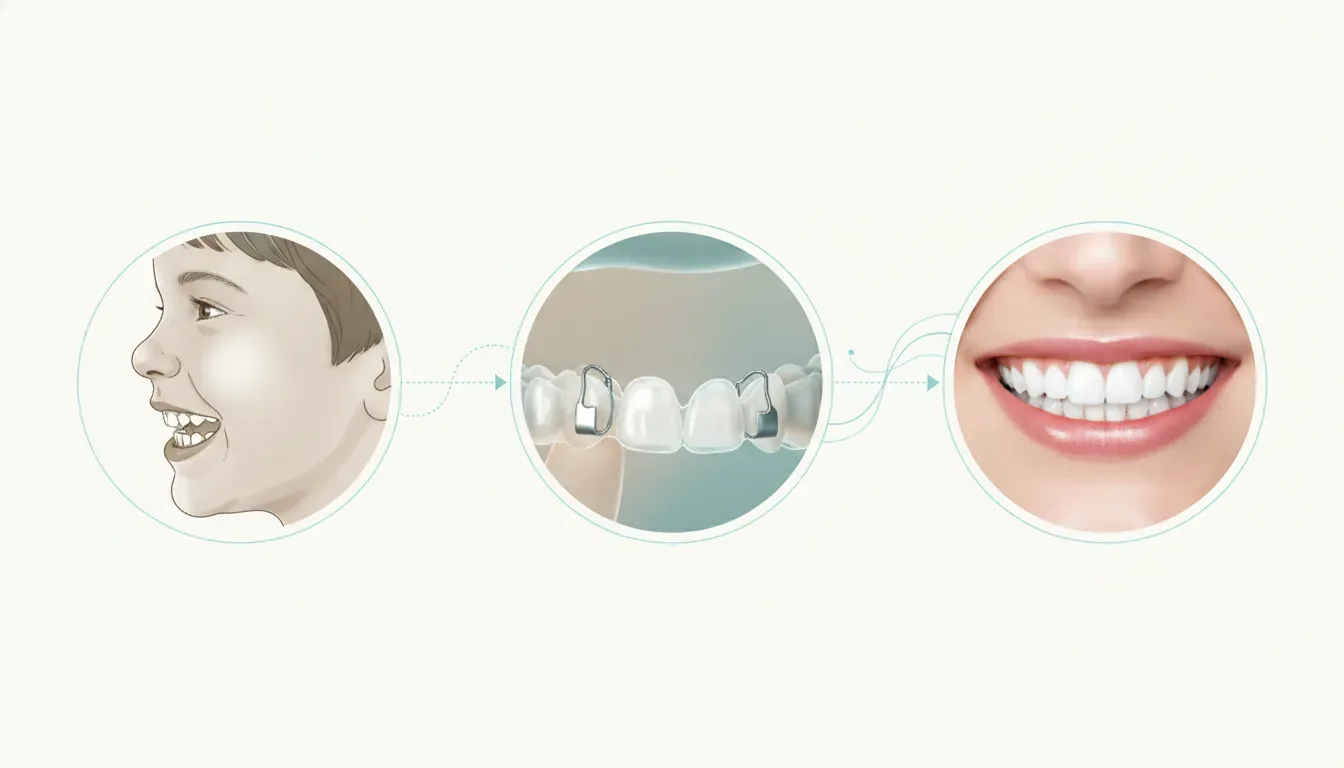
If early treatment is needed, one tool an orthodontist may use is a palatal expander, which widens a narrow upper jaw while a child is still growing.
At Dentique Dental Care, Dr. Shuaipaj. Where your child needs an orthodontist, the team will help you arrange one.
Whatever your child’s age, a small number of problems cannot wait even a few days.
Which orthodontic problems need care right away
A true dental or orthodontic emergency is one that affects your breathing, bleeding or jaw: call 911 or go to the emergency room for heavy bleeding that will not stop, trouble breathing or swallowing, or a suspected broken jaw or major facial injury. According to the American Association of Orthodontists, most other orthodontic problems are urgent, not emergencies.
Call 911 or go to the emergency room if there is:
- Heavy or uncontrolled bleeding.
- Trouble breathing or swallowing.
- A suspected broken jaw or a major facial injury.
Call your dentist within a day or two if there is:
- Swelling in the gum, cheek or face with fever, pus, a bad taste or spreading redness, which can be a sign of infection.
- Pain that does not ease with over-the-counter pain relief.
- A tooth that has been knocked loose.
- A broken aligner, retainer or appliance that is cutting your mouth.
An Invisalign attachment that falls off is not an emergency. Call the office to let the team know.
Dentique Dental Care offers emergency care, but availability is limited because one dentist covers both offices. Call Downers Grove at (630) 454-9299 or Lemont at (630) 685-0017, and the team will guide your next step.
Knowing why teeth and bites go wrong in the first place makes it easier to see which signs are worth acting on.
What causes crooked teeth and bite problems
Crooked teeth and bite problems usually come from jaw size and growth, how baby teeth are lost, and habits such as long-term thumb sucking. Some causes sit under the gum, where you cannot see them.
Common causes include:
- Family traits in jaw and tooth size.
- Baby teeth lost very early or very late, which can crowd the adult teeth coming in.
- Thumb sucking or finger sucking past age 5.
- Missing teeth, extra teeth or impacted teeth (teeth stuck under the gum), which the AAO notes can be found on panoramic X-rays.
- Not wearing a retainer after treatment, which lets teeth shift back.
Some of these causes, such as impacted teeth, do not correct on their own, which is why a check-up tells you more than waiting to see. The last cause on the list, a retainer left in a drawer, is where many people who finished treatment years ago find themselves now.
Your retainer doesn’t fit anymore or your teeth are shifting – what does that mean
A retainer that no longer fits usually means your teeth have moved since it was made. Do not force it in, because forcing it can break the retainer or harm your teeth. Call soon, since a small shift is simpler to deal with than a large one.
Orthodontic practices give the same advice on this point: if your old retainer will not snap in without pushing, stop, and keep it in its case.
What happens next depends on how far your teeth have shifted:
- For minor shifting, an old retainer can sometimes guide teeth back, but only when fitted under your dentist’s direction.
- For larger shifting, a new retainer or a short course of clear aligners may be an option, decided at an exam.
- If you lost your retainer soon after treatment ended, call soon, because teeth can shift quickly in that early period.
Dentique Dental Care makes custom retainers and treats suitable cases with Invisalign clear aligners.
So what happens if you leave any of these signs alone?
What happens if you wait
Waiting on most orthodontic signs is not dangerous in itself, but some problems get harder to correct, and a growing child’s jaw is easier to guide than an adult’s.
Here is what waiting can mean:
- The American Association of Orthodontists notes that jaw and tooth problems left uncorrected can need more expensive and more invasive treatment later.
- Some growth-related problems are easier to correct while a child’s jaw is still growing, which is why a tool like a palatal expander is used in childhood.
- Crowded teeth are harder to clean between, so plaque along the gum is harder to remove.
- Teeth that have shifted after treatment take more to correct the longer the shift goes on.
Is there a point where teeth are not fixable? Adults are treated too, and teeth can be moved later in life. Some adult jaw problems need an orthodontist or a surgeon, which is why an exam, not a guess, is the right next step. At that exam your dentist also checks your gum health and looks for enamel wear.
Until you are seen, there are a few safe things you can do at home.
What can you safely do right now
Before your visit, the safest steps are to note what you see and when it started, keep your retainer or aligners in their case, and do not force anything that no longer fits.
- Write down the sign, when it started, and any pain.
- Take clear photos of the bite, gap or tooth so you can show your dentist.
- Keep a retainer or aligners that no longer fit in the case, and bring them with you. Do not force them in.
- For a sore jaw or mouth, use over-the-counter pain relief as directed on the label. If the pain does not ease, treat it as urgent and call within a day or two.
- Skip the home fixes. A “do I need braces” app, an online scanner or an at-home straightening kit cannot see what is happening under the gum or in the jaw. That takes an exam and, where needed, X-rays.
Here is what happens when you come in.
What happens at an orthodontic check-up at Dentique Dental Care
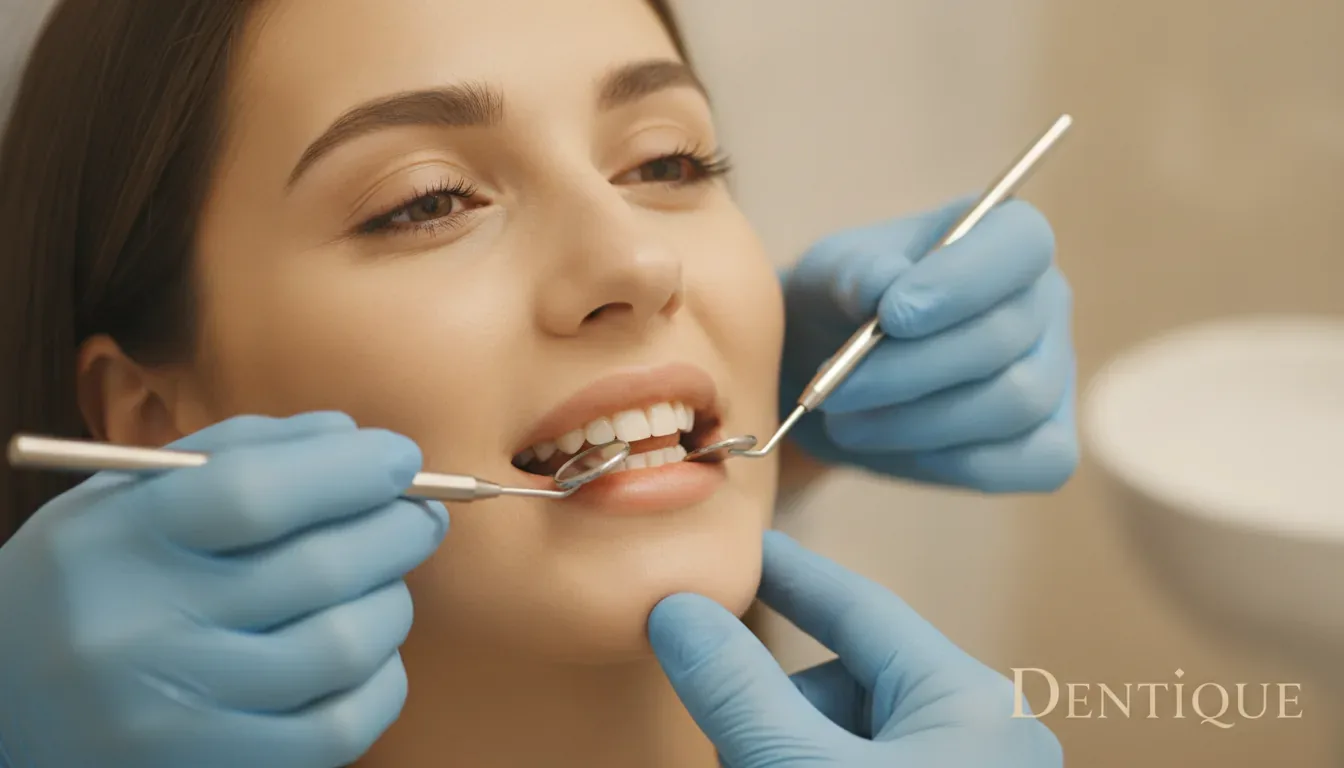
At Dentique Dental Care, Dr. Xhelo Shuaipaj checks your teeth, bite and jaw, and tells you plainly whether you need treatment now, later, or not at all. If clear aligners suit your case, Dentique treats it with Invisalign. If you need braces or jaw treatment, he will tell you and help you find an orthodontist.
Dr. Shuaipaj is a general dentist, not an orthodontist, with more than 30 years of practice, and he is the only dentist at both the Downers Grove and Lemont offices. Dentique offers Invisalign clear aligners and custom retainers for teens and adults.
The exam also answers a question many people search before they book: whether they are a candidate at all. That depends on your gum health and on whether your bite problem suits clear aligners or needs an orthodontist.
If the dental chair makes you anxious, this is how the visit works:
- Care is judgment-free, including for people who have stayed away from the dentist for years.
- There is no pressure to start treatment.
- Sedation is available: laughing gas (nitrous oxide), or a pill to help you relax (oral conscious sedation).
- If you choose treatment, you get your price in writing at the consultation.
- Dentique has over 400 Google reviews, rated 4.9.
You can reach the Downers Grove office at (630) 454-9299 or the Lemont office at (630) 685-0017. Below are the questions patients ask most.
Orthodontic warning-sign questions patients ask most
What’s the best age to get braces?
The best age to get braces or aligners depends on the problem. The American Association of Orthodontists recommends a first check-up by age 7, and many teens and adults start treatment later. Adults are treated too.
Is 7 years old too early for braces?
Seven is not too early for a check-up, but a check-up at 7 is not the same as braces at 7. According to the AAO, many children seen at that age need no treatment yet, and their growth is monitored instead.
What disqualifies you from getting braces?
What disqualifies you from getting braces or clear aligners is decided at an exam, not by a checklist. The exam looks at your gum health and at whether your bite problem suits clear aligners or needs an orthodontist.
At what point are teeth not fixable?
Age alone does not make teeth not fixable, because teeth can be moved later in life. Some jaw problems are easier to correct while a child is still growing, and some adult cases need an orthodontist or a surgeon.
Is it bad to wear a retainer that doesn’t fit anymore?
Yes. Forcing a retainer that doesn’t fit anymore can break it or harm your teeth. Stop wearing it, keep it in its case, and call your dentist.
Can my old retainer fix my shifted teeth?
Your old retainer can sometimes fix minor shifting, but only when your dentist checks the fit and tells you how to wear it. It should never be forced in.
Does insurance cover braces for kids?
Whether insurance covers braces for kids, or other orthodontic treatment, depends on your plan. Dentique Dental Care works with most major PPO plans, including Delta Dental, MetLife, Cigna, Aetna, Blue Cross Blue Shield of Illinois, UnitedHealthcare, Guardian and Humana, and confirms your price in writing before treatment starts.