By the end of this page you will know which option fits your case and roughly what it will cost. Right now you probably have the opposite: a list of options whose names all sound similar, and no way to rank them.
This guide covers the five ways to straighten teeth, plus retainers, which do a different job. You can compare them on the six things that decide it: how visible each one is, what it feels like day to day, how much daily effort it needs, how complex a case it can treat, how long it takes, and roughly what it costs.
Orthodontics has a vocabulary problem. Braces, clear aligners, trays, brackets, attachments, retention: the words tend to arrive before the explanations do. Read straight through, or jump to the one question you came for. Once you know two things about your own case, which one suits you is usually obvious.
Which teeth-straightening option is right for you
Clear aligners, including Invisalign, are best for mild to moderate crowding or spacing in a teen or adult who will wear them as prescribed. Fixed braces, whether metal braces or ceramic braces, are best for complex bite problems and for young children. Retainers hold the result afterwards and are not a treatment option.
That is the short answer. Which option is right for you comes down to two things: how much your teeth need to move, and how much daily effort you can commit to. The American Association of Orthodontists takes the same line, that suitability is a case decision and that braces can treat the large majority of orthodontic problems. The next section says what each one is, in plain terms.
Table of Contents
What are your options for straightening teeth
Teeth straightening comes down to five mainstream options, plus retainers, which do a different job. Four of the five are types of braces that are fixed to the teeth and stay there until treatment ends. The fifth is removable. Some guides list four types of braces and some list five. The set below is the complete one.
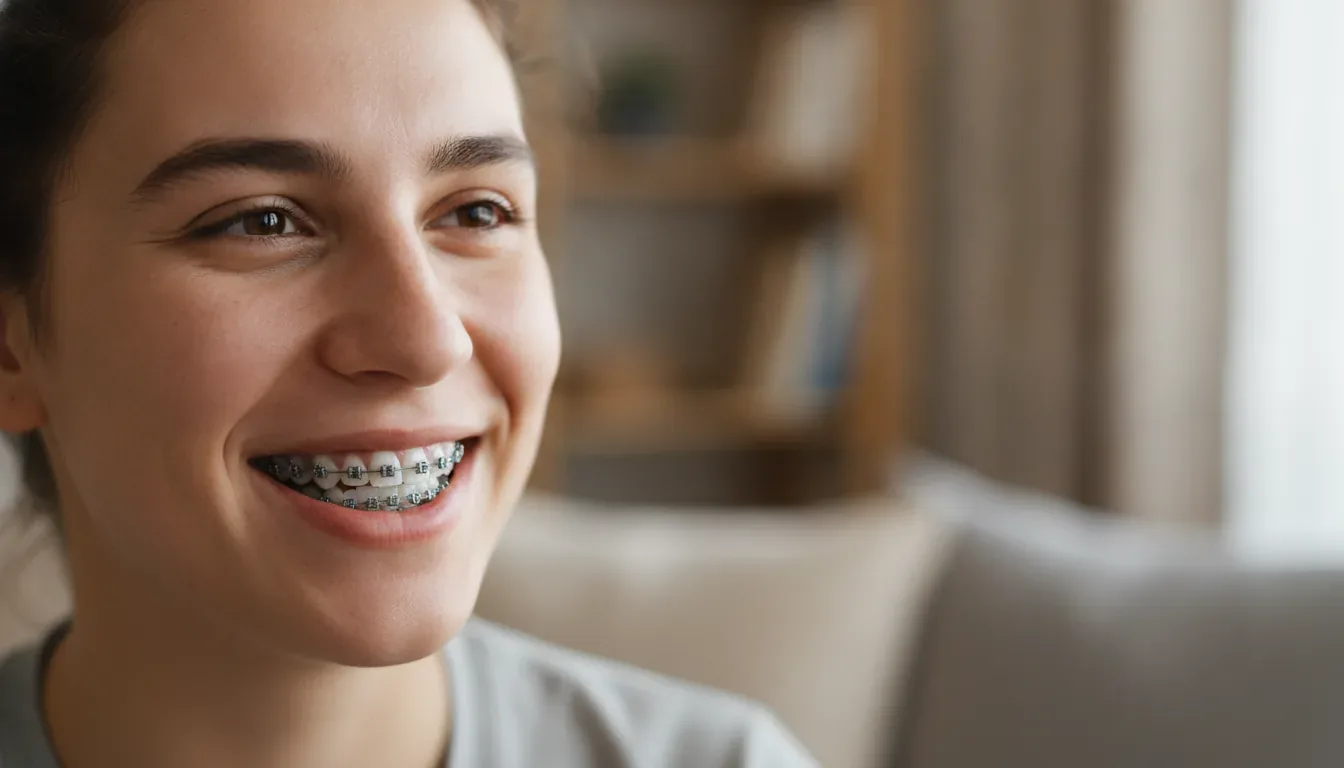
Traditional metal braces are stainless steel brackets bonded to the front of each tooth and joined by an archwire. The wire applies gentle, steady pressure over time, and the brackets are what the wire pulls against, which is the mechanism behind every fixed option on this list. Traditional metal braces are the most visible of the five, because the brackets and wires sit across the front of the teeth.
Ceramic braces use the same design, with brackets that are clear or tooth-coloured rather than steel. Ceramic braces are less obvious at conversation distance, though the wire still shows. They are more brittle than metal, and the small ties that hold the wire can stain if they are not kept clean.
Self-ligating braces swap the elastic ties for a built-in clip that holds the wire in place. Self-ligating braces usually mean fewer adjustment visits and less friction on the wire. They are still fixed to the front of the teeth, so how visible they are depends on the bracket material.
Clear aligners are a series of custom-made removable plastic trays worn over the teeth, each tray moving the teeth a small amount before you change to the next one. Clear aligners come out for meals and for brushing, which is the practical difference most people notice first.
Invisalign is a brand of clear aligner, not a separate category of treatment. That correction matters here, because a lot of people search for the brand name when what they mean is the treatment, and comparing Invisalign against clear aligners is comparing a name against the thing it names.
Lingual braces are bonded to the tongue side of the teeth, so they sit behind the teeth and nothing shows from the front. Lingual braces are the priciest of the five. They are harder to clean, and they affect speech at first.
Retainers hold teeth in position after treatment has finished. Retainers are not a way of straightening teeth in the first place. The American Association of Orthodontists is clear that every patient needs them once active treatment ends.
Lined up next to each other, the differences between these options sort themselves quickly into the ones that will matter to you and the ones that will not.
How do the options compare side by side
The five options, traditional metal braces, ceramic braces, self-ligating braces, clear aligners and lingual braces, separate on six things: how visible they are, comfort day to day, how much daily effort they need, how complex a case they can treat, how long they take, and roughly what they cost. Compare them on whichever of those matters most to you and the shortlist usually gets short fast.
One number carries more weight than the rest. The American Association of Orthodontists puts the wear requirement for clear aligners at a minimum of 22 hours a day, in the prescribed sequence. Fixed braces carry no equivalent requirement, because they are not removable, and the same body says braces can treat most orthodontic problems.
| Option | How visible it is | What it feels like day to day | How much daily effort it needs | What cases it can treat | Roughly what it costs |
|---|---|---|---|---|---|
| Traditional metal braces | The most visible. Metal brackets and wires across the front of the teeth. | Sore for a few days after each adjustment. Brackets and wires can rub the lip and cheek. | Nothing to remember. Cleaning around the brackets and wires takes longer. | The widest range, including complex bite problems and severe crowding. | Lowest of the five on published national ranges. |
| Ceramic braces | Less obvious. Clear or tooth-coloured brackets, though the wire still shows. | Much like metal braces. The same brackets sit against the lip and cheek. | Nothing to remember. The ties can stain, so cleaning matters more. | A similar range to traditional metal braces. The brackets are more brittle. | Above traditional metal braces on published national ranges. |
| Self-ligating braces | As visible as the bracket material makes them, metal or ceramic. | Less friction on the wire, and usually fewer adjustment visits. | Nothing to remember. No elastic ties to keep clean. | A similar range to other fixed braces. | Above traditional metal braces on published national ranges. |
| Clear aligners | Least visible while worn. Attachments bonded to the teeth can show. | Smooth plastic, with no brackets or wires against the cheek. Pressure for a day or two with each new tray. | The most of any option. A minimum of 22 hours a day, in sequence (American Association of Orthodontists). | Mild to moderate crowding and spacing. Not every case. | At or above the fixed-braces range on published national figures. |
| Lingual braces | Hidden from the front. Fitted behind the teeth. | They irritate the tongue at first and affect speech for a while. | Nothing to remember. The hardest of the five to keep clean. | A similar range to other fixed braces. | The most expensive of the five. |
The cost column is a national picture, not a Dentique Dental Care price.
The table narrows the field. It does not decide it, because the thing that decides it is your own case.
Which option is best for your case
The right option for your case is decided by two things: how much your teeth need to move, and how much daily effort you can realistically commit to. Everything else, including how it looks and what it costs, sits underneath those two.
Here is how that plays out across the cases that come up most.
- If you are an adult or an older teenager with mild to moderate crowding or spacing, clear aligners are the option to ask about, and Invisalign is the brand name you will see most. They are best for that kind of movement and they come out for meals. The condition attached is real: the American Association of Orthodontists puts the wear requirement at a minimum of 22 hours a day, in sequence. If that is not going to happen, this is not your option.
- If you have a complex bite problem or severe crowding, fixed braces are the option to ask about. The American Association of Orthodontists says braces can treat the large majority of orthodontic problems, and that range is why they are still the answer for difficult cases. Traditional metal braces cover the widest span of them, and ceramic braces reduce how much they show without changing the mechanics. The trade is visibility, and people tend to underestimate how much that will bother them.
- If you are choosing for a child of around 11 or under, fixed braces are usually the sensible call. Published orthodontic guidance from 2026 points that way for this age group, and the reason given is compliance rather than how well each one works. A small child should not have to be the reason the treatment works or does not.
- If you are an adult who needs fixed braces and cannot have them showing, lingual braces are the option to ask about. They sit behind the teeth, so nothing is visible from the front. They are the priciest of the five, the hardest to clean, and they will change your speech at first.
- If your teeth were straightened once and have drifted back, start with a retainer question rather than a treatment question. It is worth asking whether retainers can hold what you have before anyone talks about a second course of treatment. That is a conversation for a consultation, not a decision to make from a web page.
- If you cannot place yourself in any of these, that is the ordinary situation. Someone has to look at your teeth and your bite, which is what a consultation is for, and at Dentique Dental Care your price is confirmed in writing at that point.
One thing none of this settles is comfort, which is the question a lot of people are quietly asking first.
Which type of braces hurts the least
Clear aligners hurt the least day to day, and they are the most comfortable of the five to wear, because there are no brackets or wires sitting against the inside of your lip and cheek. Smooth plastic irritates the mouth less than metal does.
What no comparison page tells you is the rest of it. Every option here is uncomfortable for a few days after each adjustment or each new tray. Teeth feel sore, and there is a dull pressure when you bite down. That soreness is the teeth moving, which is the treatment doing what it is meant to do rather than a sign something has gone wrong.
As for the most painful type of braces: traditional metal braces and ceramic braces cause the most day-to-day irritation, because the brackets and wires rub the inside of the lip and cheek, and the first few adjustments can leave mouth sores. Lingual braces are their own case. They sit against the tongue, so they irritate it at first and change your speech for a while.
For a lot of people, none of that is what has kept them away. If you are nervous about dental treatment, or you have not seen a dentist in years and the thought of a long course of appointments is the real obstacle, say so at the first appointment. Anxiety is an ordinary thing to raise here, not something to apologize for.
At Dentique Dental Care, nitrous oxide, also called laughing gas, and oral conscious sedation are available. Dr. Xhelo Shuaipaj DDS FDOCS FICOI holds a sedation fellowship, and sedation is treated as a routine pathway rather than an upsell. People who have avoided the dentist for years are met without judgment.
With clear aligners, the harder part of treatment is the discipline they ask of you every day.
Why do people quit Invisalign
Clear aligners only move teeth while they are in your mouth. The American Association of Orthodontists puts the wear requirement at a minimum of 22 hours a day, in the prescribed sequence, which leaves roughly two hours for meals, for anything other than water, and for brushing.
Most people who give up did not sit down and decide to quit. They take the trays out for a long lunch and forget to put them back in. They travel and lose the case. They find the trays make them lisp for the first days of each new set. They discover that attachments, the small bumps bonded to the teeth for the trays to grip, make treatment less invisible than they expected. The outcome is the same each time: the teeth stop tracking to the plan, and treatment stalls or has to be restarted.
Orthodontists call this compliance, and it is the one thing clear aligners, Invisalign included, depend on that fixed braces do not. That is a wear problem, and it does not make anyone a bad patient.
The honest version of this advice goes one step further. If you cannot realistically wear them as prescribed for 22 hours a day, or your child cannot, say so before treatment starts rather than six months into it. Fixed braces do the work without depending on you to remember anything, and choosing them for that reason is a sound decision.
Whichever option you choose, finishing treatment is not the end of the job.
Will your teeth move again after treatment
Teeth drift back toward where they started unless something holds them. That is why the American Association of Orthodontists states that every patient will need to wear retainers once treatment ends, alongside daily brushing and flossing.
So the honest answer to whether teeth move again years later is that they can. Teeth shift across a lifetime, with or without a history of treatment, and shifting after braces is the version people notice. If you had braces as a teenager and your lower front teeth have crowded again in your thirties, that is relapse. Wearing retainers as directed is what holds the result in place.
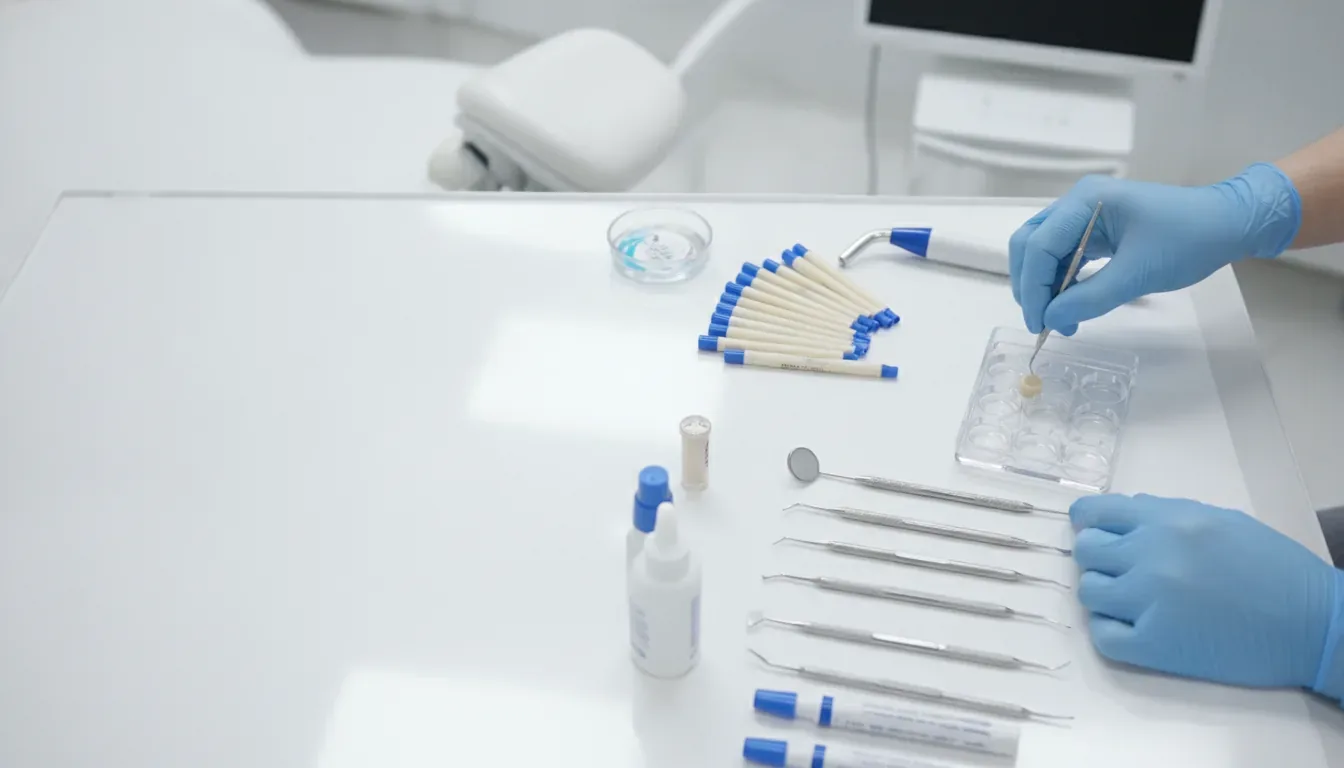
Retainers are part of treatment rather than an add-on at the end of it. Dentique Dental Care provides custom retainers, designed to maintain the result and help prevent teeth from shifting after orthodontic treatment.
For the decision in front of you, that matters in one specific way. Clear aligners and fixed braces both end in the same place, with retainers, so if durability is what you are choosing on, retention weighs more than which appliance did the moving.
Supervision is also the thing a mail-order kit cannot give you, which brings up the cheapest-looking route on the market.
Are mail-order aligners a safe option
Mail-order aligners, also called direct-to-consumer aligners, differ from clear aligners fitted at a practice in one way that decides the rest: nobody examines your teeth in person, and the movement is not supervised by anyone who has. You take an impression or a scan at home, the trays arrive in the post, and you wear them.
The clinical reason that matters is diagnosis. The American Association of Orthodontists position is that treatment should rely on a clinician trained to evaluate diagnostic findings, and evaluating them means examining the teeth and the bite rather than looking at photographs of them. Invisalign and other aligners fitted through a practice are prescribed and monitored on that basis.
The cost advantage deserves a fair hearing, because it is real. Search for mail order aligners and the price is the first thing you see, and it is cheaper than treatment run through a practice. That is a serious consideration for anyone weighing a few thousand dollars, not a foolish one. The trade is what the lower price leaves out: the in-person examination, and the supervision while the teeth are moving.
Whether that trade is safe is a question about your particular mouth. Cost is the reason most people look at mail order in the first place, so it is worth being straight about what any of this costs.
What do these options cost, and what does insurance cover
What orthodontic treatment costs depends on three things: how much your teeth need to move, how long that takes, and what your plan’s orthodontic benefit covers. The option you pick shifts the number less than the case does, which is why two people quoted for clear aligners at the same practice can be given very different figures.
Published national ranges give you a shape to work with. Ranges captured in August 2026 put fixed braces at roughly $3,000 to $7,000 and clear aligners at roughly $4,000 to $8,000. Other published ranges from the same month put both around a thousand dollars lower at each end. No page tells you the published figures disagree with each other, and the disagreement is the useful part, because it exists for the same reason your own quote will vary: the number follows the case, not the category.
These are national figures and not Dentique Dental Care prices.
What is certain is the process. Your price is confirmed in writing at the consultation, before treatment starts.
On insurance, Dentique Dental Care works with most major PPO plans, including Delta Dental, MetLife, Cigna, Aetna, Blue Cross Blue Shield of Illinois, UnitedHealthcare, Guardian and Humana. Whether your plan carries an orthodontic benefit at all, and how much of the cost it covers, is a plan-level question rather than a practice-level one, and it is checked and confirmed in writing before treatment begins.
For whatever insurance does not cover, third-party financing is available through CareCredit, Cherry and Sunbit, which is how most people turn one large number into a payment plan. How much you pay out of pocket comes down to the benefit, the case, and how you choose to spread the balance.
That raises a fair question about this practice specifically: which of these options can you get here, and which can you not?
What does Dentique provide, and when will we refer you elsewhere
Dentique Dental Care provides two of the options on this page: Invisalign and clear aligners, and custom retainers. We provide those. We do not provide traditional metal braces, ceramic braces, self-ligating braces or lingual braces, and if your case needs one of them we will tell you and refer you to someone who does.
The honest version is the one worth printing. Treatment planning here runs with no pressure, and if clear aligners are not right for you, hearing it at the first appointment saves you months.
Dr. Xhelo Shuaipaj DDS FDOCS FICOI is the dentist at both offices, in Downers Grove and in Lemont, Illinois, with more than 30 years in practice. One dentist across two locations means the person who assesses your case is the person who treats it. If you have put off dental treatment for years, you are met without judgment.
That covers the decision itself. What is left are the smaller questions people ask on the way to making it.
Common questions about orthodontic options
Are aligners just as effective as braces?
Clear aligners work as well as fixed braces for the cases they suit, and less well for the ones they do not. The American Association of Orthodontists says braces can treat the large majority of orthodontic problems, while aligners work inside a narrower band: mild to moderate crowding and spacing, in someone who wears them a minimum of 22 hours a day. So whether aligners are just as effective as braces depends on your case rather than on the appliance.
Do dentists prefer Invisalign or braces?
Dentists and orthodontists choose on the case rather than on a preference. The two things that decide it are the same two from earlier on this page: how much the teeth need to move, and how much daily effort the patient can commit to. Where those two answers point differs from patient to patient, which is why the recommendation does too. Clear aligners are what Dentique Dental Care provides, and if your case is better served by fixed braces, we will say so.
What’s the best age to get Invisalign?
Clear aligners, Invisalign included, are not gated by a birthday. What decides it is whether the adult teeth are through, and whether the person will wear the trays as prescribed. Published orthodontic guidance from 2026 points to fixed braces for children of around 11 and under, on compliance grounds rather than on results.
What is the newest type of braces?
Self-ligating braces and clear aligners are the newer end of the field. What changed is the mechanism and the materials: a built-in clip holds the wire in place of elastic ties, and removable trays replaced brackets for the cases that suit them. Newer does not mean better for your case, and your case is the only test worth applying.