Ever left the dentist unsure what half those words even meant
You sit in the chair, the dentist says you need a prophylaxis and some scaling because of calculus near the gumline, and you nod like you understand. A dental cleanings comes wrapped in words like prophylaxis, scaling, and calculus, and this guide explains every one of them in plain English, with nothing to be embarrassed about.
If it has been a while since your last visit, or if the words alone are enough to make you put off booking, you are in good company. Plaque, tartar, all of it has a simple meaning once someone slows down and tells you. That is what this page does, in plain English and without making you feel bad for asking. There is no judgment here.
Dentique Dental Care is a family practice in Downers Grove and Lemont, Illinois, built around people who have avoided the dentist for years. Here is the short version first, then every term after it.
What is a dental cleaning, in plain English
A dental cleaning is a routine visit where a dentist or dental hygienist removes the soft film and hard buildup from your teeth, and it keeps your gums healthy while catching small problems early. The everyday term is a cleaning; the clinical term is a prophylaxis. The soft film is plaque, and the hardened version is tartar.
That is the whole idea in one breath, and it matches how the American Dental Association and Cleveland Clinic describe the visit. A cleaning is preventive: it clears away what brushing and flossing at home cannot, so your mouth stays healthy between visits. From here, the other words you will hear at a cleaning are worth knowing too.
Table of Contents
What do the words your dentist uses actually mean
The words on your dental chart sound technical, but each one has a simple meaning, and here they are in plain English.
- Plaque: the soft, sticky film of bacteria that forms on your teeth within hours of brushing.
- Tartar (also called calculus): plaque that has hardened into a mineral deposit. Once it forms, only a professional can remove it; brushing will not.
- Prophylaxis: the clinical name for a routine, preventive cleaning of healthy teeth and gums, done above and just below the gum line.
- Scaling: using hand instruments and an ultrasonic scaler (a vibrating tool) to remove plaque and tartar from your teeth, above and below the gumline.
- Root planing: smoothing the rough surfaces of the tooth roots so bacteria cannot cling there again. It is the second half of a deep cleaning.
- Gingivitis: the earliest, reversible stage of gum disease, often caused by tartar left too long. Gums look red or bleed easily.
- Periodontitis: a more serious, advanced stage of gum disease that can affect the bone holding your teeth in place.
Most of these definitions come straight from the American Dental Association, and they are the same terms your dentist and hygienist use every day. Now that the words make sense, here is what actually happens in the chair.
What actually happens during a routine cleaning, step by step
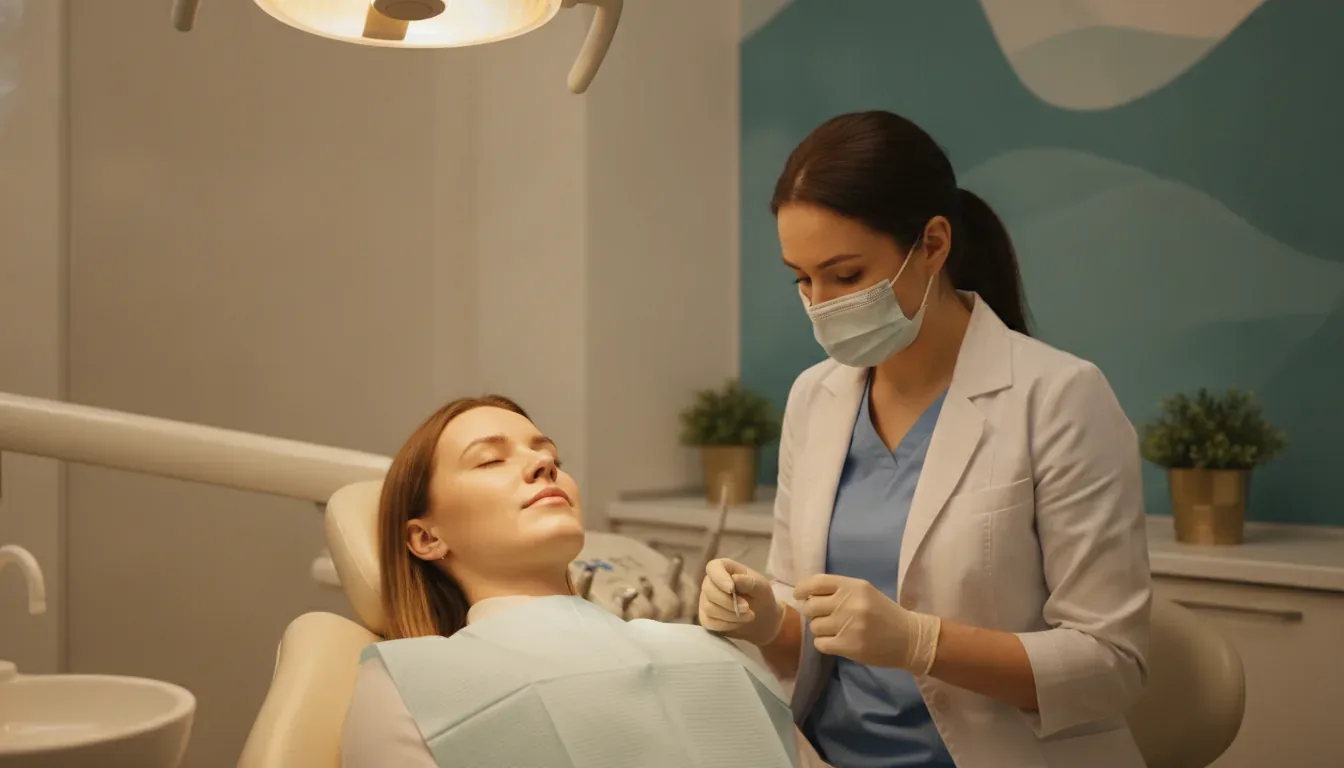
A routine cleaning follows a set order of gentle steps, and it usually takes about 30 to 60 minutes and is not painful for most people. If you are not sure how long a cleaning takes or what each part is for, here is the whole visit, step by step.
- Health-history review: your dentist or hygienist checks any changes in your health and medications.
- Scaling: plaque and tartar are removed from your teeth with hand instruments and an ultrasonic tool.
- Polishing: a gritty paste smooths and cleans the tooth surface. This is the polish step that leaves teeth feeling fresh.
- Professional flossing: a thorough floss reaches between the teeth and clears anything left behind.
- Fluoride treatment: an optional step that helps protect the enamel.
- Periodontal measurements: small checks of the gums to see how healthy they are.
- Oral cancer screening: a quick look for anything that needs attention.
- Digital X-rays: taken periodically, not at every visit.
- Dental exam: the dentist reviews everything and answers your questions.
That is a standard preventive visit. Not every cleaning is the same, though, and the next section explains why some people are told they need a deep cleaning instead.
Regular cleaning or deep cleaning: what is the difference
A regular cleaning (prophylaxis) cleans healthy teeth and gums above and just below the gumline, and it is preventive. A deep cleaning (scaling and root planing) goes deeper below the gumline to treat active gum disease, so it is a treatment, not a routine visit.
Here is the plain difference. A regular cleaning keeps healthy gums healthy. A deep cleaning is done when gum disease has already started and plaque and tartar have built up under the gums, where a regular cleaning cannot reach. Because it works below the gumline, a deep cleaning is usually done with a local anesthetic to keep you comfortable, and it is sometimes split over two visits.
Which one you need is decided by your dentist, based on your gum health and gum measurements, not on a fixed schedule. If someone tells you that you need a deep cleaning, it means your gums need more care than a routine polish, and understanding why a cleaning is worth doing is the next thing worth knowing.
Why does a cleaning matter, and how often do I really need one
The American Dental Association recommends a professional cleaning and exam about every six months for most healthy adults. A cleaning matters because it removes the tartar that brushing at home cannot, which helps prevent cavities and gum disease and lets your dentist catch problems while they are still small.
How often you personally need one can change. People at higher risk are often seen about every three to four months. That includes anyone with a history of gum disease, diabetes, a current pregnancy, a smoking habit, or a weakened immune system, because these all make gum problems more likely. For most other healthy adults, every six months is the baseline.
None of this is about scaring you into more visits. It is about keeping small things small. And the honest reason many people skip cleanings for years is not the schedule at all; it is the worry that it will hurt.
Does a cleaning hurt, and what is normal afterward
A routine cleaning does not hurt for most people, and it is not painful the way many fear; you may feel some pressure or mild sensitivity, especially if it has been a while. That is the honest answer to the question most people are too polite to ask out loud.
A deep cleaning is different because it works below the gumline, so it is done with a local anesthetic and you should not feel pain during it. Afterward, it is normal for your gums to feel a little sore or to bleed slightly for a few days as they heal. Mild sensitivity to hot or cold for a short time is also normal.
If dental anxiety is what has kept you away, comfort is part of the plan from the start. Dentique offers nitrous oxide, also called laughing gas, and oral conscious sedation for anxious or sensitive patients. You stay awake and in control, and the edge comes off. For some people, though, the reason they have avoided the dentist is bigger than pain, and that is worth talking about too.
What if it has been years, or the dentist makes me anxious
A first cleaning after a long gap, at Dentique Dental Care, is judgment-free and unhurried, and you can ask for sedation if you are nervous. Nobody counts the years for you or makes you feel bad about them.
If it has been years, or if the dentist has always made you anxious, you are exactly the person this practice is built for. Care here is gentle and paced to you, with no-pressure treatment planning, which means no one pushes a long list of work on your first visit. When you are ready, nitrous oxide or oral conscious sedation is there to make the visit easier. Dentique has earned over 400 five-star reviews and a 4.9 rating from patients, many of whom arrived nervous.
Dr. Xhelo Shuaipaj DDS FDOCS FICOI has cared for patients for more than 30 years, across two offices in Downers Grove and Lemont, Illinois. That is close to home, with no judgment, whenever you decide it is time. Here are the questions people ask most before they book.
Frequently asked questions
How painful is a tooth cleaning?
A tooth cleaning is not painful for most people; you may feel some pressure or mild sensitivity, nothing more. If you are anxious, Dentique Dental Care offers nitrous oxide or oral conscious sedation to keep you comfortable.
Is a dental cleaning really necessary?
A dental cleaning is necessary for most people. The American Dental Association recommends one about every six months, because it removes the tartar that brushing cannot and helps prevent gum disease.
What are the disadvantages of dental cleaning?
The disadvantages of a dental cleaning are minor and temporary for most people: a little sensitivity, or, after a deep cleaning, gums that feel sore for a few days. A routine cleaning (a prophylaxis) has no lasting downside for healthy teeth and gums.
What should you not do after teeth cleaning?
After a routine cleaning you can eat and drink normally right away. After a deep cleaning, follow your dentist’s advice and expect your gums to be a little sore for a few days, so it helps to stick to softer foods for a short time.
Which is more painful, a root canal or a deep cleaning?
A root canal and a deep cleaning are both done with numbing, so you should not feel pain during either. A deep cleaning is usually the less involved of the two, and at Dentique sedation is available for either if you are anxious.
Does a dental cleaning whiten teeth?
A dental cleaning removes surface stains and tartar, so your teeth can look brighter afterward, but a cleaning is not a whitening treatment.
These answers are only as trustworthy as the person behind them, so here is who wrote and reviewed this guide.
Who wrote and reviewed this guide
Dr. Xhelo Shuaipaj DDS FDOCS FICOI is the dentist at Dentique Dental Care, with more than 30 years of experience, practicing in Downers Grove and Lemont, Illinois. This guide was written and reviewed under that clinical experience.
FDOCS means Fellow, DOCS Education, a credential in sedation dentistry. FICOI means Fellow, International Congress of Oral Implantologists. Together they reflect training in the calm, comfortable care this guide describes.
Want a cleaning that starts with an explanation, not a lecture
A Dentique dentist will walk you through your Dental Cleanings in plain language, at your pace, with sedation available if you are nervous. A visit here is judgment-free and anxiety-friendly, and your price is confirmed in writing at the consultation, so there are no surprises.
When you are ready, book a gentle checkup at Dentique Dental Care. Call the Downers Grove office at (630) 454-9299 or the Lemont office at (630) 685-0017, and the team will find a time that works and call you back to confirm.