
What a Dental Crown Really Costs in Downers Grove and Lemont
A dental crown is the kind of tooth-saving cost people quietly dread, and if you have been putting it off, you deserve a real number and no lecture for waiting. Maybe a molar cracked, or an old filling gave out, or a dentist mentioned a crown months ago and you have been worrying about the price ever since. That worry is common, and it is not something to feel ashamed about.
At Dentique Dental Care in Downers Grove and Lemont, the care comes with no judgment, built for people who have avoided the dentist for years. This guide gives you a straight answer: what a crown costs, what changes that cost, whether you can afford it, and how insurance and financing fit in. No hype and no pressure, just the honest range and the reasons behind it.
Table of Contents
How much does a dental crown cost near Downers Grove and Lemont
TL-DR A dental crown typically costs about $800 to $2,500 per tooth before insurance, with most patients paying around $1,200 to $1,800. That is a national and regional typical range, not a Dentique price. Your exact cost depends on the tooth, the material, and your plan, and Dentique Dental Care confirms your price in writing at the consultation, at either the Downers Grove or Lemont office, before any work begins.
If you want the short version: how much a crown costs comes down to a typical range, and the number for your tooth is set at the visit, not on a web page. The rest of this guide explains why the range is that wide and what moves your price within it.
What does a dental crown actually cost, and why is the range so wide
A dental crown commonly costs about $800 to $2,500 per tooth before insurance across the country, and Illinois-area guides tend to land closer to $800 to $1,700 per crown without insurance. The exact figure depends on the factors covered further down this page, which is why two honest quotes can look so different.
The wide range is real, and it helps to see where the numbers come from. National guides put the average porcelain crown around $1,399, with a broad span from about $915 to $3,254 (CareCredit). Delta Dental reports an out-of-network average of $1,100 to $2,000 for a permanent crown. A nearby Illinois practice in Oak Park lists $800 to $1,700 per crown in its area. Aspen Dental quotes an average near $1,269. None of those is a Dentique price. They are typical ranges from named national and regional sources, and they overlap enough to give you a fair expectation: most crowns fall somewhere between roughly $800 and $2,500, and the specific number for your tooth is set at the exam in Downers Grove or Lemont.
That spread exists because a crown is not one flat product. What you are actually paying for is a short sequence of steps and materials, and the next section explains each part.
What is included in the price of a crown
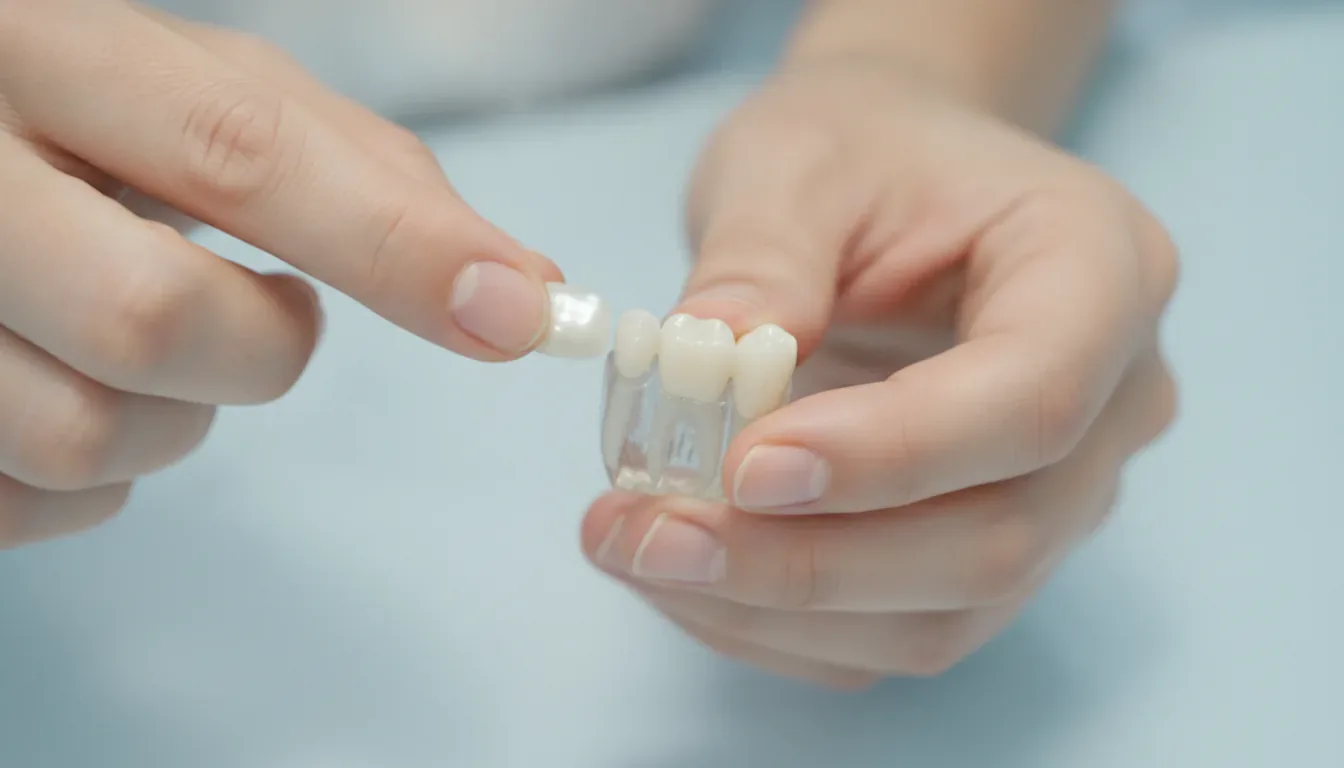
A crown fee usually bundles several steps into one price: the tooth preparation, an impression or digital scan, a temporary crown, the crown itself, and the final fitting. When you read a quote, that base fee is what covers the standard visit-to-visit work.
Here is what is typically included in the price:
- Preparing the tooth, which means shaping the damaged tooth so the crown fits over it.
- An impression or a digital scan that captures the tooth so the crown matches your bite.
- A temporary crown to protect the tooth while a permanent crown is made, on the two-visit path.
- The crown itself, made in a dental lab or milled in the office.
- The fitting, where the dentist places, adjusts, and cements the final crown.
Some teeth need extra work that is not part of the base crown fee. A core buildup, which rebuilds enough tooth to hold a crown, typically runs about $250 to $400 as a labelled add-on range, not a Dentique price. A post and core is needed when little natural tooth remains after deep decay or a root canal. Because add-ons like these change the total, a written estimate is the only way to see your full number, and the next section covers the factors that move the price up or down.
What changes the price of a crown
The price of a crown changes mainly with five things: the material, the tooth’s location in your mouth, whether extra work like a buildup or root canal is needed, whether the crown is made same-day or in a lab, and your insurance. Each one moves the number up or down, and most of them are choices you and the dentist make together.
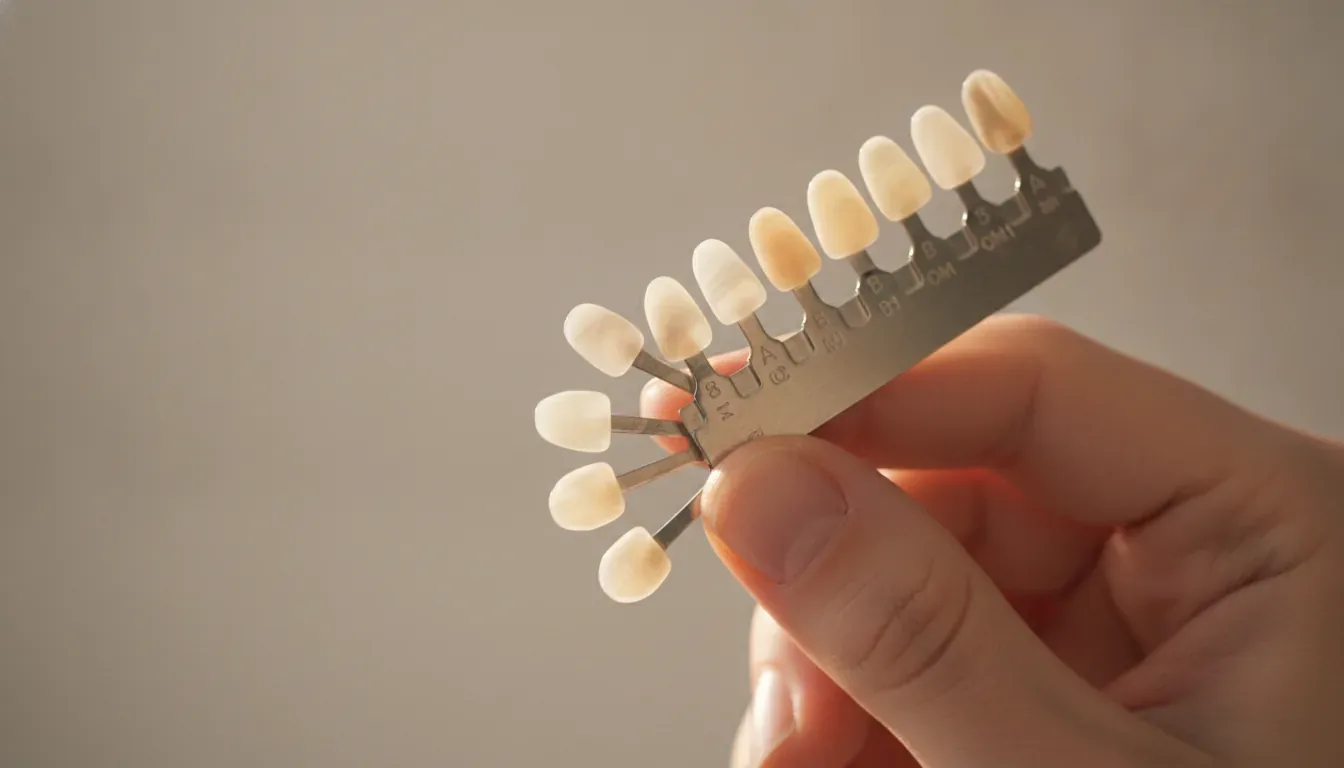
Material is the biggest single factor. Dentique offers all-ceramic, porcelain, zirconia, PFM (porcelain-fused-to-metal), gold, and E-max. A PFM crown often sits at the lower end, roughly $800 to $1,800, while an all-porcelain or zirconia crown tends toward the higher end and can exceed $2,500 for a single tooth. Those are typical ranges from named sources, not Dentique prices.
Location matters too. A molar at the back of the mouth takes more force and can be harder to reach than a front tooth, and back teeth that need a buildup, a post, or a root canal first will cost more overall. So the final price depends on the exact tooth and the exact mix of work it needs, which is why the same crown can be quoted differently for two people. The question most people ask next is whether choosing a same-day crown adds to that price.
Does a same-day crown cost more than a lab crown
A same-day crown, made and fitted in one visit using in-office milling and often called CEREC, generally costs about the same as a traditional lab crown. The main difference is one visit instead of two, not a higher price to fear.
Here is how the two paths compare. A same-day crown is designed and milled right in the office, so the tooth is prepared and the finished crown is placed in a single visit. A traditional crown takes two visits: the tooth is prepared and a temporary crown goes on while a dental lab makes the permanent one, usually over about two weeks. Both a same-day crown and a lab crown fall within the same typical price range, so choosing one-visit convenience does not automatically cost more.
Dentique Dental Care offers both the same-day and traditional paths. Same-day availability can depend on the office and the tooth, so it is worth confirming when you book rather than assuming it for a specific visit. Once you know which path fits, the next question is usually how insurance helps with the cost.
Does dental insurance cover a crown, and how much
A dental crown is usually treated as a major restorative service by dental insurance, which means many PPO plans cover a share of it, often around half after your deductible, up to your annual maximum, and sometimes only after a waiting period. How much you get back with insurance depends on your specific plan.
A few things shape what a crown costs you after coverage. Your deductible is the amount you pay before the plan starts contributing. The coinsurance is the plan’s share, often about 50 percent for a major service, though this varies by plan. Your annual maximum caps what the plan pays in a year, and a large crown can bump against it. Some plans also apply a waiting period before they cover major work.
Dentique Dental Care works with most major PPO plans, including Delta Dental, MetLife, Cigna, Aetna, Blue Cross Blue Shield of Illinois, UnitedHealthcare, Guardian, and Humana. The practice works with these plans and files a pre-treatment estimate so you see your specific coverage in writing before treatment. If your plan covers little, or you have no coverage at all, there are still ways to make a crown manageable, and that is the next section.
What if you cannot afford a crown right now
If a crown is not in your budget this month, you have real options, including monthly financing through CareCredit, Cherry, or Sunbit, and a written estimate first so there are no surprises. Cost does not have to be the reason a tooth keeps getting worse.
A few paths can make a crown manageable. Financing lets you spread the cost into monthly payments through CareCredit, Cherry, or Sunbit, which are the partners Dentique Dental Care works with. A written estimate, given before any treatment, shows you the full number up front so you can plan. And if you have been away from the dentist for a while, the New Patient Special is a low-cost first step: $250 for a checkup, X-rays, and a cleaning, which cannot be combined with insurance. It is a calm way to learn exactly what your tooth needs and what it will cost before you commit to anything.
Financing terms vary, so ask about current options when you visit rather than assuming a specific rate. Knowing you can afford the work in steps changes the question from whether you can pay to whether a crown is even the right choice, which is where honest alternatives come in.
Is a crown worth it, or is there a cheaper alternative
A crown protects and rebuilds a tooth that is too damaged for a filling, so whether it is worth it depends on how much healthy tooth is left. When enough natural tooth structure remains, a filling or an onlay can be the cheaper and correct choice. When the tooth is cracked or heavily broken down, a crown is usually the right protection, and skipping it can lead to losing the tooth.
It helps to weigh a crown against the alternatives. A filling or an onlay costs less and makes sense when there is enough solid tooth to support it. A crown covers and strengthens a tooth that a filling cannot, and it commonly lasts 10 to 15 years or more with good care. Choosing to pull the tooth instead of a crown is rarely cheaper in the long run: a tooth extraction leaves a gap that usually needs a dental bridge or a dental implant to restore, and a single-tooth implant is a larger investment (for context, Dentique offers a single-tooth implant special at $2,995). A root canal followed by a crown is often what saves a badly infected tooth rather than removing it.
The goal is to protect the tooth in the way that fits its condition and your budget, not to spend more than the tooth needs. The most common remaining questions are answered next.
Frequently asked questions
What is the average cost to put a crown on a tooth?
A dental crown averages about $1,200 to $1,400 to put on a tooth nationally, within a broader range of roughly $800 to $2,500. Where your crown lands in that range depends on the material and the tooth.
Is $2000 a lot for a dental crown?
A $2,000 crown is within the normal range, not an outlier, especially for an all-ceramic molar crown on a back tooth or when extra work like a buildup is needed. It sits toward the higher end but is common for more involved cases.
How much does a crown cost at a dental school?
A crown at a dental school often costs less than at a private practice, because supervised students do the work. The trade-off is longer visits and less scheduling flexibility.
Can a tooth rot under a crown?
A tooth can rot under a crown, usually at the crown’s edge where plaque collects, if brushing and flossing slip. Regular brushing, flossing, and checkups are how you keep tooth decay from starting there.
When is it too late to put a crown on a tooth?
It is too late to put a crown on a tooth when too little healthy tooth or supporting bone remains to hold one. A dentist confirms whether a crown is still possible during an exam.
These answers are general information, and the dentist who reviewed this page is introduced next.
Reviewed by the dentist who would treat you
Dr. Xhelo Shuaipaj is the sole dentist at Dentique Dental Care, with more than 30 years in practice and the credentials DDS, FDOCS, and FICOI, and he reviews the clinical information on this page. He rotates between the Downers Grove and Lemont offices, so the dentist who reviewed this guide is the same dentist who would treat you.
The FDOCS credential means Fellow of DOCS Education, which focuses on sedation dentistry, and FICOI means Fellow of the International Congress of Oral Implantologists. This page was last reviewed on 24 August 2026.
Byline: Dr. Xhelo Shuaipaj DDS FDOCS FICOI
Cost is only worth working through if the next step feels calm, so here is a low-pressure way to get your real number.
Want a real number for your tooth
The only way to know your exact price is a quick look and a written estimate, so book a gentle checkup at Dentique Dental Care in Downers Grove or Lemont, with no judgment and sedation available if you feel anxious.
You will be greeted first, not rushed. If dental visits make you nervous, nitrous oxide and oral conscious sedation are available to keep you comfortable. Bring the tooth that is worrying you, and you will leave with a written estimate you can actually plan around.
To book a gentle checkup, call the Downers Grove office at (630) 454-9299 or the Lemont office at (630) 685-0017.