
Dental Cleaning Options: Which One You Actually Need
A dental cleaning is not one single thing. There are a few kinds, and which one you need depends on the health of your gums, not on how your teeth look. If a dentist has just told you that you need a deep cleaning, and you are not sure whether that is a real need or a sales pitch, you are in the right place.
The goal of this guide is simple. You leave knowing exactly which cleaning you need and why, without being pushed into anything more than your gums call for. We compare a regular cleaning, a deep cleaning, and one option most people have never heard of, so you can see which fits your case. At Dentique Dental Care, treatment planning is judgment-free and runs on no pressure, so the recommendation you get rests on what your gum health shows, not on what is easiest to sell. The short answer comes first.
The short answer: which cleaning do you need
A regular cleaning (prophylaxis) is right if your gums are healthy. A deep cleaning (scaling and root planing) is for active gum disease below the gumline. Periodontal maintenance keeps things stable afterward. You should never be moved to a bigger cleaning than your gum health calls for; healthy gums need only a regular cleaning.
That is the whole decision in a few lines. The rest of this guide sets the three options side by side so you can see the differences at a glance, starting with a comparison table.
Table of Contents
What are your dental cleaning options
Dentists offer a few kinds of cleaning, and each does a different job: a regular cleaning for healthy gums, a deep cleaning for active gum disease, and periodontal maintenance to hold the line afterward. The simplest way to tell them apart is by your gum health: healthy gums need a regular cleaning above and just below the gumline, gum disease needs a deep cleaning below the gumline, and after treatment you move to periodontal maintenance.
| Dimension | Regular cleaning (prophylaxis) | Deep cleaning (scaling and root planing) | Periodontal maintenance |
|---|---|---|---|
| Purpose | Prevents cavities and gum disease | Treats active gum disease and stops bone loss | Keeps gum disease stable after a deep cleaning |
| Area cleaned | Above and just below the gumline | Below the gumline, on the tooth roots | Above and below the gumline |
| Who it is for | Healthy gums | Active gum disease, deeper gum pockets | People treated for gum disease |
| Time | About 30 to 60 minutes, one visit | Often one to two longer visits | A routine visit length |
| Comfort | Usually painless, no numbing | Gums numbed with a local anesthetic; sedation available | Comfortable; sedation available |
| How often | Every six months | A course of treatment, then maintenance | Usually every three to four months |
| Cost | National typical range about $75 to $200 for a cleaning and exam (national, being verified). Dentique offers a $250 New Patient Special (checkup, X-rays, and cleaning; cannot be combined with insurance). | National typical range about $150 to $350 per quadrant (national, being verified). | Varies. We confirm your exact price in writing at the consultation. |
One more term you might hear is a full mouth debridement. That is a one-time clearing of heavy buildup so the dentist can see and assess the teeth, sometimes done before a regular cleaning. Each option is explained below, starting with the regular cleaning.
What is a regular cleaning (prophylaxis)
A regular cleaning, also called a prophylaxis, removes plaque and tartar from above and just below the gumline to keep healthy gums healthy. It is preventive care, the routine visit most people have every six months.
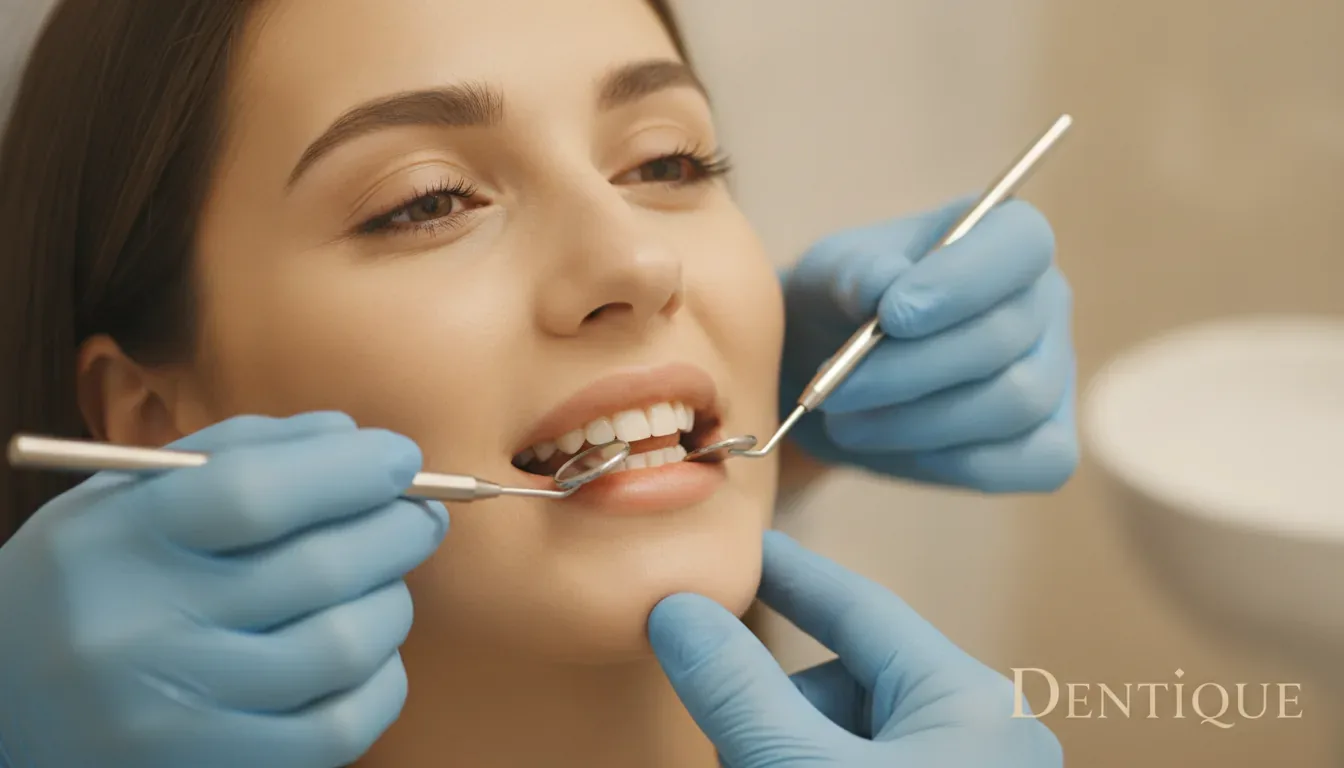
A regular cleaning visit typically includes a health-history review, scaling to lift plaque and tartar (done with manual and ultrasonic tools), polishing, professional flossing, optional fluoride, periodontal probing to measure gum health, an oral cancer screening, digital X-rays when they are due, and a dental exam. The American Dental Association describes a routine cleaning and exam as standard preventive care. For most people a regular cleaning is painless and needs no numbing. If your gums are healthy, this is the cleaning you need, and it is a very different thing from the deep cleaning we look at next.
What is a deep cleaning (scaling and root planing)
A deep cleaning, known as scaling and root planing, is a separate treatment for active gum disease that cleans below the gumline and smooths the tooth roots so the gums can heal. It is not a deeper version of a regular cleaning done for the same reasons; it treats a diagnosed problem.
A deep cleaning is needed when there is active gum disease, also called periodontitis. Signs a dentist looks for include deeper gum pockets, gums that bleed, and bone loss shown on an exam and X-rays. The American Academy of Periodontology and the American Dental Association describe scaling and root planing as the standard first treatment for gum disease. During the procedure the gums are usually numbed with a local anesthetic, and for anxious patients, sedation is available. Once the disease is under control, the care plan usually changes, which brings us to an option many people have never heard of.
What is periodontal maintenance
Periodontal maintenance is a cleaning schedule that follows a deep cleaning, usually every three to four months, to keep gum disease from coming back. It is the step most comparison guides leave out, and it matters, because once you have been treated for gum disease your gums need closer attention than a standard six-month visit gives.
Periodontal maintenance is an ongoing cleaning above and below the gumline that follows a deep cleaning, and its job is to keep treated gum disease stable. The American Academy of Periodontology recommends this kind of maintenance after periodontal treatment. Rather than returning to a regular cleaning every six months, most people who have had a deep cleaning come in more often, usually every three to four months, so any early return of deeper gum pockets is caught and managed. Knowing the three options is one thing; the next question is how to tell which one applies to your own mouth.
How do you know which cleaning is right for you
The right cleaning is decided by your gum health, not by how your teeth look. A dentist checks your gum pockets, any bleeding, and your X-rays to tell whether a regular cleaning is enough or a deep cleaning is needed. That is how to know which cleaning fits your case, and it is something you can partly gauge yourself.
At a routine dental exam, periodontal probing measures the depth of your gum pockets. Shallow pockets, firm gums, and no bleeding point to healthy gums and a regular cleaning. Deeper gum pockets, bleeding gums, gum recession, and bone loss seen on X-rays point to gum disease, which calls for a deep cleaning and then periodontal maintenance. The American Academy of Periodontology and the American Dental Association base the choice of cleaning on this periodontal status, not on appearance. If a deep cleaning is recommended for you, it is fair to want to know it is genuinely needed and not just a way to sell you more, which is the next thing to sort out.
Why do dentists recommend a deep cleaning, and can you say no
A deep cleaning is recommended when gum disease is measured, not to sell you something. A good dentist shows you the pocket readings and the X-rays behind the recommendation, and you can always ask questions or get a second opinion. So yes, you can say no, and you can ask for the evidence first.
The honest answer to the fear behind this question is this. A deep cleaning recommendation should rest on measured signs of gum disease shown to you, the depths of your gum pockets, the bleeding, and the X-rays, and not on appearance or on a sales target. If you are unsure, you can ask why it is recommended, look at the measurements yourself, and seek a second opinion before you agree to anything. A regular cleaning will not treat gum disease, so turning down a genuinely needed deep cleaning leaves the disease active, which is worth weighing. Dentique Dental Care uses no-pressure treatment planning, and patients say, without being asked, that they were not upsold. That is the standard to expect anywhere: a recommendation you can see the reasons for, and the room to say no. None of that settles the other worry people carry into the chair, whether a cleaning hurts, so that is next.
Does a cleaning hurt, and can you be sedated
A regular cleaning is usually painless for most people. A deep cleaning is done with the gums numbed, and for anxious or sensitive patients, Dentique offers nitrous oxide or oral conscious sedation. So a cleaning does not have to hurt, and it does not have to be something you dread.
For a routine regular cleaning, most people feel no pain and need no numbing at all. For a deep cleaning, the gums are numbed with a local anesthetic, so you feel pressure rather than pain. If you have dental anxiety, or sensitive teeth that make even a routine visit hard, you can be sedated: Dentique offers nitrous oxide, also called laughing gas, and oral conscious sedation, whichever suits you. Both the nitrous oxide and the oral sedation options keep you comfortable, and they wear off at different rates. Patients describe staying relaxed, some sleeping through longer procedures. Dr. Xhelo Shuaipaj DDS FDOCS FICOI carries the FDOCS credential, a Fellowship with DOCS Education in sedation, so comfort is a routine part of care here, not an afterthought. With comfort covered, the last practical question is what a cleaning costs and whether insurance helps.
What do these cleanings cost, and will insurance help
A new patient cleaning at Dentique comes through the New Patient Special: $250 for a checkup, X-rays, and a cleaning, which cannot be combined with insurance. National typical ranges give you context, and your exact price is confirmed in writing at the consultation.
Here is the honest picture on price, which most guides skip. A regular cleaning and exam runs about $75 to $200 nationally, a national typical range rather than a Dentique price. A deep cleaning runs about $150 to $350 per quadrant nationally, again a national range being verified, not a local quote. Periodontal maintenance varies. For your own cost at the Downers Grove or Lemont office, and we confirm your exact price in writing at the consultation before anything is booked.
On insurance, Dentique works with most major PPO plans, including Delta Dental, MetLife, Cigna, Aetna, Blue Cross Blue Shield of Illinois, UnitedHealthcare, Guardian, and Humana. Many PPO plans cover a routine cleaning at or near full cost, while coverage for a deep cleaning or periodontal maintenance often differs and can be subject to your annual maximum, so we verify your specific benefits for you. If you are paying without insurance, or spreading the cost, financing is available through CareCredit, Cherry, and Sunbit. With price and insurance covered, here are the quick questions readers still ask.
Frequently Asked Questions
Is deep cleaning for teeth worth it?
A deep cleaning is worth it when there is active gum disease. It stops the infection and protects the bone that holds your teeth in place.
Can you refuse a deep cleaning and get a regular cleaning?
You can refuse a deep cleaning and ask for a regular cleaning, and you can seek a second opinion. Keep in mind that a regular cleaning does not treat gum disease, so declining a needed deep cleaning leaves the disease active. We explain the reasons and never pressure you.
What are the disadvantages of deep cleaning teeth?
The main disadvantages of a deep cleaning are temporary soreness and sensitivity for a few days afterward. It is usually done with the gums numbed, which keeps the treatment itself comfortable.
How painful is a tooth deep cleaning?
A deep cleaning does not usually hurt the way people expect. The gums are numbed with a local anesthetic during treatment, so most people feel pressure rather than pain, and sedation is available if you are anxious.
Do teeth go back to normal after deep cleaning?
After a deep cleaning, gums usually firm up and bleed less over the following weeks as they heal. Ongoing periodontal maintenance keeps them stable.
Can I drive myself home after a deep cleaning?
You can drive home yourself after a deep cleaning done with local anesthetic only. If you choose oral conscious sedation, arrange a ride, because you should not drive afterward.
What not to do after a deep teeth cleaning?
After a deep teeth cleaning, avoid very hot, hard, or crunchy foods for a short while, and follow the aftercare instructions your dentist gives you.
Every answer here comes from a named, credentialed dentist, which is who stands behind this guide.
About your dentist
Dr. Xhelo Shuaipaj, DDS, FDOCS, FICOI is a general and sedation dentist with 30+ years of experience who cares for patients at the Downers Grove and Lemont offices. This guide was written and medically reviewed by Dr. Xhelo Shuaipaj DDS FDOCS FICOI.
The credentials behind the byline: DDS, the dental degree; FDOCS, a Fellowship with DOCS Education in sedation; and FICOI, a Fellowship of the International Congress of Oral Implantologists. One dentist, 30+ years of experience, seeing patients in both Downers Grove and Lemont. If a deep cleaning has been on your mind, there is one simple next step.
Not sure which cleaning you need
A Dentique dentist can check your gum health and tell you plainly which cleaning you need, so you do not have to guess. Book a gentle checkup, or talk to a Dentique dentist by calling the office nearest you.
On your first visit at Dentique Dental Care, you are greeted, not pressured, and we confirm your price in writing before anything is booked. If nerves are the issue, nitrous oxide or oral conscious sedation is available. Whichever you prefer, there is no pressure, and the New Patient Special covers a checkup, X-rays, and a cleaning for $250.
Book a gentle checkup:
- Downers Grove: (630) 454-9299
- Lemont: (630) 685-0017