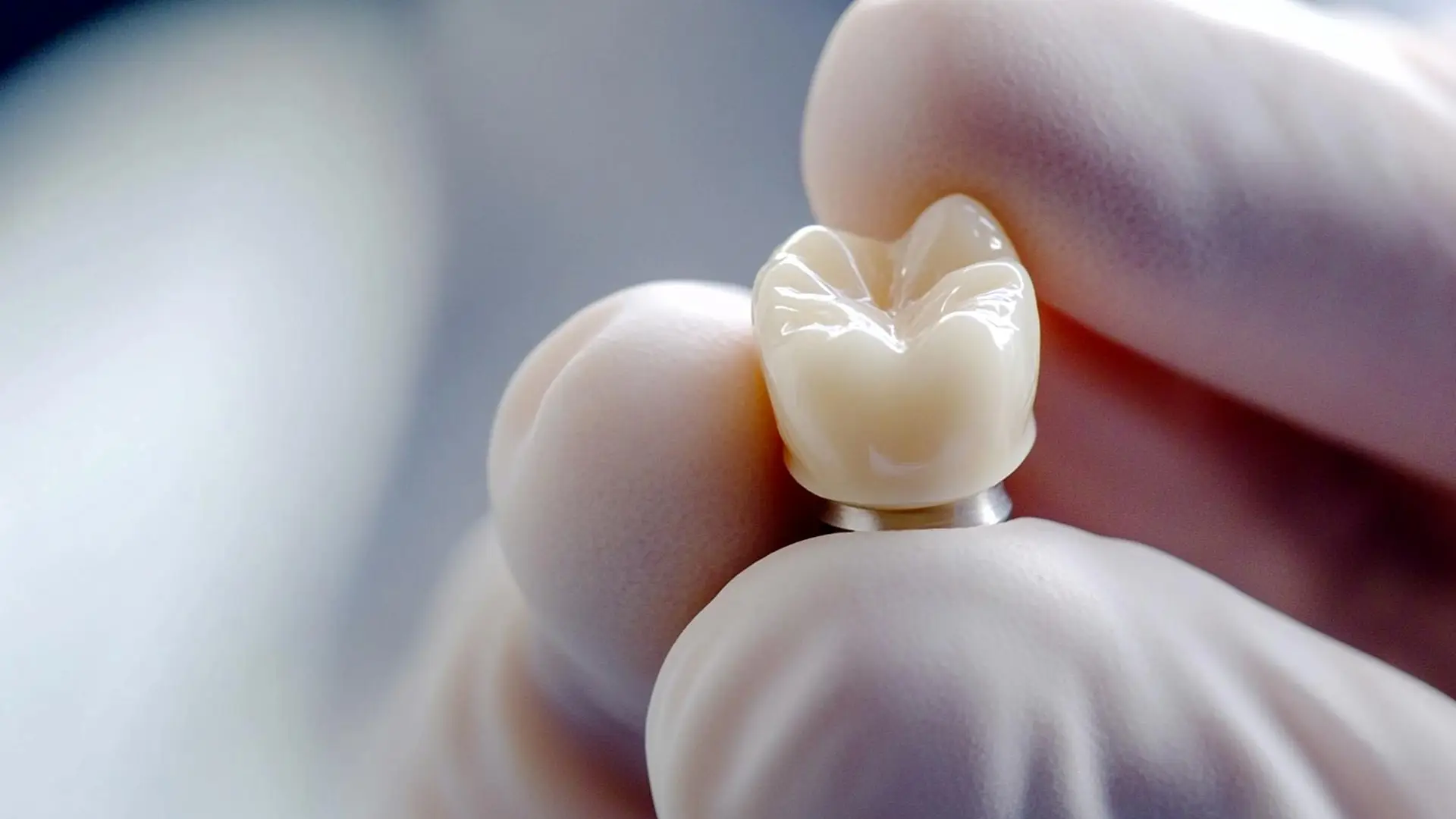
A dental crown is a tooth-shaped cap that covers a weak, broken, or decayed tooth to restore its shape, strength, and bite. Crowns last roughly five to fifteen years with good care, and material choice, the tooth’s location, and your habits drive both how long it lasts and what it costs. Being told you need a crown usually comes with a second question you weren’t ready for: which kind, and how much will it cost? If you want the clinical basics first, here is what a dental crown is from the Cleveland Clinic. This guide breaks down the materials, realistic national costs, the traditional versus same-day process, and how long crowns last, with help from our team in restorative dentistry at Dentique Dental Care.
What Is a Dental Crown, and When Do You Actually Need One?
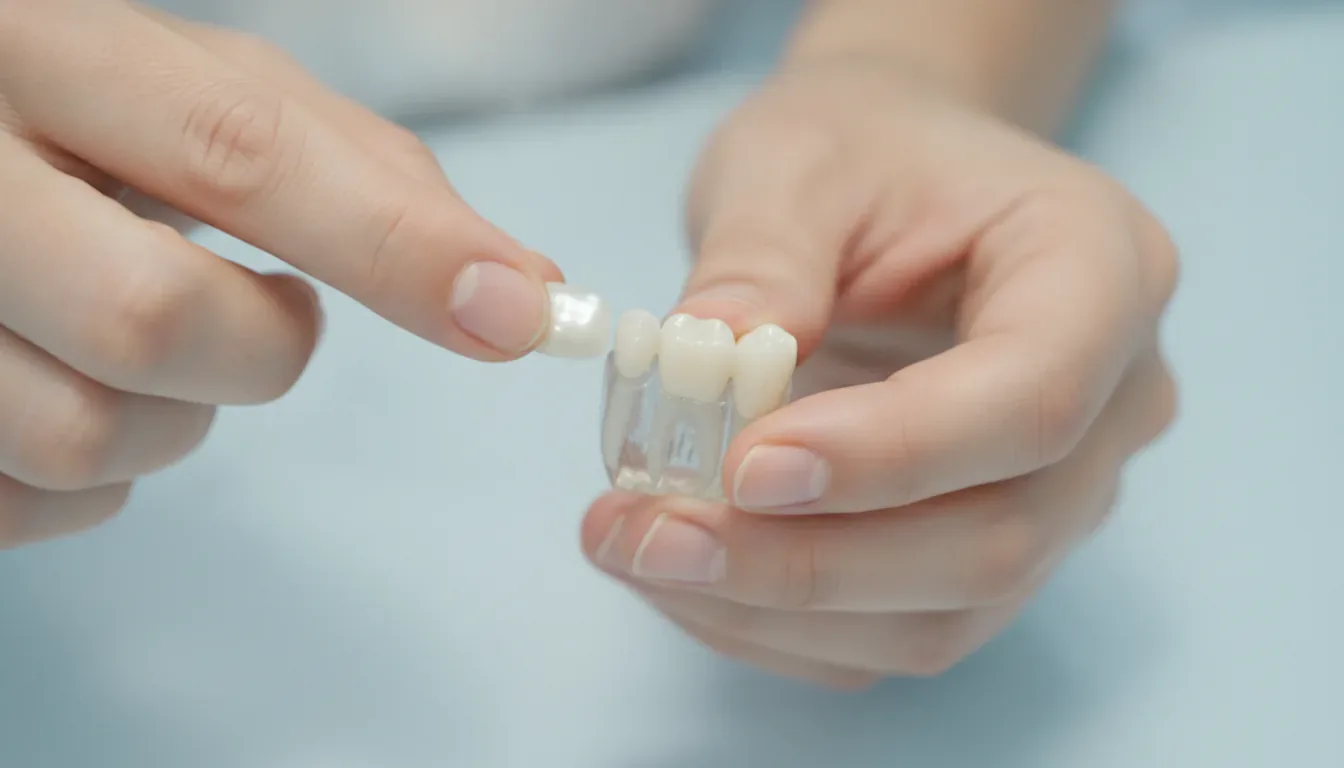
A dental crown is a cap that fits over the entire visible part of a tooth, down to the gumline. Unlike a filling, which patches one part of a tooth, a crown wraps the whole thing. That full coverage is what makes a crown the go-to fix when a tooth is too damaged or too weak to hold a filling but is still worth saving.
Your dentist will usually recommend a crown in a handful of situations:
- A tooth with a large filling that no longer has enough healthy structure left to stay strong
- A cracked or fractured tooth that needs to be held together
- A tooth with decay too extensive for a standard filling
- A worn-down or weakened tooth, often from grinding
- A tooth that has had a root canal and become brittle
- A dental implant that needs a crown placed on top to act as the new tooth
The common thread is protection: a crown shields what is left of the tooth and lets you chew, bite, and smile normally again. A tooth that has had a root canal often needs a crown afterward because it becomes more fragile, and we keep that point brief here. What matters most for your decision is the next part: which material your crown is made from, because that choice shapes how it looks, how long it lasts, and what you pay.
Crown Materials Compared: Porcelain, Zirconia, PFM, Gold, and E-max
Here is the part that trips most people up. As more than one patient has put it, deciding whether you want porcelain, zirconia, or gold can feel like a trick question, because no one explained the trade-offs. The plain version: the right material depends mostly on which tooth it is and how hard that tooth has to work.
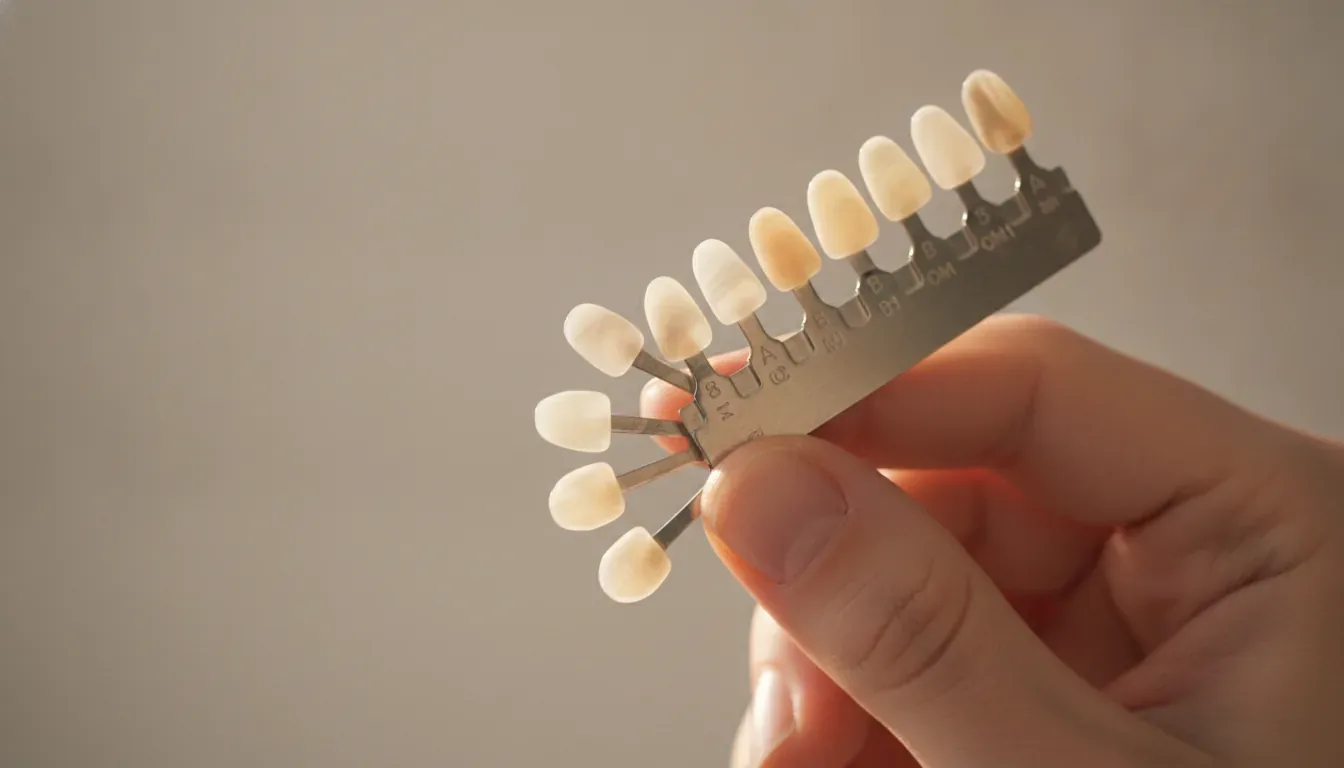
All-ceramic and porcelain crowns look the most natural and are a strong pick for front teeth, where appearance matters most. Zirconia is extremely strong, resists chipping, and has become the default choice for molars that do heavy chewing, while still looking good enough for many front-tooth cases. Porcelain-fused-to-metal, or PFM, gives you a tooth-colored surface over a metal core at a lower cost, though a thin metal line can sometimes show at the gum over time.
Gold crowns are the most durable option of all and are gentle on the opposing teeth, which makes them a quiet favorite for back molars where no one sees them. E-max is a premium lithium-disilicate ceramic prized for the translucency that makes front-tooth crowns look lifelike. Veneers come up here too, but those are a cosmetic-only option for reshaping the front of a tooth, not a full cap, so we keep them separate. If you are weighing a cosmetic fix instead of a full restoration, our guide
If you are weighing a cosmetic fix rather than a full restoration, our guide comparing crowns, veneers, and bonding walks through that decision in detail, so this page can stay focused on crowns themselves.
| Material | Look | Strength | Typically lasts | Best for |
|---|---|---|---|---|
| All-ceramic / porcelain | Most natural | Good | 5–15 years | Front teeth |
| Zirconia | Very good | Excellent | 10–20 years | Molars and front teeth |
| PFM (porcelain-fused-to-metal) | Tooth-colored, metal line possible | Strong | 5–15 years | Budget-conscious, most teeth |
| Gold | Metallic | Most durable | 15+ years | Back molars |
| E-max (lithium disilicate) | Lifelike translucency | Strong | 5–15 years | Premium front teeth |
Getting a Crown: Traditional Two-Visit vs Same-Day (CEREC)
Once you and your dentist pick a material, there are two ways to actually get the crown made and placed. A very common worry we hear is some version of: how long does the first appointment take, and do I really have to wear a temporary for two weeks? The honest answer is that it depends on which path your tooth and your dentist choose.
The traditional two-visit path
On the first visit, your dentist numbs the tooth, removes decay, and shapes it so the crown will fit. A scan or impression is taken, a temporary crown is placed to protect the tooth, and that scan goes to a dental lab. The first appointment usually runs about an hour to ninety minutes. The lab then makes your permanent crown, which takes roughly two weeks. At the second visit, the temporary comes off and the permanent crown is checked, adjusted, and cemented into place.
Same-day with CEREC
CEREC stands for Chairside Economical Restoration of Esthetic Ceramics, which is a long name for a simple idea: the whole crown is designed and made in the office while you wait. Your dentist takes a digital scan, software designs the crown, and an in-office milling unit carves it from a ceramic or zirconia block. It is fitted and cemented the same day, so there is no temporary crown and no two-week gap. The dental crown procedure with CEREC typically wraps up in a single visit of a couple of hours. Same-day crowns generally cost about the same as lab-made crowns, and your insurance and financing options usually apply the same way. Not every case is suited to same-day, so your dentist will tell you which path fits your tooth.
How Much Does a Crown Cost? National Ranges and Why the Bill Can Surprise You
Crown pricing is wide because so much depends on the material, the tooth, and your location. Nationally, a single dental crown typically runs about $800 to $2,500 per tooth, and most people land somewhere between $1,200 and $1,800. Gold and premium ceramics sit at the higher end, while PFM tends to be more affordable. Same-day CEREC crowns generally fall in the same range as lab crowns, roughly $1,000 to $2,300.
Here is the part that catches people off guard, and we hear it often: the bill came back higher than the quote. That usually is not a mistake. The quoted crown price often covers only the crown itself, while related work needed to make the crown succeed is billed separately. Two common add-ons are a core buildup, which rebuilds enough tooth structure to anchor the crown when too little remains, and crown lengthening, a minor gum procedure that exposes more tooth so the crown can seat properly.
| Item | Typical national range | Notes |
|---|---|---|
| Single crown (any material) | $800–$2,500 / tooth | Most patients pay $1,200–$1,800 |
| Same-day CEREC crown | $1,000–$2,300 | Comparable to lab-made crowns |
| Core buildup (add-on) | $250–$400 | When little natural tooth remains |
| Crown lengthening (add-on) | $600–$1,000 | Minor gum procedure, billed separately |
These are national figures, not Dentique prices, and your actual cost depends on your tooth, the material, and your insurance. We do not post a single crown price because an honest number requires a quick look at your tooth. The clearest next step is to review your insurance and financing options and ask for a written estimate at your consultation, so there are no surprises after the work is done.
How Long Crowns Last, and How to Make Yours Last Longer
With good care, crowns last roughly five to fifteen years, and many go longer. Material plays a role: studies put crown survival around 94 percent at five years and about 90 percent at ten years. Gold is the long-distance champion, often staying solid 15 years or more, while zirconia frequently reaches 10 to 20 years and porcelain and PFM crowns typically fall in the 5-to-15-year window. How long do dental crowns last in real life comes down as much to your habits as to the material itself.
The crown itself cannot get a cavity, but the natural tooth underneath it can, so caring for the crown means caring for the gumline around it.
Do:
- Brush twice a day and floss carefully around the crown and gumline
- Wear a night guard if you grind or clench your teeth
- Keep regular checkups so a small problem is caught early
- Call promptly if a crown feels loose, so it can be recemented before it is lost
Don’t:
- Chew ice, hard candy, or pens, which can crack even a strong crown
- Use your teeth to open packaging
- Ignore sensitivity or a change in your bite around the crowned tooth
Frequently Asked Questions About Dental Crowns
How much does a dental crown cost?
Nationally, a single dental crown typically costs about $800 to $2,500 per tooth, and most patients pay between $1,200 and $1,800. The price depends on the material, the tooth, and your insurance, and related work such as a core buildup can be billed separately. We do not post a single crown price because an accurate figure requires looking at your tooth first. Call either Dentique location for a personalized estimate.
Are same-day (CEREC) crowns as good as lab crowns?
Yes, for the right cases, same-day CEREC crowns are durable, well-fitting, and made from the same ceramic and zirconia materials as lab crowns. The main difference is convenience: the crown is designed and milled in the office in one visit, so there is no temporary and no two-week wait. Some complex cases are still better suited to a lab-made crown, and your dentist will tell you which path fits your tooth.
How long does the first crown appointment take?
The first appointment for a traditional crown usually takes about an hour to ninety minutes. During that visit the tooth is numbed, shaped, and scanned, and a temporary crown is placed. A same-day CEREC crown is completed in a single longer visit of roughly a couple of hours, with no second appointment needed.
What is the best crown material?
There is no single best material, only the best one for a specific tooth. Zirconia is a strong all-rounder and a common choice for molars, all-ceramic and E-max look the most natural for front teeth, gold is the most durable for back teeth, and PFM is a budget-friendly tooth-colored option. The right choice balances appearance, strength, and cost for the tooth in question.
How long do dental crowns last?
Most dental crowns last roughly 5 to 15 years, and many last longer with good care. Gold crowns often last 15 years or more, zirconia frequently reaches 10 to 20 years, and porcelain and PFM crowns typically last 5 to 15 years. Daily brushing and flossing, a night guard if you grind, and regular checkups all help a crown last toward the upper end of its range.
Why was my crown bill higher than the quote?
Usually because the quote covered the crown alone, while related work was billed separately. The two most common add-ons are a core buildup, which rebuilds tooth structure when little remains, and crown lengthening, a minor gum procedure that exposes enough tooth for the crown to seat. Asking for a written, itemized estimate up front is the best way to avoid a surprise. We provide one at your consultation.
Can a crown be replaced or recemented if it comes loose?
Yes. A crown that has come loose but is otherwise intact can often be cleaned and recemented, while a damaged or worn crown can be replaced. The most important step is to call your dentist promptly and avoid chewing on that side, because a loose crown can be lost or swallowed and the exposed tooth underneath is vulnerable. Keep the crown if it falls out and bring it with you.
Need a Crown? Let’s Find the Right One for Your Tooth.
Choosing a crown material and worrying about the cost are exactly the kinds of decisions you should not have to make alone or sight unseen. At a consultation, Dr. Xhelo Shuaipaj, DDS, FDOCS, FICOI, who has more than 25 years of experience in restorative and implant dentistry, looks at your tooth, recommends the material that fits it best, tells you whether a same-day crown is an option, and gives you a clear, written estimate.Both of our offices offer judgment-free care, and for anxious patients we provide comfort options including nitrous oxide and oral conscious sedation. You can learn more about everything we offer on our restorative dentistry in Downers Grove page.