| The American Dental Association recommends a professional teeth cleaning and dental exam every six months for most healthy adults. Patients with diabetes, gum disease history, pregnancy, smoking, or weakened immunity benefit from cleanings every three to four months. The CDC reports that only 66% of U.S. adults visited a dentist in the past year. |
Most people are told twice a year and stop there. The truth is more useful: your right schedule depends on your risk, your age, and what your dentist sees at each visit. That 66% figure comes from CDC oral health statistics, and the schedule that fits you may look different from your neighbor’s. This guide walks through the ADA baseline, who needs cleanings more often, the schedule by age, what actually happens at each visit, and how insurance handles it, all grounded in how general dentistry at Dentique approaches preventive care.
The ADA Standard: Why Twice a Year Is the Baseline
| The American Dental Association sets every six months as the baseline cleaning and exam interval for average-risk adults. Plaque, the sticky film on your teeth, forms within hours of brushing and hardens into tartar within 24 to 72 hours. Once it hardens, tartar can only be removed by a dental professional, which is the core reason regular cleanings exist. |
Twice a year is the right answer for most healthy adults. To understand why, it helps to know what is actually building up between visits. Plaque forms within hours of brushing. Within 24 to 72 hours, that soft plaque hardens into tartar, also called calculus, a mineralized deposit that brushing and flossing at home cannot remove.
Tartar gives bacteria a rough surface to cling to along and below the gumline, and that is where trouble starts. Left alone, it irritates the gums and can progress to gingivitis and then periodontitis. A six-month interval is short enough to catch those early changes before they need more involved treatment, which is the whole point of catching the signs of gum disease early. Worth noting: the modern ADA stance is risk-based, not strictly one-size-fits-all, which is exactly where the next section comes in.
Who Needs Cleanings More Often (Every 3 to 4 Months)
| Some patients benefit from cleanings every three to four months rather than every six. The most common reasons are smoking, diabetes, pregnancy, autoimmune or immunosuppressed conditions, a family history of gum disease, a personal history of periodontitis, heavy tartar buildup, and active orthodontic treatment. Smokers and people with diabetes face roughly twice the gum disease risk of the general population. |
If you have ever thought you have heard twice a year, but you are not sure if that is right for you, this is the section that answers it. Several common factors push the right interval to every three to four months.
- Smokers: smoking roughly doubles gum disease risk and slows healing, so more frequent cleanings help stay ahead of buildup.
- Diabetes: people with diabetes are roughly twice as likely to develop serious gum disease, and the relationship runs both ways, since gum inflammation can make blood sugar harder to control.
- Pregnancy: hormonal changes can trigger pregnancy gingivitis, and many dentists recommend an extra cleaning during pregnancy.
- Autoimmune or immunosuppressed conditions: a weakened immune response makes gum infections more likely and harder to clear.
- Family history of gum disease: genetic susceptibility means some people develop periodontitis more readily even with good home care.
- History of periodontitis: patients in maintenance after gum disease treatment are typically placed on a three-month recall to keep it from returning.
- Heavy tartar builders: some people simply form tartar faster, and a tighter schedule keeps it manageable.
- Orthodontic patients: cleaning around brackets and aligners is harder, so extra visits protect the teeth during treatment.
The practical takeaway is simple: if any of these apply to you, ask your dentist what schedule fits your risk profile. The schedule should fit you, not the other way around.
Cleaning Frequency by Age: Kids, Teens, Adults, Seniors
| Cleaning frequency shifts across the lifespan. Children should see a dentist by age one or when the first tooth appears, then every six months. Teens follow the six-month schedule, with extra visits during orthodontic treatment. Adults use six months as the baseline, adjusted for risk. Seniors often need cleanings every three to four months because of common age-related conditions. |
Babies and Toddlers
The first dental visit should happen by age one or when the first tooth comes in, whichever is earlier. After that, every six months is the standard, both to monitor development and to build a comfortable relationship with the dentist early.
Teens
Teens stick to the six-month schedule. If they are in orthodontic treatment with braces or aligners, more frequent cleanings help because plaque hides easily around brackets and along the gumline.
Adults
Six months is the adult baseline. If you fall into any of the higher-risk groups from the section above, your dentist may move you to every three to four months. This is the tier most readers of this guide belong to.
Seniors
Adults over 60 often need more frequent cleanings because dry mouth from medications, existing gum disease, and conditions like diabetes are more common with age. Rather than repeat that guidance here, the full picture lives in our guide to dental care after 60, which covers the age-specific considerations in depth.
What Actually Happens at a Cleaning and Exam
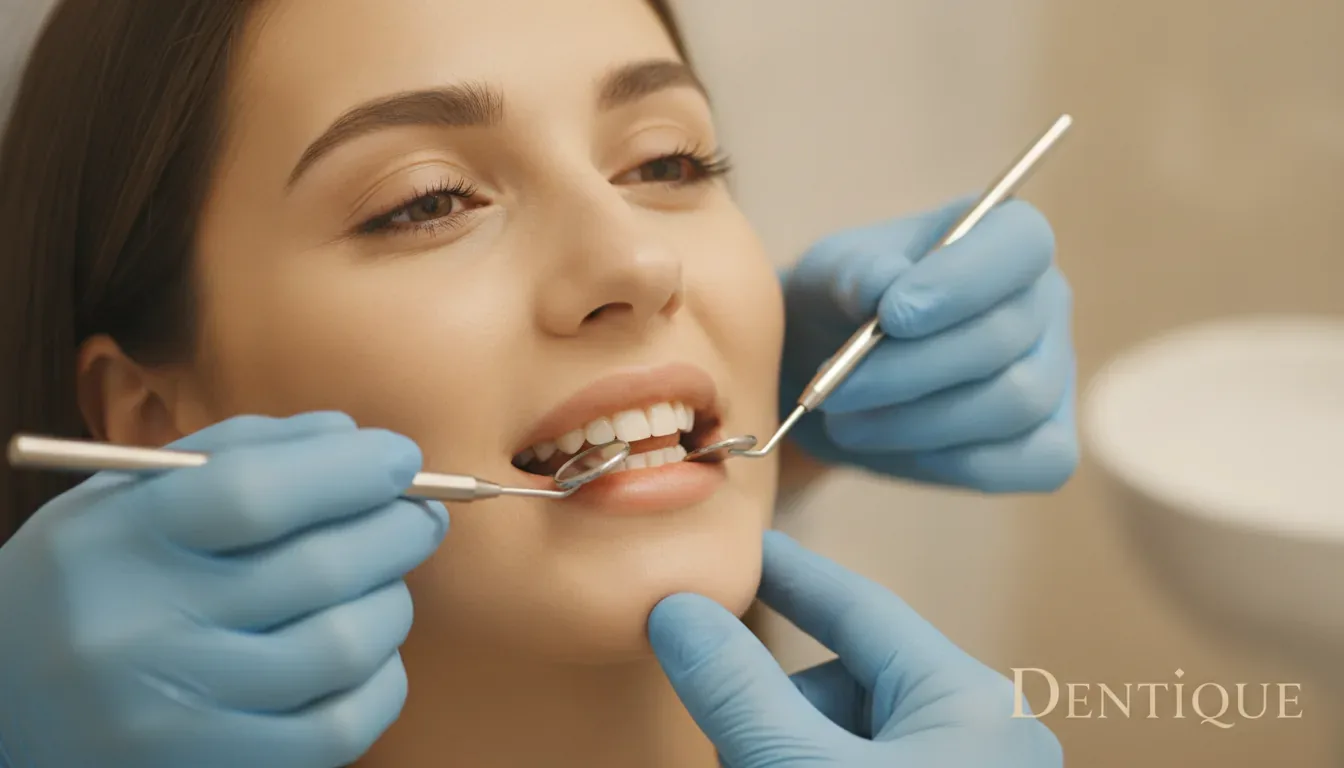
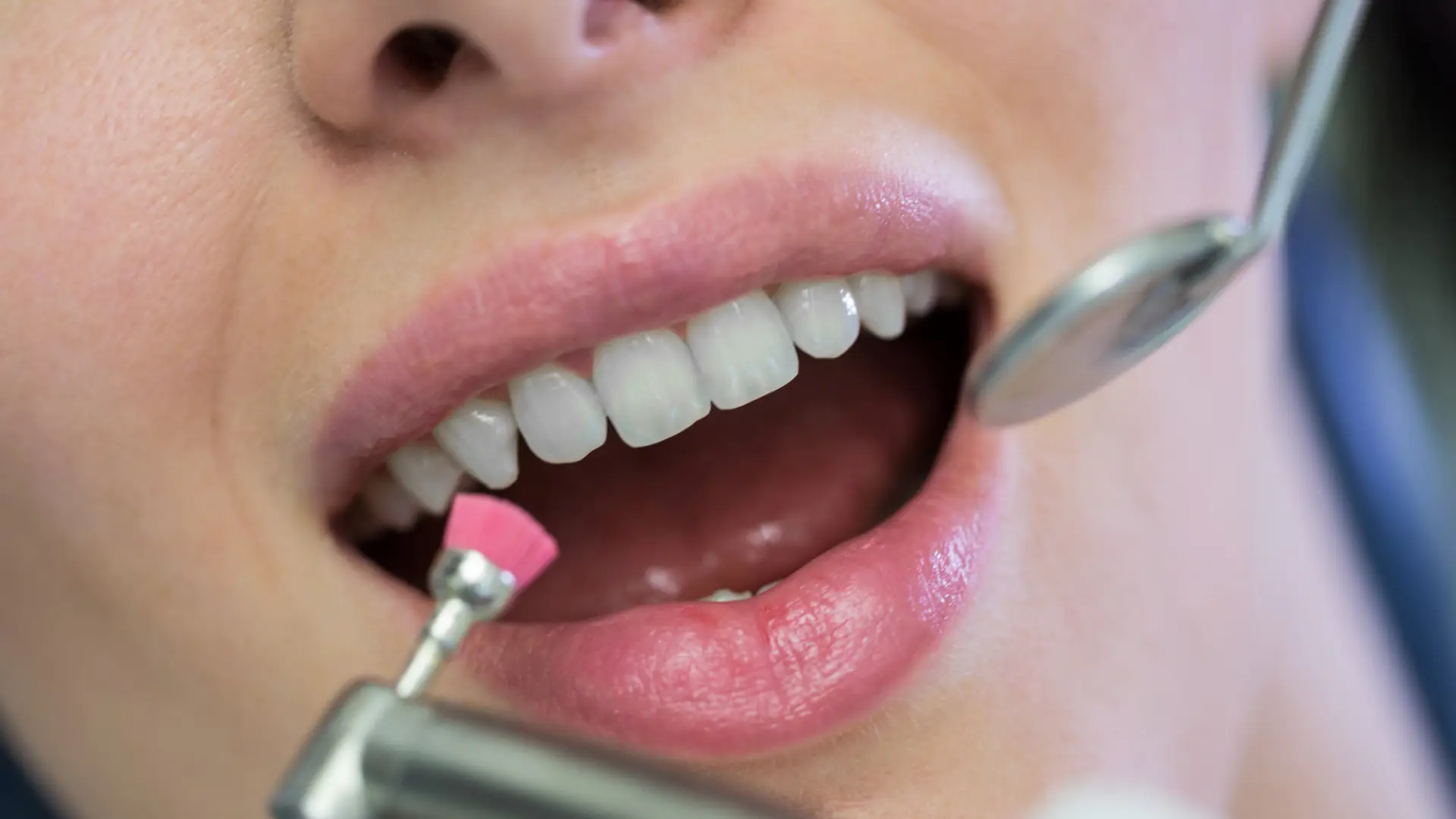
| A routine cleaning and exam includes a health-history review, scaling to remove plaque and tartar, polishing, professional flossing, optional fluoride, periodontal gum measurements, an oral cancer screening, periodic digital X-rays, and an exam by the dentist. The visit is preventive and diagnostic at once, which is what separates it from brushing well at home. |
A fair question many patients have is wanting to know what they are actually paying for, especially compared to brushing at home. A professional visit does several things your toothbrush cannot. Here is the typical sequence.
- Health-history review and a check on any concerns since your last visit.
- Scaling: manual and ultrasonic instruments remove plaque and tartar above and just below the gumline, including the hardened deposits home care cannot reach.
- Polishing with a mildly abrasive paste to lift surface stains and smooth the teeth.
- Professional flossing to clear debris between teeth and check contact points.
- Optional fluoride treatment to strengthen enamel.
- Periodontal probing: small measurements in millimeters around each tooth that track gum health over time.
- Oral cancer screening, a quick visual and physical check that can catch problems early.
- Digital X-rays, not every visit, but typically every 12 to 24 months for stable adults.
- Exam by the dentist and a plain-language discussion of any findings.
One quick distinction: a routine cleaning, sometimes called a prophylaxis, works above and just below the gumline. A deep cleaning, or scaling and root planing, is a separate procedure for patients with active gum disease and reaches deeper below the gumline. If your dentist recommends one, that is a different conversation from your regular recall visit.
Insurance, Cost, and the $280 New Patient Special at Dentique
| Most dental insurance plans cover two preventive visits per year at 100%, which is why the six-month schedule lines up with typical coverage. Without insurance, a routine cleaning and exam runs roughly $75 to $200. Dentique’s new patient special covers a checkup, digital X-rays, and a cleaning for $280, a $560 value. |
A common worry is that an insurance plan only covers two cleanings, and patients ask what happens if they need more. Most plans cover two preventive visits per year at 100%, which is exactly why the standard six-month schedule fits so neatly. If your dentist recommends a third or fourth visit because of a risk factor, that extra visit may have an out-of-pocket cost, and your plan details determine how much.
Without insurance, a routine cleaning and exam generally runs $75 to $200 nationally. If you are new to the practice, Dentique’s new patient special covers your checkup, digital X-rays, and cleaning for $280, which is valued at $560. Dentique also accepts Delta Dental, Cigna, and Aetna. For a full breakdown of how coverage works, our guide to dental insurance coverage lays it out in plain English.
If you have a different plan or want to know what your coverage looks like, call us or ask the front-desk team. We can usually tell you in about a minute.
Anxious About Cleanings? Sedation Options at Dentique
| For patients who feel anxious about cleanings, Dentique offers nitrous oxide and oral conscious sedation. Nitrous oxide is a light laughing gas that wears off quickly, and oral conscious sedation is a pill taken before the visit. Most routine cleanings need only normal comfort measures, but these options exist for anxiety, a strong gag reflex, or longer visits. |
If you are someone who feels anxious about the cleaning itself, including the scraping sound, you are far from alone, and you have options. Dr. Xhelo Shuaipaj, DDS, FDOCS, FICOI, has more than 25 years of experience and is a general and sedation dentist. That sedation focus is unusual for routine general dentistry, and it means two comfort options are available even for a standard cleaning: nitrous oxide, the light laughing gas that wears off within minutes, and oral conscious sedation, a pill taken before your appointment. You can read more about sedation for dental cleaning if anxiety has been the reason you have put off a visit.
Frequently Asked Questions
How often should I get my teeth cleaned?
Every six months is the baseline for most healthy adults, following ADA guidance. Some people need cleanings every three to four months, including smokers, people with diabetes, those who are pregnant, anyone with a history of gum disease, and patients with weakened immunity. The right interval is personal, so the best answer comes from your dentist after looking at your risk profile and what they see at each visit. If you are average risk with healthy gums, twice a year is almost certainly right for you.
Is twice a year really enough for everyone?
No, twice a year is the baseline, not a universal rule. It is right for most healthy adults, but several groups benefit from more frequent visits. Smokers and people with diabetes face roughly twice the gum disease risk of the general population, and patients in maintenance after periodontitis are often placed on a three-month schedule. Pregnancy, autoimmune conditions, and heavy tartar buildup also push the interval shorter. The modern ADA stance is risk-based, so ask your dentist whether your schedule should be tighter.
How often do kids need their teeth cleaned?
Children should have their first dental visit by age one or when their first tooth appears, then every six months after that. Early visits monitor development, catch problems while they are small, and help kids feel comfortable at the dentist. Teens continue on the six-month schedule, with more frequent cleanings recommended if they are in orthodontic treatment, since braces and aligners trap plaque around brackets and along the gumline.
What’s the difference between a regular cleaning and a deep cleaning?
A regular cleaning, called a prophylaxis, removes plaque and tartar above and just below the gumline and is part of your routine recall visit. A deep cleaning, known as scaling and root planing, is a separate procedure for patients with active gum disease that reaches deeper below the gumline to clean the tooth roots. A regular cleaning is preventive, while a deep cleaning treats an existing condition. If your dentist recommends a deep cleaning, that is a different conversation from your standard six-month visit.
Does my dental insurance cover teeth cleaning?
Most dental insurance plans cover two preventive visits per year at 100%, which is why the six-month schedule aligns so well with typical coverage. If your dentist recommends a third or fourth cleaning for a risk factor, the extra visit may carry an out-of-pocket cost depending on your plan. Coverage varies, so it is worth checking your specific benefits. Dentique accepts Delta Dental, Cigna, and Aetna, and the front-desk team can usually confirm your coverage in about a minute.
What happens if I skip dental cleanings for a year or two?
Tartar continues building up, which can lead to gingivitis and, over time, periodontitis, the more serious form of gum disease. Your first catch-up cleaning may be more involved because there is more to remove, and your dentist may want X-rays to check what has changed. None of this is a reason to feel embarrassed. If it has been a while and you have not been looking forward to going back, the practice welcomes returning patients the same way it welcomes everyone. The best step is simply to book a visit.
Can I be sedated for a routine teeth cleaning?
Yes, at Dentique you can. Most routine cleanings need only normal comfort measures, but for anxiety, a strong gag reflex, or a longer visit, two options are available: nitrous oxide, a light laughing gas that wears off quickly, and oral conscious sedation, a pill taken before your appointment. Dr. Shuaipaj is a sedation-trained dentist, so your comfort options can be matched to your needs. If dental anxiety has kept you away, sedation can make a routine cleaning manageable.
Book Your Next Cleaning
Whether you are due for your next cleaning or it has been a while since your last visit, our team welcomes you the same way. Call our Downers Grove office at (630) 454-9299 or our Lemont office at (630) 685-0017 to schedule. New to Dentique? Our $280 new patient special covers your checkup, digital X-rays, and cleaning, a $560 value. You can also learn more about general dentistry at Dentique to see how preventive care fits into the bigger picture.