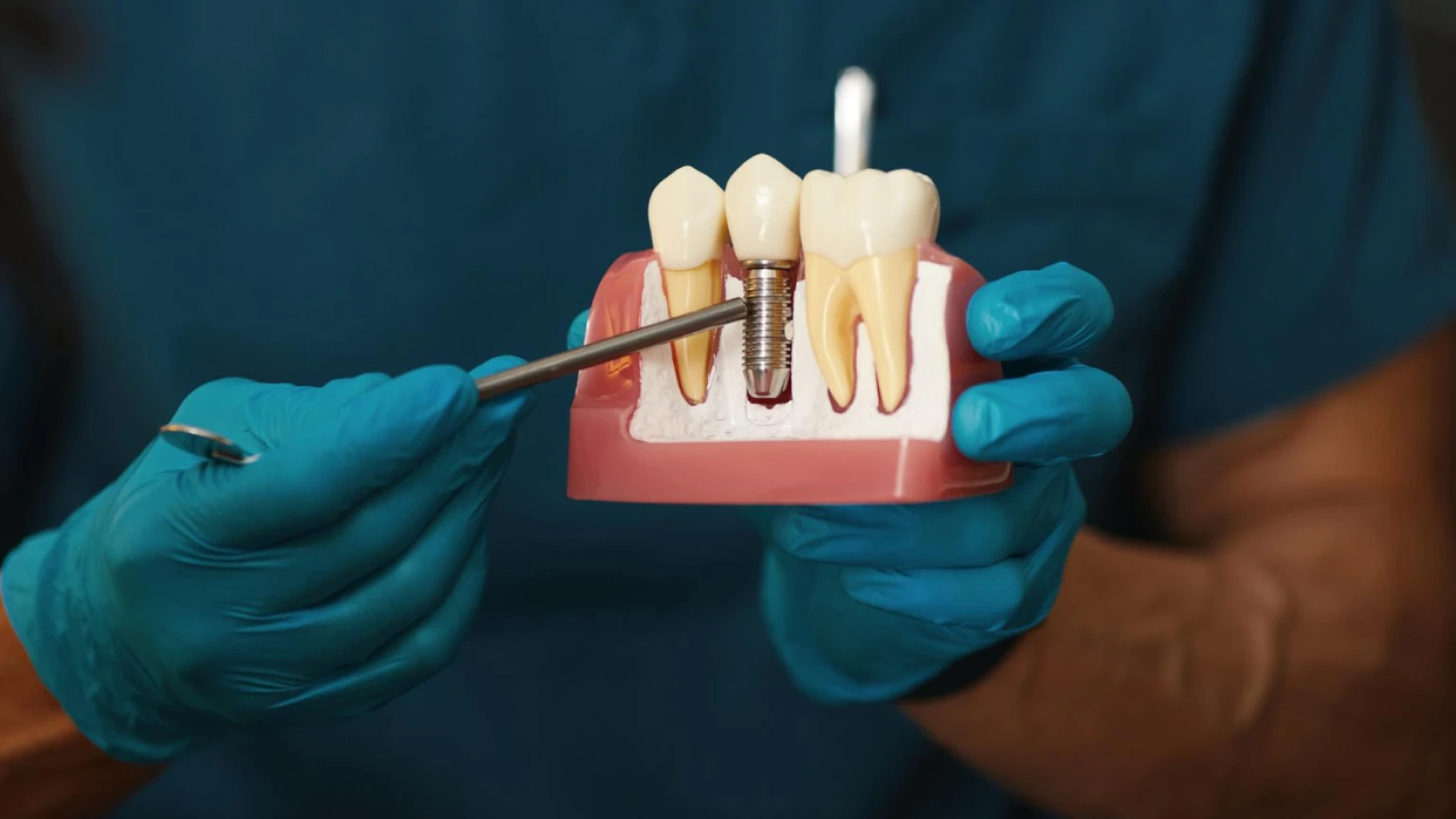
Most people assume dental implants cost $10,000 or more. That sticker shock is real, and it stops a lot of patients from even finding out if implants are actually within reach. The truth is, Dental Implant Cost in Illinois falls between $3,000 and $6,000 for a single tooth. That range includes the implant post, the abutment connector, and the porcelain crown.
Dental implants Implant in Illinois typically cost between $3,000 and $6,000 for a single tooth, including the implant post, abutment, and crown. At Dentique Dental Care in Downers Grove, the all-inclusive price is $6,000 with no hidden add-ons. Illinois patients pay slightly above the national average ($3,000 to $4,500) due to the Chicago-area market.
This guide covers the full picture: why costs vary, what Dentique’s pricing includes, how much insurance actually helps, what your financing options look like, and whether implants are worth the cost compared to alternatives. You’ll leave with real numbers, not vague estimates.
Why Dental Implant Costs Vary: The 4 Factors That Drive Your Price
Four factors drive dental implant cost variation in Illinois: the number of missing teeth, whether bone grafting is required ($700 to $900 add-on at most practices), the geographic location of the practice, and the materials used. Urban Chicago-area practices typically price 20 to 30% higher than downstate Illinois.
Understanding what moves the price is the first step to understanding your own quote. Here are the four main cost drivers:
- Number of teeth: A single implant is straightforward. Multiple missing teeth require more implants, more healing time, and significantly more investment.
- Bone grafting: If you’ve been missing a tooth for a while, the jawbone beneath it shrinks. Grafting adds $700 to $900 at most practices. At Dentique, we assess this at your evaluation and include it in your treatment plan so you know the full cost upfront.
- Location: Chicago-area practices run 20 to 30% higher than rural Illinois practices. Downers Grove sits in DuPage County, one of the higher-cost markets in the state.
- Materials and lab quality: Implant posts and crowns vary in quality. Dentique uses established, proven implant systems with lab-fabricated porcelain crowns, not discount alternatives.
What Dentique’s $6,000 All-Inclusive Dental Implant Price Covers
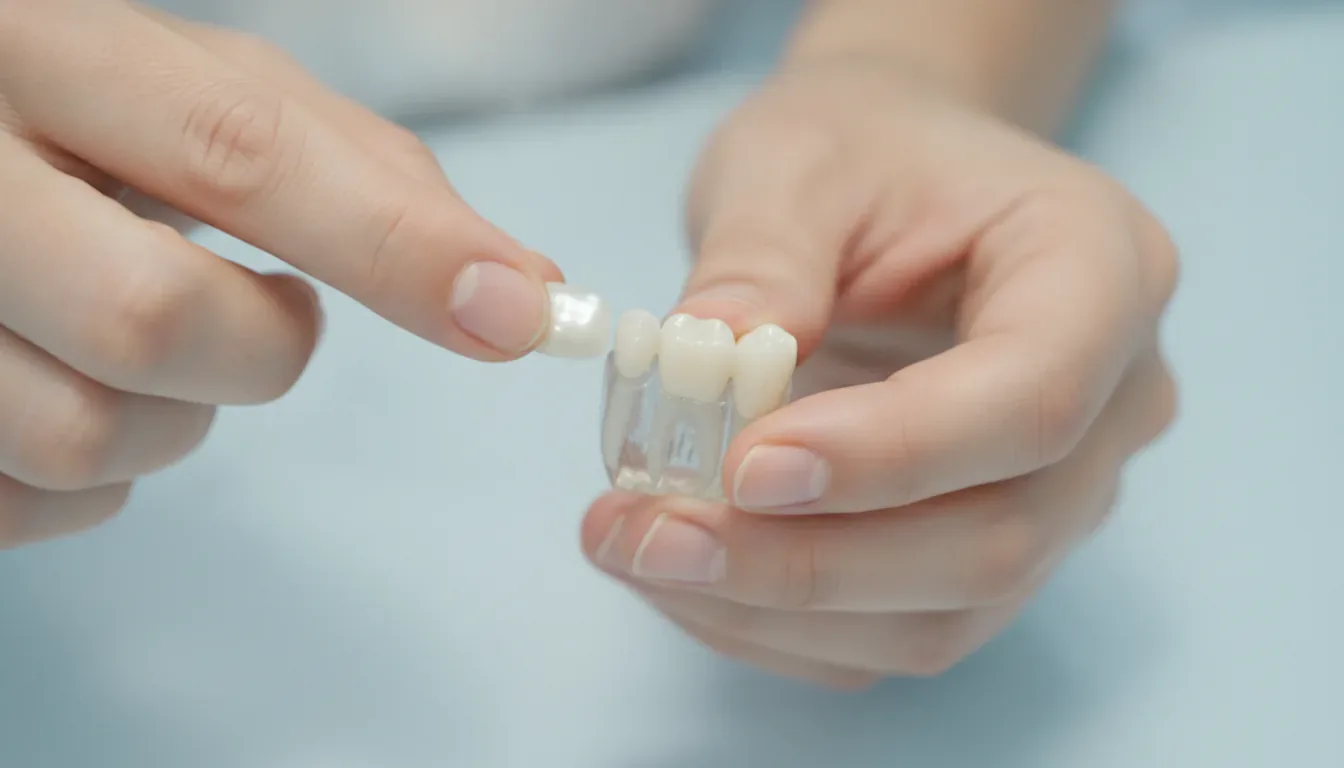
Dentique’s $6,000 dental implant price is all-inclusive: the titanium implant post (the root), the abutment (the connector), and the porcelain crown (the visible tooth). There are no separate billing surprises for standard single-tooth cases. Sedation dentistry is available for patients who prefer a more comfortable experience.
Most dental practices quote component prices. The implant post alone might be $2,400 to $2,900. The abutment adds $1,100 to $1,300. The crown adds another $1,700 to $2,100. You see a low number first, then you get the full bill.
Dentique takes a different approach: one price, everything included. Here’s the breakdown so you can see exactly what you’re getting:
| Component | What It Does | Market Range | Dentique Price |
| Titanium implant post | Acts as the artificial tooth root, fused into jawbone | $2,400 to $2,900 | Included |
| Abutment | Connects the post to the crown | $1,100 to $1,300 | Included |
| Porcelain crown | The visible replacement tooth | $1,700 to $2,100 | Included |
| All-inclusive total | Post + abutment + crown, standard case | $5,200 to $6,300 | $6,000 |
No separate bone graft billing surprises, no ‘add-on’ fees hiding in fine print for standard cases. If your evaluation reveals you need a bone graft or additional preparatory work, that is discussed and priced transparently before any treatment begins.
If you’re comparing costs for dental implants in Downers Grove, Dentique’s all-inclusive model makes that comparison straightforward.
Does Dental Insurance Cover Implants in Illinois? Here’s What Your Plan Actually Pays
Most dental insurance plans in Illinois do not fully cover dental implants, which are often classified as elective. Annual benefit maximums typically run $1,000 to $2,000, far below the cost of a single implant. Delta Dental of Illinois covers implants at 40 to 50% on select plans, but a 6-month waiting period often applies. HSA and FSA accounts are fully eligible.
The honest answer is: dental insurance helps, but rarely covers the full cost. Here’s a realistic breakdown of what Illinois patients can expect:
- Annual maximums: Most dental insurance plans cap benefits at $1,000 to $2,000 per year. That makes a meaningful dent in a $6,000 implant, but still leaves a significant out-of-pocket balance.
- Delta Dental of Illinois: On select PPO plans, Delta Dental covers implants at 40% (PPO) or up to 50% (Premier). There is typically a 6-month waiting period before implant benefits activate on newer plans.
- HSA and FSA accounts: If you have a Health Savings Account or Flexible Spending Account, dental implants are fully eligible expenses. This is one of the most tax-effective ways to cover implant costs.
- Medicare and Medicaid: Original Medicare (Parts A and B) does not cover dental implants. Illinois Medicaid covers dentures for eligible patients, but not implants except in rare medically necessary cases.
- Medical insurance: If tooth loss resulted from an accident or medical condition, your medical insurance may contribute. Documentation is required and approval varies.
Our team at Dentique can review your insurance benefits and give you a clear picture of what your specific plan covers before you make any decisions.
How to Afford Dental Implants: Financing Options at Dentique
Dentique offers dental implant financing through CareCredit and Cherry Financing, allowing patients to spread the $6,000 cost into manageable monthly payments. Many patients pay between $112 and $262 per month depending on terms and approved credit. A free consultation helps confirm your exact treatment plan and financing options before you commit.
The single most common reason people delay implants is the upfront cost. A payment plan available through Dentique means you don’t have to choose between your budget and a permanent solution.
Here’s how financing works in practice:
- CareCredit: A dedicated healthcare credit line. CareCredit offers promotional periods with deferred interest options. Many patients qualify for 12 to 24-month promotional financing.
- Cherry Financing: A flexible financing option with a simple online application. Cherry works for patients across a range of credit profiles.
- Monthly payment reality: Based on typical financing terms, a $6,000 implant financed over 24 to 48 months runs approximately $112 to $262 per month. That’s comparable to a car payment, but for a permanent solution that lasts decades with proper care.
- Free consultation first: Dentique’s consultation maps out exactly what your treatment plan includes before any financial commitment. No surprises.
If cost has been the barrier, a payment plan available at Dentique may make the difference between delaying treatment and getting the implant you need.
Dental Implants vs Dentures vs Bridges: Which Costs More Over 10 Years?
While dentures cost less upfront ($2,800 per arch at Dentique), the total 10-year cost often exceeds implants once replacements, adhesives, and adjustments are factored in. Dental bridges ($1,700 per tooth at market average) sacrifice adjacent healthy teeth to anchor the restoration. Implants protect jawbone density, which deteriorates rapidly after tooth loss.
Sticker price comparison is misleading. A $2,800 denture looks cheaper than a $6,000 implant today. But over 10 years, that math often reverses. Here’s an honest comparison:
| Factor | Dental Implant | Dentures | Dental Bridge |
| Upfront cost | $6,000 (Dentique, all-in) | $2,800/arch (Dentique) | $1,700 avg per tooth (market) |
| 10-year cost estimate | $6,000 to $6,500 (minimal maintenance) | $4,200 to $7,000+ (replacements, adhesives, adjustments) | $3,400 to $5,000+ (potential replacement, adjacent tooth risk) |
| Bone preservation | Yes. The implant post stimulates the jawbone, preventing bone loss. | No. Bone loss continues under the denture, changing fit over time. | No. Jawbone in the gap deteriorates without a root. |
| Maintenance | Brush and floss like a natural tooth | Daily removal, cleaning, adhesive, periodic relines | Careful flossing under the bridge required; adjacent teeth at risk |
| Feel and function | Closest to a natural tooth. Fixed in place. | Removable. Can shift or slip. Affects chewing and speech. | Fixed in place but involves grinding down healthy adjacent teeth |
The 10-year cost difference between implants and dentures often comes down to $0 to $1,000, once you account for denture relining, replacement, and adhesive costs. Implants also prevent the jawbone loss that makes dentures fit poorly over time.
What Dr. Shuaipaj Wants You to Know Before Budgeting for Implants
Dr. Xhelo Shuaipaj, General and Sedation Dentist at Dentique Dental Care, hears the same concerns from implant patients every week: What will this really cost me? Will there be surprises? Can I handle the procedure?
His perspective on each:
- On pricing transparency: Most patients come in having been quoted wildly different numbers from different practices. My goal is to give you one honest number at your consultation, before any treatment starts. No one should be surprised by a bill.
- On comfort during the procedure: Sedation dentistry is available at Dentique for patients who are anxious about the implant process. You don’t need to white-knuckle through it. For many patients, sedation makes the entire process feel like it took minutes.
- On realistic expectations: Dental implants are not the cheapest option upfront. But for most patients who’ve had them placed, the investment feels worth every penny when they realize they’ve stopped thinking about their teeth.
Dr. Shuaipaj recommends starting with a consultation, not a quote from a website. Every patient’s bone density, gum health, and treatment needs are different. The consultation gives you real numbers for your real situation, with no financial commitment required.
4 Dental Implant Cost Myths That Could Cost You More
A lot of what patients believe about implant pricing comes from misleading ads, outdated information, and vague online comparisons. Here are the four myths that most often trip people up:
Myth 1: The $399 implant ads are the same quality for less.
Truth: The $399 advertised implants rarely include the abutment and crown. Those are billed separately, often bringing the total to $4,000 to $6,000 or higher, with lower-quality components and higher failure risk. Cheap implants failed is the most common complaint in implant forums and patient communities. The number that gets you in the door is not the number you’ll pay.
Myth 2: Insurance will cover most of the cost.
Truth: Most dental insurance plans cap annual benefits at $1,000 to $2,000. Even with Delta Dental coverage at 40 to 50%, your out-of-pocket on a $6,000 implant is typically $3,000 to $3,600 before HSA or FSA contributions. Insurance helps. It does not eliminate the cost.
Myth 3: Dental implants are too expensive compared to dentures.
Truth: Over 10 years, the cost difference is smaller than most patients expect, often under $1,000. Dentures require adhesives, periodic relining, and eventual replacement. They also allow jawbone loss that changes facial structure over time. Choosing the cheapest option could cost more in the long run, both financially and functionally.
Myth 4: You need perfect health to qualify for implants.
Truth: Most patients qualify. Conditions that could affect candidacy, such as uncontrolled gum disease or certain bone density issues, are addressable. A consultation determines your actual candidacy. Assumptions based on age, health history, or something you read online are not a reliable substitute for a professional evaluation.
FAQs About Dental Implant Costs in Illinois
How much does a single dental implant cost in Illinois?
A single dental implant in Illinois costs between $3,000 and $6,000 for a complete restoration, including the implant post, abutment, and crown. At Dentique Dental Care in Downers Grove, the all-inclusive price is $6,000 with no hidden add-ons for standard single-tooth cases.
The $3,000 end of the range typically reflects lower-cost or discount practices that may use lower-quality components or bill components separately. The $6,000 end reflects full-service practices in the Chicago metro area. The CareCredit-tracked Illinois average sits at $2,207, which reflects insurance-negotiated pricing, not the retail cost most patients pay out of pocket.
Does dental insurance cover dental implants in Illinois?
Most dental insurance plans in Illinois do not fully cover dental implants. Annual benefit maximums of $1,000 to $2,000 leave a significant gap. Delta Dental of Illinois covers implants at 40 to 50% on select plans after a 6-month waiting period. HSA and FSA accounts are eligible for implant costs.
Coverage varies significantly by plan. Original Medicare does not cover implants. Illinois Medicaid covers dentures but not implants in most cases. The best approach is to have your Dentique treatment coordinator review your specific plan before your consultation so you know exactly what to expect.
Is there a cheaper alternative to dental implants?
Dental bridges and dentures cost less upfront than implants. A dental bridge averages $1,700 per tooth at market rate. Dentures at Dentique are $2,800 per arch. Neither alternative preserves jawbone density, which deteriorates after tooth loss and can affect facial structure over time.
The 10-year total cost of dentures, factoring in relining, replacement, and adhesives, often approaches or exceeds the cost of an implant. Bridges also require grinding down adjacent healthy teeth to anchor the restoration, which creates risk for those teeth. For patients who qualify, implants are typically the most cost-effective long-term solution.
What disqualifies you from getting dental implants?
Active gum disease, severely uncontrolled diabetes, certain medications including bisphosphonates, and insufficient jawbone density may affect implant candidacy. Most of these conditions can be addressed before implant placement. A consultation determines your actual candidacy, not assumptions.
Age alone does not disqualify patients. Patients in their 60s, 70s, and beyond regularly receive implants successfully. Smoking increases failure risk but does not automatically disqualify. Bone loss can often be addressed with a bone graft. The best way to know if you qualify is to schedule a free consultation at Dentique.
Your Next Step: See What Implants Cost at Dentique
You now know the Illinois price range. You know what Dentique’s $6,000 price includes. You know how insurance and financing work, and you know how implants compare to alternatives over time.
The next step is a free consultation at Dentique Dental Care in Downers Grove. No obligation. No surprise pricing. You get a clear treatment plan and exact cost for your specific situation before you make any decisions.
| No surprises. See exactly what you’ll pay before you decide. All-inclusive pricing published upfront: $6,000 for post, abutment, and crown. CareCredit and Cherry Financing available: $112 to $262/month for many patients. Sedation dentistry available for a comfortable experience.Two DuPage County locations: Downers Grove and Lemont. |