
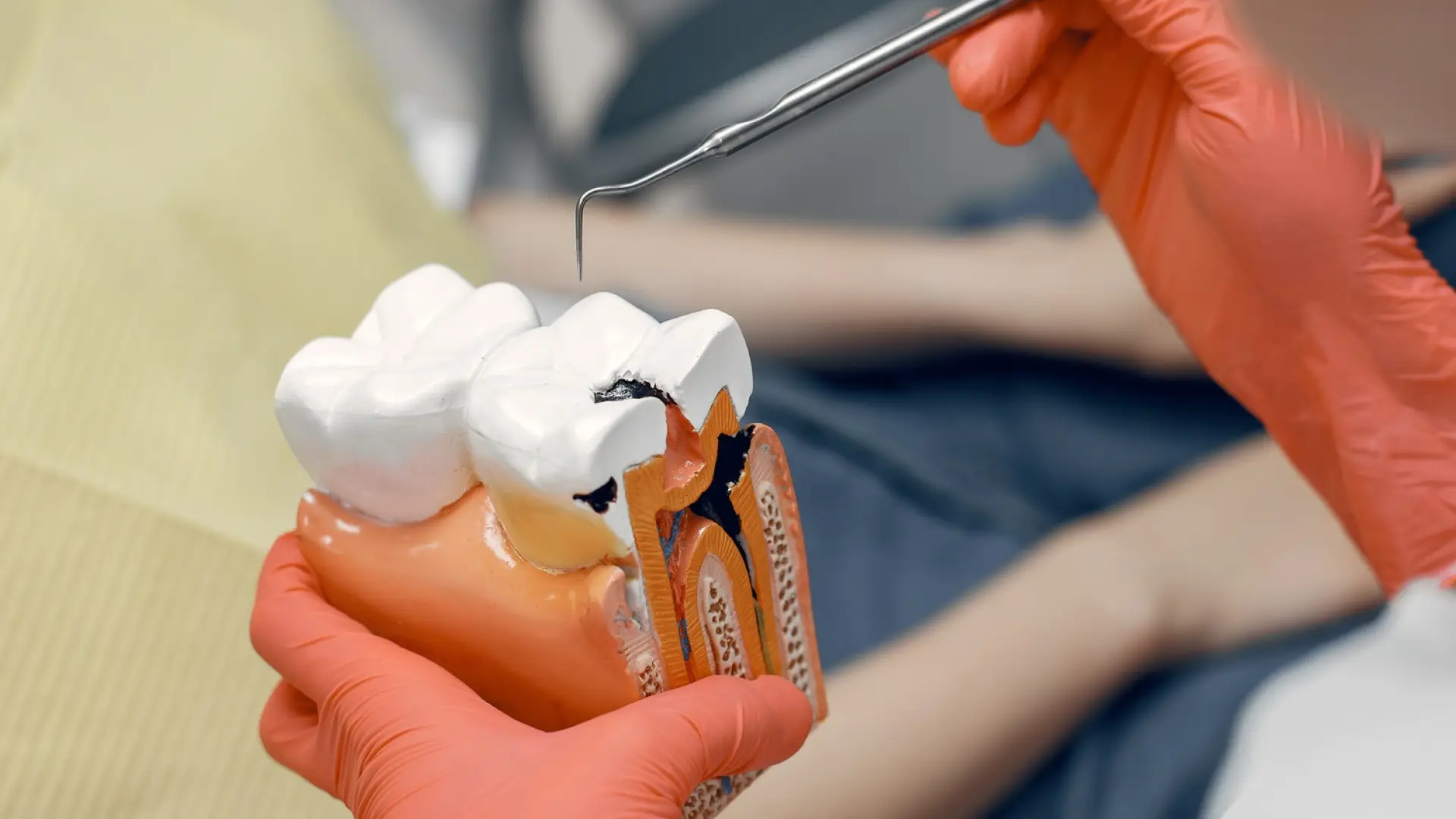
Dental fillings are one of the most common restorative treatments in the United States. The American Dental Association reports that amalgam and tooth-colored composite are the two materials used for most routine fillings, and both are recognized as safe and effective for repairing cavities and restoring a tooth to full function.
If you have just found out you have a cavity, the choice between silver and tooth-colored is simpler than it sounds. Both materials are safe, both repair the tooth well, and the right pick usually comes down to where the tooth is, how it will look, and your budget. The worry most people carry, that it will hurt or that silver is somehow dangerous, has a calmer answer than the internet suggests. This guide compares both materials side by side, walks the appointment step by step, and gives honest cost ranges, all as part of the broader picture of restorative dentistry.
When Do You Actually Need a Filling?
A filling repairs a tooth that has been damaged by decay. Cavities form when bacteria and acid wear through the hard outer enamel and start to hollow out the tooth. Once that happens, the damage does not heal on its own, so the decayed part is removed and the space is filled to stop the cavity from spreading and to restore the tooth to normal use.
Not every spot of decay needs a filling right away. Very early decay, sometimes called a watch, can occasionally be slowed with fluoride and better home care. Once a true cavity has formed, though, a filling is the standard fix. “I just found out I have a cavity” is one of the most common things people say at a checkup, and for most of them a single filling solves it.
Sometimes decay has gone further than a filling can handle. If it reaches the nerve inside the tooth, the tooth may need a root canal before it can be restored. If too much tooth structure is lost, a crown may be the better choice. If you are weighing that boundary, our guide to when a tooth needs a root canal explains the difference.
| Damage level | Usual fix |
| Cavity in enamel/dentin | Filling |
| Decay reaching the nerve | Root canal, then a filling or crown |
| Large loss of tooth structure | Crown |
Tooth-Colored (Composite) vs Amalgam (Silver): The Real Differences
This is the decision most people are really here for: tooth-colored vs amalgam fillings. Composite is a tooth-colored resin that bonds to the tooth and blends in. Amalgam is a durable silver-colored blend of metals that has been used for well over a century. Both are legitimate choices, and neither is simply better than the other. Here is how composite vs amalgam fillings compare on the things that actually matter.
Appearance
Composite is matched to your natural tooth color, so a filling is essentially invisible. Amalgam is silver and shows when you open wide, which is why many people choose composite for front and visible teeth.
Durability and longevity
Amalgam is the tougher of the two under heavy chewing forces and typically lasts about 10 to 15 years or more. Composite usually lasts about 5 to 10 years, sometimes longer with good care. For large fillings on back molars that take the most pressure, amalgam still has a durability edge.
Tooth preservation
Composite bonds to the tooth and often allows the dentist to keep more of the healthy structure, while amalgam usually needs a slightly larger preparation to hold in place. If preserving tooth is a priority, composite has the advantage.
Cost
Amalgam is generally the less expensive option, and composite costs a little more, with the gap widening on larger fillings. The full cost breakdown is in the cost section below.
| Factor | Tooth-colored (composite) | Amalgam (silver) |
| Appearance | Matches the tooth, nearly invisible | Silver, visible when you open wide |
| Typical lifespan | About 5 to 10 years | About 10 to 15 years or more |
| Durability | Good; best for small to medium fillings | Excellent under heavy chewing |
| Tooth preservation | Bonds, often keeps more tooth | Needs a slightly larger prep |
| Relative cost | Slightly higher | Lower |
| Best for | Visible teeth, smaller cavities | Large back-molar fillings |
Are Silver Fillings Safe? What the ADA and FDA Say
The mercury question deserves a straight answer. The ADA, the FDA, and the World Health Organization all conclude that dental amalgam is safe and effective for the general population. Amalgam does release a very small amount of mercury vapor, but the levels are below the reference points set by the EPA, and decades of use support its safety record. “Do I have to get the silver one” is a fair question, and the honest answer is that you have a choice, not that silver is dangerous.
The FDA does note that certain groups may prefer to consider alternatives such as composite, and it is reasonable to discuss this with your dentist if you fall into one of them.
- People who are pregnant or planning a pregnancy, and nursing parents
- Infants and children under 6
- People with certain neurological conditions or impaired kidney function
- Anyone with a known sensitivity to mercury or other amalgam components
One more point worth knowing: the FDA does not recommend removing intact amalgam fillings that are in good condition. Taking out a sound filling can damage the tooth and briefly raise mercury exposure, so existing silver fillings are usually best left in place unless they are worn, cracked, or decaying underneath.
What Getting a Filling Is Actually Like, Step by Step
The dental filling process is quick and routine, and most appointments are finished in under an hour. Here is what actually happens, start to finish.
- Numbing. The dentist applies a local anesthetic so the tooth and surrounding area are numb before anything begins.
- Removing the decay. The decayed part of the tooth is gently cleared away, leaving healthy structure behind.
- Preparing the tooth. The area is cleaned and shaped so the filling material will bond or seat properly.
- Placing the material. Composite is layered into the space; amalgam is packed in. Both are shaped to match your bite.
- Curing. A composite filling is hardened with a special light in seconds; amalgam sets on its own.
- Polishing and checking the bite. The dentist smooths the filling and adjusts it so it feels natural when you chew.
So, is a filling going to hurt? For the great majority of people, no. The numbing means you feel pressure and movement rather than pain. Afterward the tooth can be mildly sensitive to hot or cold for a few days, which fades on its own. If dental nerves are your real concern, comfort options are available, which we cover next.
What Does a Filling Cost?
Filling cost depends mostly on the material and on how many surfaces of the tooth are involved. Nationally, an amalgam filling runs roughly $90 to $250 per tooth, with an ADA average near $160 for a single surface. A composite filling runs roughly $135 to $400 per tooth, averaging around $191 for a single surface, and rising for larger two or three-surface fillings. Insurance adds a wrinkle worth knowing: many plans cover amalgam in full but will only pay up to the amalgam rate for a composite on a back tooth, leaving you to cover the difference. For a personalized estimate or to understand your coverage, see our Insurance & Finance, or call either office.
| Material | Typical range per tooth | ADA average (1 surface) |
| Amalgam (silver) | About $90 to $250 | About $160 |
| Composite (tooth-colored) | About $135 to $400 | About $191 |
Dentique does not publish a single flat price for a filling, because the right figure depends on the tooth, the material, and the number of surfaces. A quick call or visit gives you a real number for your situation.
Comfortable, Tooth-Colored Fillings at Dentique
If nerves are the reason you have been putting off a filling, that is something we plan around every day.
At Dentique Dental Care, your care is led by Dr. Xhelo Shuaipaj, DDS, FDOCS, FICOI, who brings more than 25 years of experience in general and restorative dentistry. We focus on natural-looking, tooth-colored fillings that blend with your smile, and comfort is built into the visit. For patients who feel anxious, we offer nitrous oxide and oral conscious sedation to keep things calm and relaxed. You can read more about our sedation dentistry options if dental anxiety has been holding you back.
Access is easy too. Dentique has two Illinois locations, one in Downers Grove and one in Lemont, so getting a filling is convenient whichever side of the area you are on.
| Downers Grove | Lemont |
| 4121 Fairview Ave, Suite 205Downers Grove, IL 60515(630) 454-9299 | 15543 W 127th St, Suite 103Lemont, IL(630) 685-0017 |
Frequently Asked Questions
Does getting a filling hurt?
For most people, getting a filling does not hurt. The dentist numbs the tooth and surrounding area with a local anesthetic first, so during the procedure you feel pressure and movement rather than pain. Afterward, it is common for the tooth to be mildly sensitive to hot, cold, or biting for a few days, and that sensitivity fades on its own. If dental anxiety makes the visit stressful regardless, comfort options such as nitrous oxide and oral conscious sedation can help you stay relaxed throughout.
How long do composite (tooth-colored) fillings last compared with amalgam?
Composite fillings typically last about 5 to 10 years, and sometimes longer with good oral care, while amalgam fillings often last 10 to 15 years or more. Amalgam is more durable under heavy chewing forces, which is why it has a longevity edge on large back-molar fillings. Composite, on the other hand, bonds to the tooth, matches its color, and often preserves more healthy structure. How long any filling lasts also depends on its size, its location, and how well you care for your teeth.
Are silver (amalgam) fillings safe?
Yes. The ADA, FDA, and World Health Organization all conclude that dental amalgam is safe and effective for the general population. Amalgam releases a very small amount of mercury vapor, but at levels below the EPA reference points, and its safety is supported by more than a century of use. The FDA does note that some groups, such as pregnant or nursing people, young children, and those with certain health conditions or mercury sensitivity, may prefer composite, which is a reasonable conversation to have with your dentist.
Should I replace my old silver fillings with tooth-colored ones?
Not usually. The FDA does not recommend removing intact amalgam fillings that are in good condition, because taking out a sound filling can damage the healthy tooth around it and briefly increase mercury exposure. If an old silver filling is worn, cracked, leaking, or has decay underneath, then replacement makes sense, and many people choose a tooth-colored filling at that point. If your silver fillings are stable, the safest choice is generally to leave them in place and let your dentist monitor them at routine checkups.
How much does a filling cost?
Nationally, an amalgam filling runs roughly $90 to $250 per tooth, with an ADA average near $160 for a single surface, while a composite filling runs about $135 to $400 per tooth, averaging around $191 for a single surface. Larger two or three-surface fillings cost more. Your final price depends on the material, the tooth, and how many surfaces are involved. For a personalized estimate, call (630) 454-9299 in Downers Grove or (630) 685-0017 in Lemont, or check our Insurance & Finance page.
Does dental insurance cover tooth-colored fillings?
Many dental plans do cover composite fillings, but the details vary. A common arrangement is that the plan pays the full cost of an amalgam filling and only up to that same rate for a composite on a back tooth, which means you pay the difference for the tooth-colored upgrade. Front-tooth fillings are more often covered as composite because appearance matters there. The clearest way to know your share is to have the practice check your benefits before treatment, which our team is happy to do.
Can I be sedated for a filling if I have dental anxiety?
Yes. At Dentique we offer nitrous oxide and oral conscious sedation to help anxious patients feel calm during a filling. Nitrous oxide, often called laughing gas, takes effect quickly and wears off within minutes of the appointment ending, so you can usually drive yourself home. Oral conscious sedation uses a prescribed medication that keeps you relaxed throughout the visit. Both are gentle, well-established options. If anxiety has kept you from getting a needed filling, let us know and we will build comfort into your plan.
Next Steps: Talk to Dentique
You do not have to settle the silver-versus-tooth-colored question on your own. If you have just learned you need a filling, or you are simply comparing materials before booking, a short conversation can clear things up fast.Not sure which filling is right for you? Call (630) 454-9299 (Downers Grove) or (630) 685-0017 (Lemont) and our team will walk you through your options. No pressure, just answers. You can also book a new patient visit whenever you are ready.