Periodontal disease is one of the most common adult oral health conditions. The CDC reports that nearly half of U.S. adults aged 30 and older have some level of periodontitis. The earliest stage, gingivitis, is fully reversible, and even advanced gum disease is manageable with professional treatment such as scaling and root planing.
If you have just been told you need a deep cleaning, take a breath: you are not alone, and it is far more routine than it sounds. That phrase worries a lot of people, and the worry is usually about pain, cost, or how things got this far. None of that needs to keep you up at night. This guide walks you through every stage of gum disease treatment, from gingivitis to scaling and root planing, what each step actually feels like, and what it costs. If you are still spotting symptoms and want to know whether you even have a problem yet, the early signs of gum disease are a good place to start.
What Is Periodontal Disease? Gingivitis vs Periodontitis
Periodontal disease is an infection of the tissues that hold your teeth in place. It starts when plaque, a sticky film of bacteria, builds up along and under the gumline. If it is not removed, it hardens into tartar that brushing alone cannot reach. The body responds with inflammation, and that inflammation is what slowly damages the gums and the bone underneath.
Gum disease moves through two main stages, and the difference between them matters a great deal for your treatment and your outcome.
Gingivitis: the early, reversible stage
Gingivitis is the mild form. The gums become red, puffy, and bleed easily, which is why so many people describe it as “my gums bleed every time I brush.” At this stage no permanent damage has been done. With a professional cleaning and better home care, gingivitis is fully reversible. Catch it here and you can return your gums to full health.
Periodontitis: the advanced, manageable stage
When gingivitis is left untreated, it can progress to periodontitis. Here the gums begin to pull away from the teeth, forming pockets that trap bacteria, and the bone that anchors the teeth starts to break down. Periodontitis cannot be fully reversed, because lost bone does not grow back on its own. It can, however, be controlled and stopped from getting worse with the right treatment, which is exactly what scaling and root planing is designed to do. Roughly six in ten adults over 65 live with some periodontitis, so being in this stage is common and very treatable.
| Feature | Gingivitis | Periodontitis |
| Stage | Early, mild | Advanced |
| Reversible? | Yes, fully | No, but manageable |
| Bone loss | None | Present |
| Typical treatment | Professional cleaning + home care | Scaling and root planing, then maintenance |
How Gum Disease Is Treated, Stage by Stage
Periodontal treatment follows a ladder. Most people never reach the top rungs, because treatment is matched to how far the disease has progressed. The goal at every level is the same: remove the bacteria, calm the inflammation, and protect the bone you still have. Your dentist will choose where to start based on how deep your gum pockets measure. Pockets of 4 mm or deeper are generally the signal that a deep cleaning is needed. If you want the full picture of routine and preventive care that keeps you off this ladder, our general and family dentistry page covers the everyday side of gum health.
- Better home care. For very early gingivitis, improving daily brushing and flossing plus a routine cleaning can be enough to reverse the inflammation.
- Professional cleaning. A standard cleaning removes plaque and tartar above the gumline and is the right tool for gingivitis.
- Scaling and root planing. For periodontitis, this deep cleaning removes bacteria and tartar from below the gumline and smooths the tooth roots so the gums can reattach. This is the first-line, non-surgical treatment for most periodontal disease.
- Periodontal maintenance. After a deep cleaning, cleanings are usually scheduled more often, often every three to four months, to keep the pockets from filling back up.
- Surgery, only if needed. A small number of advanced cases need a surgical step to reduce deep pockets or rebuild support, but most people are managed without it.
What a Deep Cleaning (Scaling & Root Planing) Actually Involves
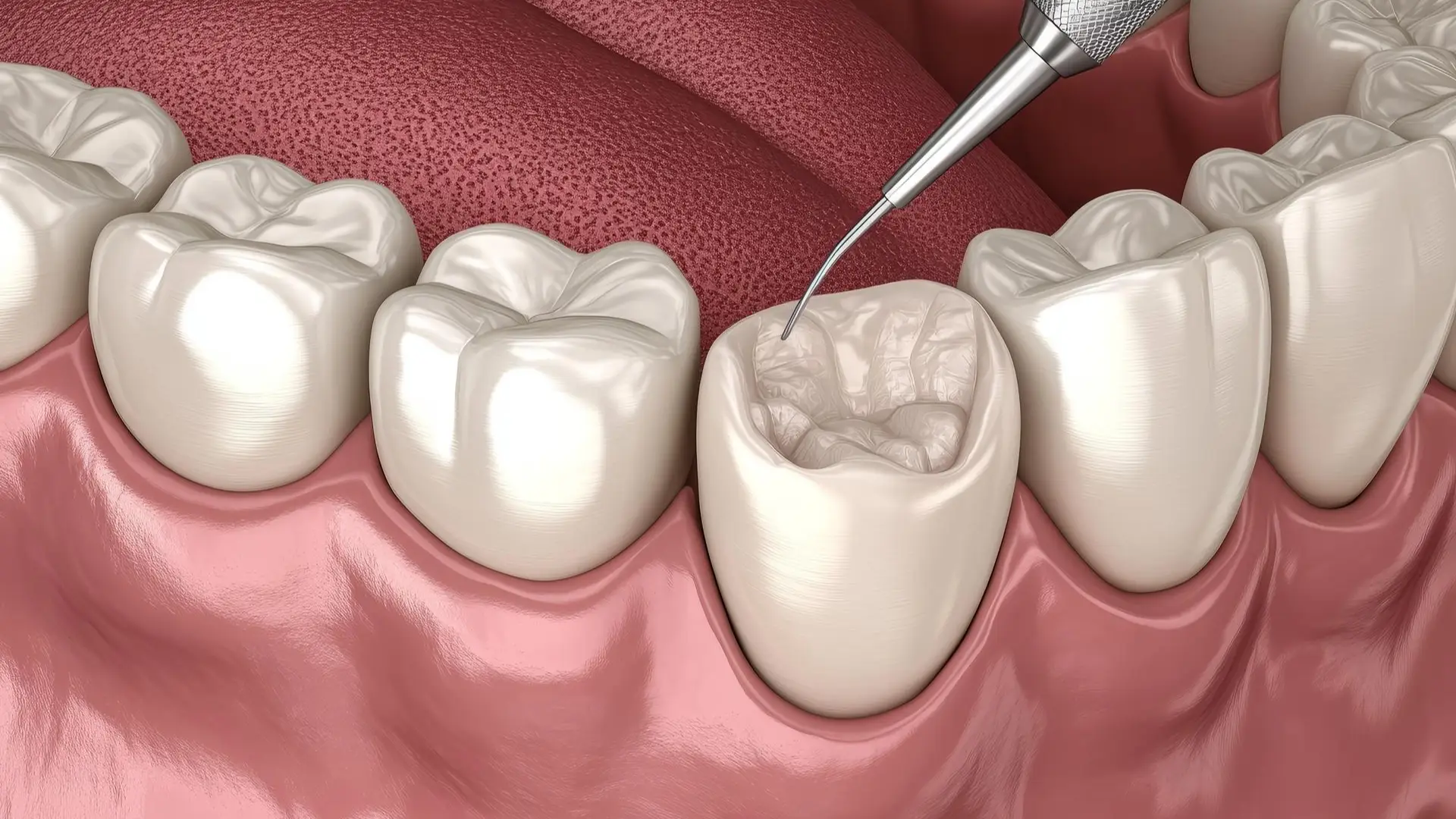
A deep cleaning teeth procedure has two parts, and the names describe exactly what happens. Scaling is the removal of plaque and tartar from the tooth surface and from inside the gum pockets, above and below the gumline. Root planing is the smoothing of the tooth root afterward, which removes rough spots where bacteria collect and helps the gum tissue heal back against the tooth. Together, scaling and root planing is the standard non-surgical treatment for periodontitis.
Will it hurt?
This is the question almost everyone asks: “is a deep cleaning going to hurt?” For most people the honest answer is that it is far gentler than they expect. Your dentist numbs the area with a local anesthetic first, so the cleaning itself is not painful. Some tenderness or sensitivity for a few days afterward is normal and usually managed with over-the-counter pain relief. If dental anxiety is part of your worry, comfort options are available, which we cover further down.
One visit or several?
How long scaling and root planing takes depends on how much of your mouth is affected. Mild cases are sometimes finished in a single visit. More often the mouth is divided into four quadrants and treated over two or more appointments, one or two quadrants at a time, so the numbing stays comfortable and the work is thorough. Many practices use an ultrasonic scaler, which vibrates tartar loose and tends to be faster than hand instruments while delivering comparable results.
| Stage | What to expect |
| Before | Your dentist measures pocket depths and numbs the area with local anesthetic. |
| During | Scaling clears tartar above and below the gumline; root planing smooths the roots. You feel pressure, not pain. |
| After | Mild tenderness for a few days, eased by over-the-counter relief, plus a maintenance schedule to protect the result. |
Is It Backed by Evidence? What the Research Shows
Periodontitis treatment is not experimental. It is one of the most studied areas in dentistry, and the numbers show both how common the disease is and how well treatment works. The CDC reports that roughly 42 to 47 percent of U.S. adults aged 30 and older have periodontitis, and the rate climbs to about 60 percent among adults 65 and older. Severe periodontitis affects close to 8 percent of adults.
The reassuring part is what treatment achieves. Scaling and root planing is recognized by the American Academy of Periodontology and clinical sources such as Cleveland Clinic as the standard first-line therapy, and starting it early is the single most effective way to prevent the tooth loss that advanced gum disease can cause. The evidence is consistent: catch periodontal disease and treat it, and you keep your teeth.
Nearly half of U.S. adults over 30 have periodontitis, yet caught early it is manageable and largely preventable. Treatment works.
Gentle, Anxiety-Free Periodontal Care at Dentique
If the reason you have put off treatment is nerves rather than the gums themselves, you are in good company, and it is something we plan around every day. Periodontal care does not have to be stressful.
At Dentique Dental Care, treatment is led by Dr. Xhelo Shuaipaj, DDS, FDOCS, FICOI, who brings more than 25 years of experience in general and gum-focused care. Comfort is built into how we work. For patients who feel anxious, we offer nitrous oxide and oral conscious sedation to take the edge off, so a deep cleaning feels manageable rather than daunting. You can read more about our sedation dentistry options if calm, comfortable care is what has been holding you back.
We also make access easy. Dentique has two Illinois locations, one in Downers Grove and one in Lemont, so periodontal care is close to home whichever side of the area you are on.
| Downers Grove | Lemont |
| 4121 Fairview Ave, Suite 205Downers Grove, IL 60515(630) 454-9299 | 15543 W 127th St, Suite 103Lemont, IL(630) 685-0017 |
What Does Gum Disease Treatment Cost?
Cost is a fair question, and the deep cleaning cost is more predictable than most people assume. Nationally, scaling and root planing runs roughly $200 to $350 per quadrant, so the total depends on how much of your mouth needs treatment. In Illinois, a deep cleaning averages about $309 without insurance, and closer to $77 once a typical plan contributes. Many dental plans cover scaling and root planing as a periodontal benefit, though the exact amount varies by plan and by how advanced the disease is. For a personalized estimate or to see how financing works, visit our Insurance & Finance page, or call either office.
| Scenario | Typical cost |
| National, per quadrant | About $200 to $350 |
| Illinois average, no insurance | About $309 |
| Illinois average, with insurance | About $77 |
Dentique does not publish a single flat price for periodontal treatment, because the right plan depends on your pocket depths and how many quadrants need attention. The fastest way to a real number is a quick conversation.
Frequently Asked Questions
Can gum disease be reversed?
Gingivitis, the earliest stage, can be fully reversed. With a professional cleaning and consistent brushing and flossing, inflamed gums can return to full health and no lasting damage remains. Periodontitis, the advanced stage, is different. Because it involves bone loss, it cannot be completely reversed, but it can be controlled and stopped from getting worse with scaling and root planing followed by regular periodontal maintenance. The key is acting early: the sooner gum disease is treated, the more of your natural support you keep.
Does a deep cleaning hurt?
For most people a deep cleaning is far gentler than expected. Your dentist numbs the area with a local anesthetic before scaling and root planing begins, so you feel pressure rather than pain during the procedure. Afterward, mild tenderness or sensitivity for a few days is normal and is usually handled with over-the-counter pain relief. If dental anxiety is part of your concern, comfort options such as nitrous oxide and oral conscious sedation can make the visit feel calm and manageable.
What is the difference between a regular cleaning and a deep cleaning?
A regular cleaning removes plaque and tartar from above the gumline and is preventive care for healthy gums or mild gingivitis. A deep cleaning, known clinically as scaling and root planing, goes below the gumline to clear bacteria and tartar from inside the gum pockets and then smooths the tooth roots so the gums can reattach. A deep cleaning is a treatment for periodontitis, not a routine cleaning, and it is usually recommended when gum pockets measure 4 mm or deeper.
How long does scaling and root planing take, and how many visits?
It depends on how much of your mouth is affected. Mild cases are sometimes completed in a single appointment. More commonly, the mouth is divided into four quadrants and treated over two or more visits, one or two quadrants at a time, which keeps the numbing comfortable and the cleaning thorough. Many practices use an ultrasonic scaler, which removes tartar faster than hand instruments while producing comparable results, so individual appointments stay efficient.
How much does gum disease treatment cost in Illinois?
In Illinois, a deep cleaning averages about $309 without insurance and roughly $77 once a typical dental plan contributes. Nationally, scaling and root planing runs about $200 to $350 per quadrant, so your total depends on how many quadrants need treatment. Because the right plan varies from person to person, the most accurate figure comes from an exam. Call (630) 454-9299 in Downers Grove or (630) 685-0017 in Lemont for a personalized estimate.
Does dental insurance cover scaling and root planing?
Many dental plans cover scaling and root planing as a periodontal benefit, since it is a recognized treatment rather than a cosmetic procedure. How much is covered varies by plan and by how advanced the disease is, with some plans paying a set percentage and others applying a deductible first. The clearest way to know your share is to have the practice check your benefits before treatment. Our Insurance & Finance page explains the options, and our team can verify coverage for you.
Can I be sedated for a deep cleaning if I have dental anxiety?
Yes. At Dentique we offer nitrous oxide and oral conscious sedation to help anxious patients feel relaxed during periodontal treatment. Nitrous oxide, sometimes called laughing gas, wears off within minutes of the appointment ending, while oral conscious sedation involves a prescribed medication that keeps you calm and comfortable throughout. Both are gentle, well-established options. If nerves have kept you from getting the gum care you need, let us know and we will tailor your comfort plan.
Next Steps: Talk to Dentique
You do not need to have everything figured out to take the first step. If you have been told you need a deep cleaning, or you are just trying to understand which stage you are in, a short conversation can replace a lot of uncertainty.Not sure where you stand? Call (630) 454-9299 (Downers Grove) or (630) 685-0017 (Lemont) and our team will talk through your options. No pressure, just answers. You can also book a new patient visit when you are ready.