More than 36 million Americans have lost all of their natural teeth, and roughly 90 percent of them rely on dentures to eat, speak, and smile. Modern dentures come in several types and fit far better than older versions, but every new wearer goes through a short adjustment period in the first few weeks. If you are facing dentures for the first time, the questions usually come in a rush: which kind, how much, and will they ever feel normal? This guide walks through the types, realistic costs, the adjustment period, and daily care, so the decision feels manageable. For the full picture of your replacement options, see our restorative dentistry overview, and the latest figures on tooth loss in the U.S. come from the American Dental Association.
Types of Dentures: Complete, Partial, Immediate, and Implant-Supported
There is no single “denture.” The right type depends on how many teeth you have lost, the health of your gums and jaw, your budget, and how much stability you want. Knowing the main types of dentures up front makes the rest of the decision far less overwhelming. Here are the four you are most likely to be offered.
Complete dentures
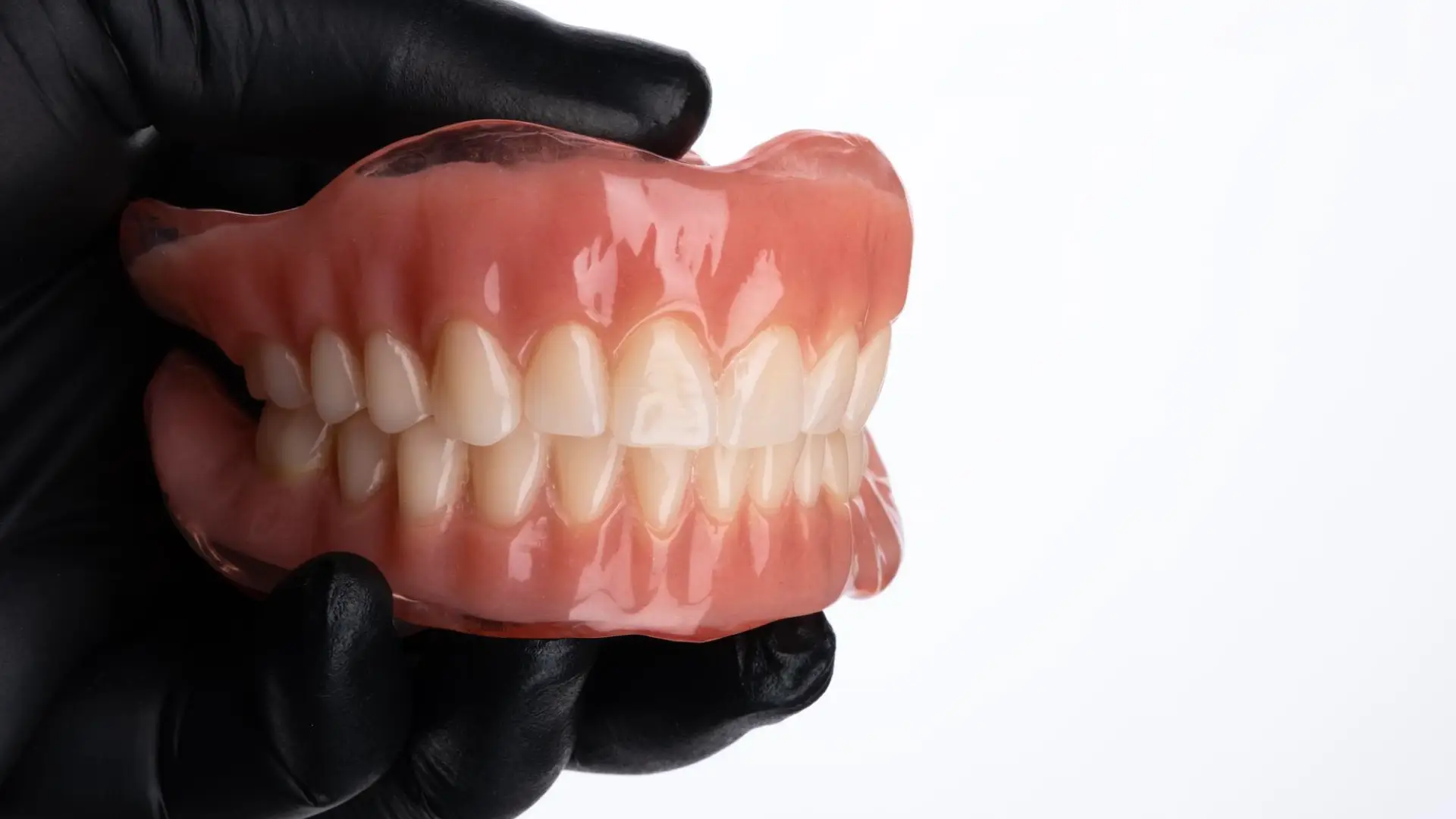
A complete denture replaces a full arch of teeth, top or bottom, and rests on the gums. It is removable and is the classic option when all the natural teeth in an arch are gone. Today’s versions are lighter and more natural-looking than the sets many people remember from years ago.
Partial dentures
A partial denture fills the gaps when you still have some healthy natural teeth. It clips into place with small clasps that grip the remaining teeth, and it also helps keep those teeth from drifting. If you are weighing a complete denture vs partial denture, the deciding factor is simply how many natural teeth remain and whether they are healthy enough to keep.
Immediate dentures
An immediate denture is placed the same day your teeth are extracted, so you are never without teeth in public. The trade-off is that your gums shrink as they heal, so an immediate denture is temporary by design and almost always needs a reline (a refit of the inside surface) after several months once the healing settles.
Implant-supported dentures
An implant-supported denture snaps onto a small number of dental implants placed in the jaw. It is the most stable option, will not slip while you eat or speak, and helps preserve bone, but it costs considerably more and involves minor surgery. For a focused breakdown of how this stacks up against a traditional set, the comparison guide later in this article is the better resource.
| Type | Who it suits | Pros | Trade-offs |
| Complete | All teeth in an arch are gone | Restores a full smile; non-surgical; lowest cost of the full-arch options | Removable; can move while eating until you adjust |
| Partial | Some healthy natural teeth remain | Fills gaps; protects remaining teeth from shifting | Clasps may be visible; relies on the health of remaining teeth |
| Immediate | Need teeth the same day as extraction | Never without teeth in public; protects the healing site | Temporary; needs a reline after healing |
| Implant-supported | Want maximum stability and bone preservation | Will not slip; eat almost anything; protects jawbone | Highest cost; involves minor surgery and healing time |
How Much Do Dentures Cost? National Price Ranges and What Drives Them
The honest answer to the cost of dentures is that it varies widely by case, because the type, the materials, the lab work, your region, and any pre-treatment such as extractions all move the number. The national ranges below give you a realistic ballpark, but they are not a quote. Exact pricing depends on your mouth and your plan, which is why a short consultation is the only way to get a figure you can rely on.
| Denture type | Typical national range (per arch) | Notes |
| Partial denture | $600 to $3,000 | Varies with metal vs flexible framework |
| Conventional full denture | $1,500 to $4,000 | Material grade affects look and durability |
| Immediate denture | $1,500 to $4,000 | Add a later reline, often $300 to $600 |
| Implant-supported denture | $8,000 to $20,000+ | Includes implants and surgery |
The biggest cost drivers are the material quality, the amount of lab customization, and whether you need extractions, bone work, or a reline before the final fit. Most dental plans cover part of a denture as a basic restorative service, though the share varies by policy. Because the figures above are national averages and not a Dentique price, the best next step is a consultation, and you can review payment plans and coverage on our insurance and financing options page or simply call for an estimate tailored to your case.
Adjusting to New Dentures: What the First Few Weeks Really Feel Like
If you take one thing from this guide, let it be this: the awkward stage is real, it is temporary, and almost everyone comes out the other side. When a new set goes in, it is normal for dentures to feel like a foreign object at first, and the most common worry we hear is “will I be able to eat normally again.” You will, and adjusting to new dentures is a process with a fairly predictable timeline.
- Days 1 to 3: Expect extra saliva and a full, bulky feeling. Uppers can briefly trigger a gag reflex. This settles quickly.
- Week 1 to 2: Salivation and the gag sensation normalize. Sore spots are common where the denture rubs, and a quick chairside adjustment relieves them.
- Weeks 2 to 4: Most people have 2 to 4 short follow-up visits in the first month to fine-tune the fit. Speech evens out, often faster if you read aloud for a few minutes a day.
- Weeks 4 to 8: Eating confidence returns as you progress from soft foods to a more normal diet. By the end of this window, most wearers stop thinking about their dentures.
The single most useful habit early on is to expect a few sore spots and not tough them out. They are easy to fix, and a denture that rubs is telling you it needs a small adjustment, not that something is wrong. How long it takes to feel normal differs from person to person, but two to eight weeks is the usual range. Start with soft foods such as eggs, yogurt, soup, and well-cooked vegetables, cut everything small, and chew on both sides at once to keep the denture stable. If you are also weighing a more permanent fixed option, our guide comparing dentures and implants lays out the differences in detail. For patients who feel anxious about extractions or fittings, Dr. Xhelo Shuaipaj, DDS, FDOCS, FICOI, offers comfort options including nitrous oxide and oral conscious sedation.
Caring for Your Dentures, and When You Need a Repair or Reline
Good daily care keeps dentures comfortable, hygienic, and long-lasting. The routine is simple, and a little consistency prevents most of the problems that send people back to the office. Here is what to do, and what to avoid.
| Do Clean your dentures daily with a soft brush and a non-abrasive denture cleaner, rinse after meals, soak them overnight in water or a denture solution unless your dentist says otherwise, handle them over a folded towel or a sink of water so a drop does not crack them, and keep up with regular dental checkups. |
| Don’t Do not use regular toothpaste or hard brushes, which scratch the surface; do not soak them in hot water, which can warp the fit; do not sleep in them unless specifically advised; and do not rely on adhesive to fix a loose denture. The ADA is clear that adhesives are not a substitute for a proper fit, so a denture that keeps loosening needs a reline or replacement. |
See a dentist promptly for a cracked or broken denture, a snapped clasp, persistent looseness, or sore spots that do not settle, since these are quick fixes when caught early. As your gums and jaw change shape over time, you will need a reline to refit the inside surface, and most dentures are replaced every five to ten years. Dentique handles denture repairs and relines in-house as part of routine general and family dentistry, so you are not left searching when something needs attention.
Dentures or Something Else? A Quick Orientation
Dentures are not the only way to replace missing teeth. If your main priority is maximum stability and chewing power, implant-supported options exist and may be worth a look, while traditional dentures remain the more accessible, non-surgical route for many people. Rather than rehash that decision here, we cover it properly in our dedicated guide comparing dentures and implants, which weighs cost, comfort, and longevity side by side. The right choice is personal, and a consultation is the surest way to match an option to your mouth, your goals, and your budget.
Frequently Asked Questions
What is a complete denture?
A complete denture is a removable appliance that replaces all the teeth in one arch, either the upper or lower jaw, and rests directly on the gums. It is the standard option when every natural tooth in that arch has been lost. Modern complete dentures are custom-made to match your facial features and are lighter and more natural-looking than older sets. They are held in place by suction and the natural contours of your mouth, and a small amount of adhesive can add confidence, though a well-fitted denture should stay put on its own.
How long does it take to adjust to new dentures?
Most people adjust to new dentures within two to eight weeks. The first few days bring extra saliva and a bulky feeling, and uppers can briefly trigger a gag reflex, but these usually settle within one to two weeks. Sore spots are common early on and are easily relieved with quick chairside adjustments, so expect two to four short follow-up visits in the first month. Speech and eating confidence return gradually, often faster if you read aloud and start with soft foods. By the end of the adjustment period, most wearers stop noticing their dentures.
Can I eat normally with dentures?
Yes, most denture wearers return to a nearly normal diet, though it takes practice. Start with soft foods such as eggs, yogurt, soup, mashed vegetables, and well-cooked pasta during the first weeks. Cut food into small pieces, chew slowly using both sides of your mouth at once to keep the denture balanced, and reintroduce firmer foods gradually as your confidence grows. Very hard, sticky, or crunchy items take the longest to master and may always require extra care. Implant-supported dentures allow the widest range of foods because they stay firmly anchored while you chew.
How much do dentures cost?
Denture costs vary widely by type and case. National ranges run roughly $600 to $3,000 per arch for a partial, $1,500 to $4,000 for a conventional or immediate full denture, and $8,000 to $20,000 or more for an implant-supported set. The final figure depends on materials, lab work, your region, and whether you need extractions or a reline. These are national averages, not a Dentique price. For a figure you can count on, call for a consultation and a personalized estimate, and ask us to review your insurance and financing options.
Can dentures be repaired?
Yes, most denture problems can be repaired, and it is best to act quickly. A cracked base, a broken tooth, or a snapped clasp can often be fixed in the office, sometimes the same day, and trying to repair it yourself with household glue usually makes things worse. If your denture has become loose over time, the fix is typically a reline rather than a repair, because your gums and jaw have changed shape. Bring the denture and any broken pieces to your appointment. Dentique handles repairs and relines in-house.
How often should dentures be replaced?
Most dentures should be replaced every five to ten years, though the exact timing depends on wear, fit, and changes in your mouth. Even well-cared-for dentures gradually lose their precise fit as the jawbone and gums reshape after tooth loss, which is why periodic relines extend their life in between replacements. Signs it is time for a new set include persistent looseness that a reline cannot fix, visible wear on the teeth, cracks, or changes in your bite. Regular checkups let your dentist catch these changes early and advise when replacement makes sense.
Are immediate dentures worth it?
Immediate dentures are worth it for many people because they mean you are never without teeth in public, even on the day your remaining teeth are extracted. They also protect the healing tissue and help you adapt to wearing a denture sooner. The trade-off is that your gums shrink as they heal, so an immediate denture is temporary by design and needs a reline, often costing around $300 to $600, after several months once healing settles. Some people later move to a final conventional or implant-supported denture. Whether it fits your situation is a good question for a consultation.
Not Sure Which Denture Is Right for You? Let’s Talk.
Choosing a denture can feel like a big decision, and you do not have to sort it out on your own. The lowest-pressure first step is a consultation, where we look at your mouth, talk through the options that actually fit your situation, and give you a personalized estimate, no judgment and no obligation. Call Downers Grove at (630) 454-9299 or Lemont at (630) 685-0017 to book a denture consultation and get a personalized estimate.With two convenient locations, getting in is easy, and if dental visits or extractions make you anxious, comfort options including nitrous oxide and oral conscious sedation are available. To see how dentures fit alongside the rest of your tooth-replacement choices, explore restorative dentistry in Downers Grove.