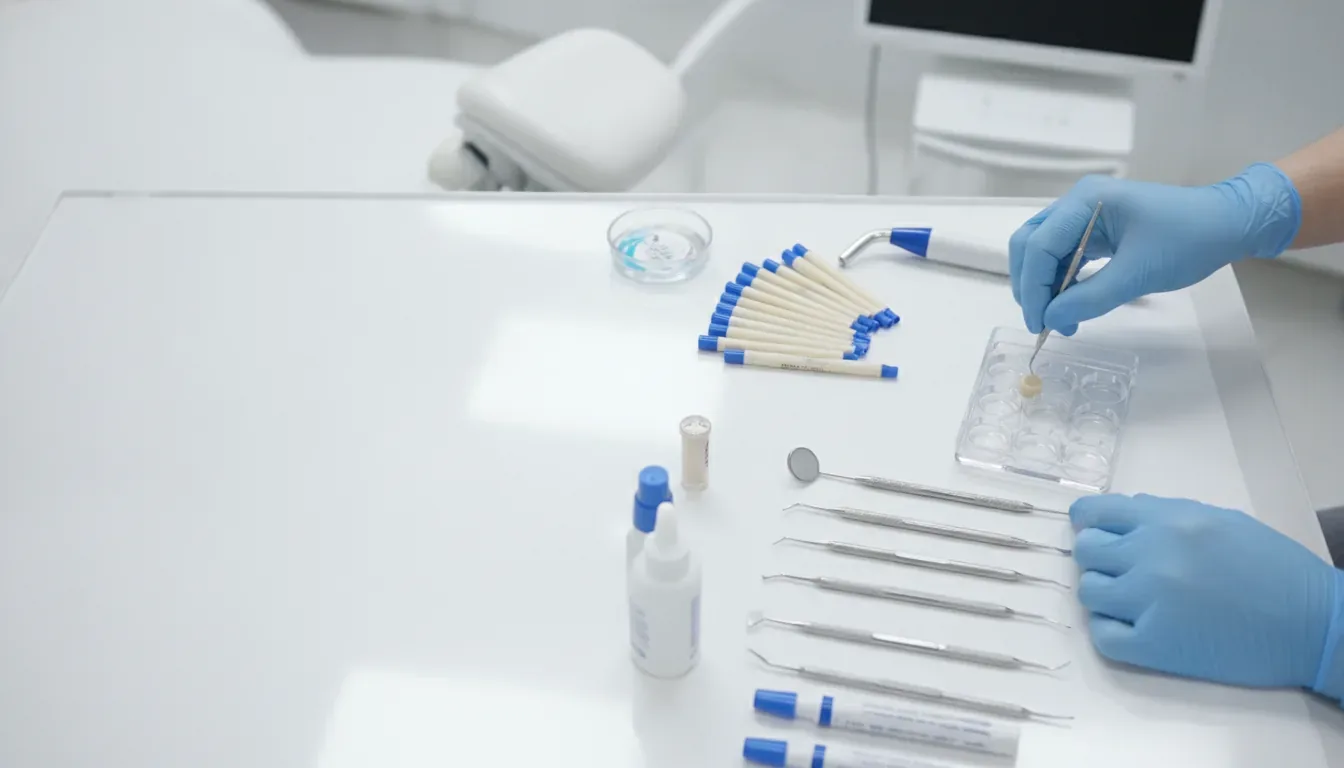

Persistent tooth pain, prolonged sensitivity to hot or cold, and swelling near the gum line are the three most common signs of a tooth nerve that needs root canal treatment. According to the Cleveland Clinic, untreated infections inside the tooth can spread to surrounding bone and tissue. Dentique Dental Care offers same-week root canal consultations with sedation options for anxious patients.
How do you know if you need a root canal? Your body gives you specific warning signals when the soft tissue inside a tooth, called the pulp, becomes infected or damaged. Recognizing these signs early is the difference between a straightforward fix and a more complex procedure. Here is what each sign means and what to do about it.
Why Recognizing Root Canal Symptoms Early Matters
Many patients tell us, “I’ve been putting it off.” That delay is understandable. A 2025 JADA survey found that 72.6% of U.S. adults report some level of dental fear. Fear keeps people from getting answers, and without answers, small problems grow into big ones.
| 72.6% of Americans report dental fear (JADA 2025). Early treatment is simpler, faster, and more comfortable than waiting until the infection spreads. |
Here is the cost reality of waiting. A small cavity caught early may need a filling. Let the decay reach the nerve and you need a root canal ($700 to $2,000). Wait longer and lose the tooth, and you are looking at an extraction plus implant ($6,000). Learn more about root canal treatment and what the process involves at each stage.
Pain Signs That Point to a Root Canal
Pain is the most common reason patients seek a root canal evaluation. Three distinct pain patterns indicate that the nerve inside the tooth is infected or dying: persistent throbbing, sharp pain when biting, and spontaneous pain without an obvious trigger.
Persistent, Throbbing Pain That Won’t Go Away
A toothache that lingers for hours or wakes you up at night usually means the pulp is inflamed beyond self-repair. The pain may radiate to your jaw, ear, or temple. Over-the-counter medication might dull it temporarily, but the underlying infection remains.
Sharp Pain When You Bite Down
A sudden, stabbing sensation when you chew or press on a specific tooth often signals a crack extending into the nerve chamber or deep decay that has reached the pulp. This type of pain tends to be highly localized; you can usually point to the exact tooth.
Spontaneous Pain Without a Trigger
Pain that appears out of nowhere, without eating, drinking, or touching the tooth, is one of the most urgent signs you need a root canal. It indicates the nerve is dying or already dead, and the surrounding tissue is reacting to the infection. This symptom warrants a same-day or next-day dental visit.
Visible Signs Your Tooth Needs Attention
Not all root canal warning signs involve pain. Visible changes in your gums or tooth color can indicate infection or nerve death even when discomfort is minimal. Three visual indicators require prompt evaluation: gum swelling, a gum bump, and tooth discoloration.
Swollen, Tender Gums Near One Tooth
Localized gum swelling that concentrates around a single tooth typically means infection has spread from the root tip into the surrounding tissue. The area may feel warm and tender when you press on it. General gum inflammation affects multiple teeth; root canal infections target one specific spot.
A Pimple or Bump on Your Gums
A small, pimple-like bump on the gum near a tooth is called a fistula. It forms when an abscess at the root tip creates a drainage channel through the bone and gum tissue. The bump may come and go and sometimes releases an unpleasant taste. A fistula is a clear sign of active infection, even if the tooth itself does not hurt.
A Tooth That Has Darkened or Turned Gray
When a tooth noticeably darkens compared to its neighbors, the pulp inside has likely died. Blood flow has stopped and the internal tissue is breaking down. This discoloration signals that the nerve is no longer viable and the tooth needs root canal treatment to prevent chronic infection.
Temperature Sensitivity and What Happens If You Wait
Lingering sensitivity to hot or cold that persists for more than 30 seconds after the stimulus is removed indicates irreversible pulpitis: nerve damage requiring root canal treatment. Sensitivity that fades within seconds is typically reversible and may not require a root canal.
| The 30-Second Rule: If hot or cold sensitivity lingers for more than 30 seconds, the nerve inside your tooth is likely damaged beyond self-repair. Sensitivity that fades quickly is usually less serious. |
The symptoms of needing a root canal rarely improve on their own. Ignoring them allows bacteria to spread from the tooth root into the jawbone and surrounding tissue. In rare but documented cases, untreated dental infections have reached the neck or brain. The more common outcome is that a treatable root canal becomes an extraction, followed by an implant at roughly three times the cost.
Patients who delay often tell us, “I wish I had gone sooner.” Worried about pain? Read our guide: does a root canal hurt? The short answer: most patients rate the procedure at 2 to 3 out of 10.
What Dr. Shuaipaj Wants You to Know About Root Canal Signs
“In our experience, patients who come in at the first sign of persistent pain have simpler, faster treatment. The root canal itself is not what patients should fear. It is the infection that brought them here. My goal is to remove the source of pain and preserve the natural tooth. For anxious patients, we offer nitrous oxide and oral sedation so you can be completely relaxed during treatment.”
— Dr. Xhelo Shuaipaj, DMD, General and Sedation Dentist, certified in implant placement and restoration | Dr. Shuaipaj’s background and credentials
If dental anxiety has kept you from seeking care, explore our sedation options for anxious patients to learn how we can help you feel comfortable throughout your visit.
3 Root Canal Myths That Keep Patients from Getting Help
Myth: Root Canals Are Extremely Painful
The procedure itself is comparable to getting a filling. Local anesthesia numbs the area completely, and patients with sedation report the experience as painless. The pain patients associate with root canals is actually from the infection, not the treatment. The root canal relieves it.
Myth: Pulling the Tooth Is Easier Than a Root Canal
Extraction removes the problem tooth but creates new ones: shifting teeth, bone loss, and the need for an implant or bridge. Root canal treatment preserves the natural tooth with success rates exceeding 93% at 10 years.
Myth: If the Pain Stops, the Problem Is Gone
When tooth pain suddenly disappears, it often means the nerve has died, not that the infection has resolved. The bacteria continue spreading silently through the root and into surrounding bone. A tooth that stops hurting after weeks of pain needs evaluation immediately.
Root Canal FAQs
Can a Tooth Rot Under a Crown?
Yes. Decay can develop at the margin where the crown meets natural tooth structure, especially if oral hygiene is inconsistent or the crown seal has deteriorated. Regular dental exams catch this early before decay reaches the nerve.
How Much Does a Root Canal Cost?
Root canals typically cost $700 to $2,000 per tooth, depending on whether the tooth is a front tooth, premolar, or molar. A crown to protect the treated tooth adds $500 to $2,000. Dental insurance usually covers 50% to 80% under the major restorative category. Dentique offers affordable payment plans and discusses all costs upfront before treatment begins.
Can You Avoid a Root Canal with Antibiotics?
Antibiotics can temporarily reduce infection and swelling, but they cannot reach bacteria inside the sealed pulp chamber of the tooth. The infected tissue must be physically removed through root canal treatment. Antibiotics are sometimes prescribed beforehand to manage acute symptoms, but they are not a substitute.
How Long Can You Wait to Get a Root Canal?
There is no safe timeline for delaying a root canal once infection signs appear. Every week of delay allows bacteria to spread further, increasing the risk of abscess, bone loss, and tooth loss. Schedule an evaluation within one to two weeks of noticing symptoms.
What Happens During a Root Canal Procedure?
The dentist numbs the tooth, creates a small opening, removes infected pulp, cleans and shapes the canals, fills them with a biocompatible material, and seals the tooth. The process takes one to two visits and feels no more uncomfortable than a filling with proper anesthesia.
What to Do If You Notice These Signs
If you recognize two or more of the signs described above, the smartest move is a quick evaluation. Not a commitment to treatment, just a conversation about what is happening and what your options are. Dentique offers emergency exams for $169 when symptoms are urgent and same-week consultations at both our Downers Grove and Lemont offices. Sedation is available for every appointment.
phone (630) 963-6003 Schedule a painless root canal in DG or call (630) 963-6003 to start the conversation today.