
A root canal removes infected tissue from inside a tooth, stopping pain at its source. According to the American Dental Association, the procedure causes little to no discomfort with local anesthesia, and modern success rates exceed 93%. Dentique Dental Care offers root canal treatment with nitrous oxide and oral sedation for patients who want additional comfort.
You’ve been told you need a root canal, and the first thing you did was search whether it hurts. That reaction is completely normal. The short answer: with modern anesthesia and sedation, most patients say the procedure feels no worse than getting a filling. The real pain is the infection that brought you here, and a root canal is how we stop it. Below are the answers to every question patients ask before their procedure.
How Painful Is a Root Canal on a Scale of 1 to 10?
Most patients rate root canal pain at 2 to 3 out of 10 during the procedure when local anesthesia is properly administered. The brief sting of the numbing injection is typically the most uncomfortable moment, and it fades within seconds.
That number surprises people who have dreaded it for weeks or even months. The reality is that root canal pain during the procedure is comparable to a routine filling. Patients regularly tell us they “didn’t feel a thing” once the anesthetic took effect. The most uncomfortable part for many people is simply holding their mouth open for an extended period.
Why Does My Tooth Hurt Before a Root Canal?
The pain you feel before a root canal comes from inflamed or infected pulp tissue inside the tooth, not from the procedure itself. Bacteria have reached the nerve, triggering persistent throbbing, sensitivity to temperature, and swelling in the surrounding gum tissue.
This is the critical reframe: the root canal does not cause pain. It eliminates the source of the pain you already have. Many patients describe the toothache before treatment as far worse than anything they experienced during or after the procedure. Delaying treatment allows the infection to spread, increasing discomfort and potentially requiring more complex care. Left untreated, a tooth infection can develop into an abscess that spreads to surrounding bone and tissue.
What Happens During a Root Canal Procedure?
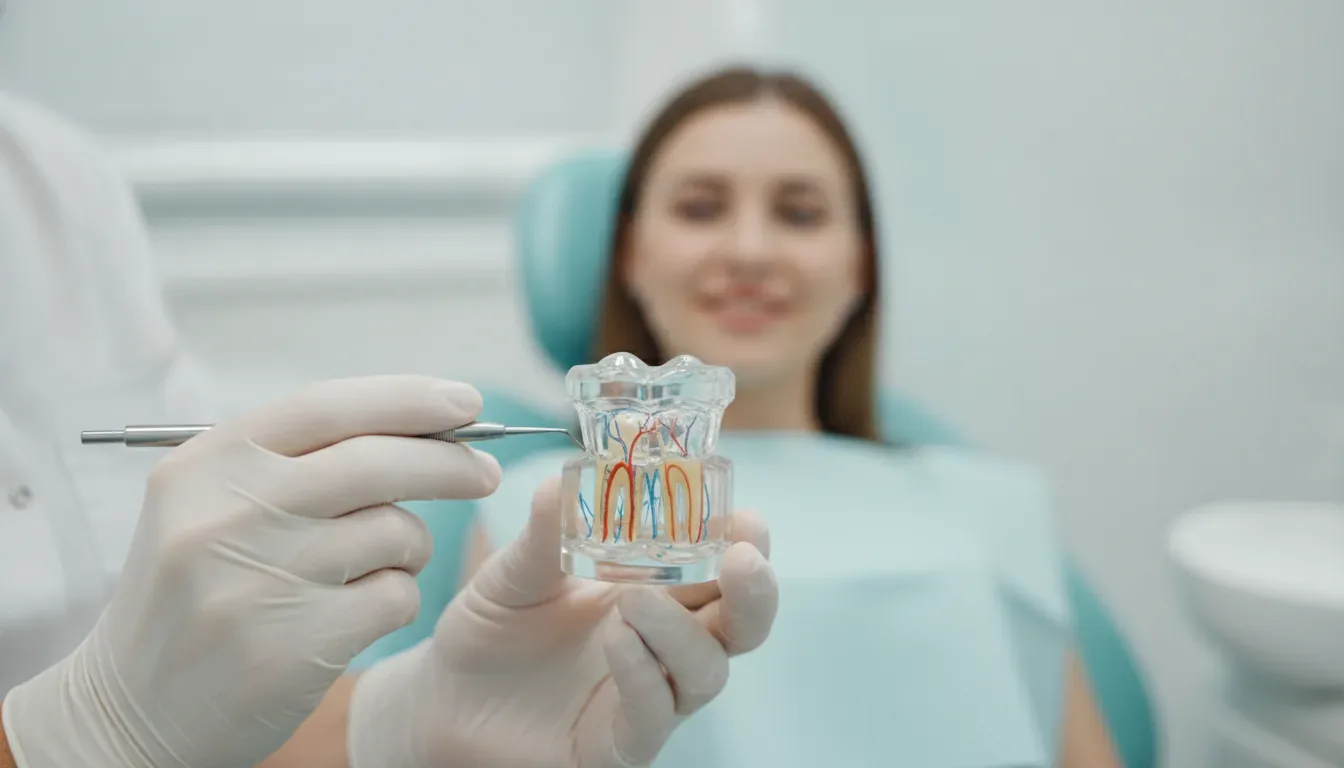
During a painless root canal, the dentist numbs the area with local anesthesia, creates a small opening in the tooth, removes the infected pulp, cleans and shapes the root canals, fills them with a biocompatible material, and seals the tooth. The entire process typically takes one to two office visits.
You are numb the entire time. A rubber dam isolates the tooth so you do not taste or swallow any of the cleaning solution. Most single-root teeth take about 30 to 60 minutes. Multi-root molars may take slightly longer. After the root canal, your dentist will recommend a crown to protect the treated tooth and restore full function.
Can You Get Sedation During a Root Canal?
Yes. Dentique Dental Care provides nitrous oxide and oral sedation for patients who want to feel completely relaxed during a root canal. Local anesthesia eliminates physical pain, while sedation addresses the anxiety that keeps many people from seeking treatment.
| Comfort options at Dentique: Nitrous oxide (laughing gas) for mild to moderate anxiety, and oral sedation for patients who need deeper relaxation. Both options are available for root canal appointments at our Downers Grove and Lemont locations. |
Your fear is real. It is not a character flaw. Dental anxiety affects millions of adults, and it is one of the top reasons people delay root canal treatment. Sedation gives you a way to get the care you need without white-knuckling through the appointment. Learn more about our sedation dentistry options to find the right fit for your comfort level.
How Long Does Root Canal Recovery Take?
Root canal recovery typically involves three to five days of mild sensitivity around the treated tooth. Over-the-counter pain medication such as ibuprofen manages discomfort effectively for the vast majority of patients, and most people return to normal activities the same day.
A peer-reviewed study from the National Dental Practice-Based Research Network found that about 14% of patients experience more significant pain at one week, often linked to pre-existing infection severity or pre-existing comorbidities. If your discomfort worsens after day three instead of improving, contact your dentist. That pattern may signal a complication that needs attention. Avoid chewing on the treated side until your permanent crown is placed, and stick with softer foods for the first day or two. For most patients, root canal recovery is far easier than the pain that led them to treatment in the first place.
How Much Does a Root Canal Cost?
Root canals in the United States cost between $700 and $2,000 per tooth depending on the tooth type. Front teeth fall on the lower end ($700 to $1,200), premolars range from $800 to $1,300, and molars typically cost $1,000 to $2,000. A crown afterward adds $500 to $2,000.
Dental insurance usually covers 50% to 80% of root canal treatment under the major restorative category. At Dentique, we discuss cost upfront before any treatment begins so you know exactly what to expect. We also offer flexible payment plans for patients who want to spread the investment over time.
Is a Root Canal Better Than Pulling the Tooth?
Saving the natural tooth with a root canal is almost always the better long-term option. Clinical literature shows that 71% of patients who chose a root canal over extraction are glad they did, and properly treated teeth can last a lifetime with good oral care.
An extracted tooth leaves a gap that causes neighboring teeth to shift, accelerates bone loss in the jaw, and often requires an implant or bridge to replace. Those replacement procedures cost significantly more than a root canal and crown combined. A single dental implant, for example, runs $3,000 to $6,000 or more. The only scenario where extraction makes more sense is when the tooth is too severely damaged or fractured to restore. Your dentist will help you make that determination based on X-rays and a thorough clinical exam.
What Are the Signs You Need a Root Canal?
Common signs you need a root canal include persistent tooth pain that lingers after the stimulus is removed, prolonged sensitivity to hot or cold lasting more than 30 seconds, swelling or tenderness in the nearby gum tissue, a darkened or discolored tooth, and pain when biting or pressing on the tooth.
Not every toothache means you need a root canal. But if you recognize any combination of those symptoms, do not wait for the pain to resolve on its own. Infections in the tooth pulp do not heal without treatment, and delaying care only increases the complexity and cost of the procedure. If you recognize these symptoms, schedule a root canal in Downers Grove or call our Lemont office to get evaluated.
A Note from Dr. Shuaipaj
“I understand the anxiety that comes with hearing you need a root canal. Many of my patients have told me they dreaded it for weeks before their appointment. What I hear most often afterward is that they didn’t feel a thing and wished they hadn’t waited so long. As a General and Sedation Dentist certified in implant placement and restoration, I prioritize your comfort at every step. If anxiety is standing between you and treatment, sedation is here to help.Dr. Xhelo Shuaipaj, DMD | Dr. Shuaipaj’s credentials and training
Have More Questions? Start a Conversation
Searching “does a root canal hurt” means you are thinking about an upcoming procedure, and you deserve honest answers before you commit to anything. Call our team to talk through your comfort options, ask about sedation, or simply get your questions answered with zero pressure. We have two convenient locations in Downers Grove and Lemont ready to help.