When patients weigh a Dental Bridge vs Implant, most assume the bridge is the smarter choice because the upfront price is lower. The data tells a different story, and most dentists will say the same thing when speaking plainly: a bridge is often the more expensive decision over time.
For most patients, an implant is the longer-lasting investment. Bridges are faster and more affordable upfront, and they’re the right call in specific situations. Below you’ll find a side-by-side comparison table, a clear cost breakdown including Dentique’s all-inclusive pricing, and a straightforward recommendation based on your situation.
Dental Bridge vs Implant: Side-by-Side Comparison
The table below compares both options across the criteria that matter most: longevity, cost, surgical requirements, impact on adjacent teeth, and bone health. For most patients under 70 with adequate bone density, the dental implant is the better long-term investment. The bridge is a legitimate option for patients who need a faster solution, cannot undergo surgery, or have specific clinical factors.
| Criteria | Dental Implant | Dental Bridge |
| Longevity | 20+ years | 10-15 years (avg 10.1 yrs, ADA) |
| Cost (Dentique) | $6,000 all-inclusive | $2,000-$4,500 (market range) |
| Surgery Required | Yes | No |
| Adjacent Teeth Damaged | No | Yes (requires grinding) |
| Jawbone Preserved | Yes | No (gradual bone loss) |
| Recovery Period | 3-6 months healing | 2-3 weeks |
| Visits Required | Multiple over months | 2-3 visits |
| Feels Like Natural Tooth | Yes | Partial |
| Long-Term Cost (15+ yrs) | Lower (no replacement) | Higher (replacements needed) |
| Insurance Coverage | Varies (crown often covered) | Often 50% covered |
Ready to learn more about the implant option? See our dental implant services for a full overview of what the procedure involves.
What Is a Dental Implant? How It Works and Who It’s Right For
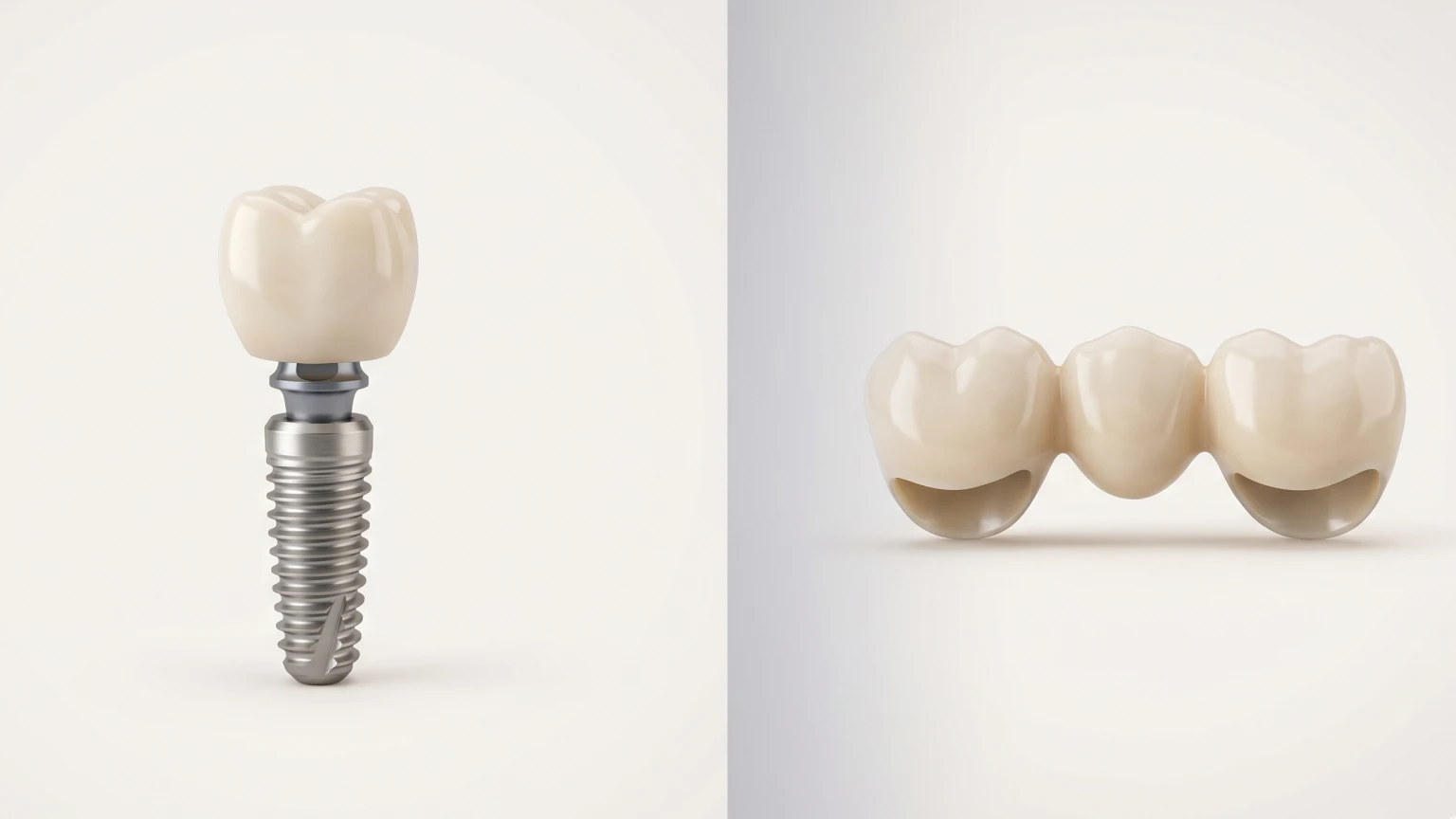
A dental implant is a titanium post placed into the jawbone to serve as an artificial tooth root. Once the bone fuses with the post (osseointegration), an abutment and a custom crown are added on top. The result looks, feels, and functions like a natural tooth. Most patients cannot tell the difference.
Pros of a Dental Implant
- Preserves jawbone: prevents the bone loss that occurs when a tooth root is missing
- No damage to adjacent teeth: no grinding or crowning of neighboring teeth required
- Longest lifespan: 20+ years with proper care; many last a lifetime
- All-in pricing transparency: Dentique’s single implant is $6,000 (implant post, abutment, and custom crown — no hidden fees)
- Looks and feels completely natural
Cons of a Dental Implant
- Surgery is required: a minor procedure performed under local anesthesia
- Longer treatment timeline: healing (osseointegration) takes 3-6 months before the crown is placed
- Higher upfront cost compared to a bridge
- Not suitable for patients with insufficient bone density without a bone graft first
Ideal Candidate for an Implant
Good bone density, non-smoker (or willing to quit for the healing period), willing to allow for the treatment timeline, and looking for a permanent replacement that protects the surrounding teeth and jawbone.
Patients who feel anxious about the implant procedure can be fully relaxed during placement. Dr. Shuaipaj offers sedation options including nitrous oxide and oral sedation for patients who need additional comfort during the procedure.
Learn about the full process at dental implants in Downers Grove, including candidacy, timelines, and what to expect at your consultation.
What Is a Dental Bridge? How It Works and Who It’s Right For
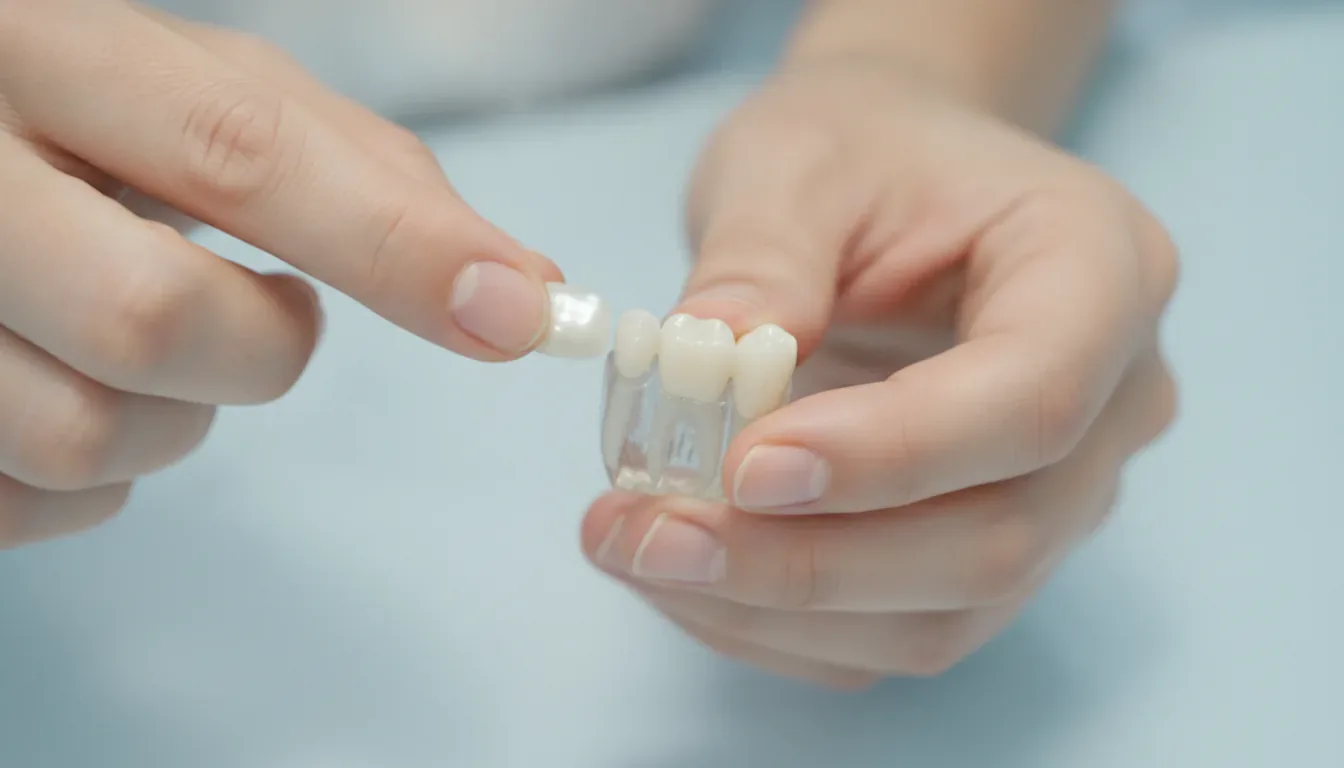
A dental bridge is a false tooth (called a pontic) held in place by crowns cemented onto the two adjacent teeth on either side of the gap. No surgery is required. The procedure typically takes two to three visits and is completed in a matter of weeks, not months.
Pros of a Dental Bridge
- No surgery: suitable for patients who cannot or prefer not to undergo a surgical procedure
- Faster treatment: completed in 2-3 visits over a few weeks
- Lower upfront cost: typically $2,000-$4,500 for a standard 3-unit bridge
- Often covered at 50% by dental insurance as a major restorative service
Cons of a Dental Bridge
- Requires grinding down the two adjacent healthy teeth to place the supporting crowns
- Does not prevent bone loss: the underlying jawbone begins to shrink without a tooth root
- Average lifespan of 10-15 years (ADA reports 10.1 years average before replacement is needed)
- Supporting teeth become more vulnerable to decay and fracture over time
- In the long run, replacement costs can exceed the cost of an implant
Ideal Candidate for a Bridge
A patient who needs a faster solution without surgery, whose adjacent teeth already need crowns anyway, who has lower bone density and is not a candidate for an implant, or who needs a lower upfront cost due to current financial constraints.
Dental Bridge vs Implant: Which Option Is Right for You?
| Decision Guide: Which Option Fits Your Situation? Choose a DENTAL IMPLANT if: you want a permanent solution, have adequate bone density, can allow for the treatment timeline, and want to protect your adjacent teeth. For most patients aged 40-65 in good general health, the implant is the better long-term investment. As one patient perspective shared online: the implant “was worth every penny” compared to replacing a bridge after eight years. Choose a DENTAL BRIDGE if: you want faster treatment without surgery, your adjacent teeth already need crowns, you have lower bone density or a medical condition that makes surgery inadvisable, or your current budget requires a lower upfront cost. A bridge is a legitimate clinical option — it is simply the right choice in specific situations, not a universal compromise. Not sure which fits your situation? A 3D scan and consultation with Dr. Shuaipaj will confirm bone density, review your existing teeth, and give you a clear recommendation. Call (630) 963-6750 to schedule. |
Dental Bridge vs Implant Cost: The Full 20-Year Picture
The sticker shock of a $6,000 implant quote is real. It is a natural first reaction. But the cost picture changes when you extend the calculation over 15-20 years.
| Cost Factor | Dental Implant (Dentique) | Dental Bridge |
| Upfront cost (single tooth) | $6,000 all-in* | $2,000-$4,500 |
| Includes | Implant post + abutment + crown | Pontic + 2 crowns on adj. teeth |
| Average lifespan | 20+ years | 10-15 years |
| Replacements over 20 years | 0 | 1-2 replacements |
| Total 20-year cost (est.) | ~$6,000 | ~$4,000-$9,000+ |
| Bone graft (if needed)** | Additional cost, assessed at consult | N/A |
| Insurance coverage | Varies; crown often covered | Often 50% of eligible costs |
| Financing available | Yes: CareCredit + payment plans | Yes: CareCredit + payment plans |
*All-inclusive: implant post, abutment, and custom crown. No additional fees for standard placement. Bone graft assessed individually. **Bone grafting is recommended for patients with insufficient bone density. Discussed at consultation.
Most insurance plans cover bridges at 50% as a major restorative service. Implant coverage varies: some plans cover the crown portion but not the implant post itself. We will help you review your benefits at your consultation.
Dentique offers flexible payment plans through CareCredit and in-house payment options to make implant treatment accessible, with monthly payments that bring the cost to a manageable range.
Dental Bridge vs Implant: Frequently Asked Questions
Is a dental bridge safer than an implant?
Both are safe procedures when performed by an experienced dentist. A bridge avoids surgery, which makes it appealing for patients who cannot undergo a procedure. Implant surgery is a minor procedure performed under local anesthesia, with sedation options available including nitrous oxide and oral sedation for anxious patients. For the long-term health of your adjacent teeth, the implant is the safer choice: it requires no grinding of neighboring teeth and preserves the jawbone structure that a bridge does not protect.
Why is a dental bridge not recommended for long-term use?
A dental bridge is not considered a permanent solution for two structural reasons. First, placing the bridge requires grinding down the two adjacent teeth to fit the supporting crowns. Those ground teeth become permanently altered and more susceptible to decay over time. Second, the bridge does not replace the tooth root, so the jawbone beneath the gap gradually loses density.
The American Dental Association reports an average bridge lifespan of 10.1 years. Supporting teeth often require additional treatment as the bridge ages. For younger patients or those with otherwise healthy adjacent teeth, these long-term consequences are why many dentists favor the implant.
What is the 3/2 rule for dental implants?
The 3/2 rule refers to the minimum bone dimensions needed for a successful implant: at least 3mm of bone width surrounding the implant, and at least 2mm of clearance between the implant and the adjacent tooth roots. These measurements ensure the implant is properly supported and does not interfere with neighboring teeth.
Candidacy is determined with a 3D cone beam CT scan. If bone volume falls short, a bone graft procedure can restore the necessary density before implant placement. A consultation at Dentique includes this assessment, with a full 3D scan to confirm your eligibility. See our dental implants in Downers Grove page for more on the process.
Is a dental bridge or implant better for front teeth?
For front teeth, the implant is the preferred option in most clinical cases. Front teeth are highly visible and cosmetically demanding. An implant does not alter the adjacent teeth and produces a result that is indistinguishable from a natural tooth in color, shape, and translucency. A bridge on a front tooth requires prepping the neighboring teeth, which changes their appearance and introduces long-term vulnerability.
Front teeth are also under constant aesthetic scrutiny: any discoloration or margin visibility as the bridge ages is more noticeable than it would be at the back of the mouth. Patients who are concerned about the look of their smile almost universally prefer the implant outcome for front teeth.
Does dental insurance cover implants or bridges?
Most dental insurance plans cover bridges at approximately 50% of the eligible cost, as a major restorative procedure. Implant coverage varies widely by plan. Some plans cover the crown portion of the implant but not the implant post or the abutment. A few plans provide partial coverage for the full procedure.
The best step is to review your specific plan benefits before your consultation. Dentique accepts Delta Dental, Cigna, Aetna, BCBS, MetLife, Guardian, Humana, and United Healthcare. You can check your insurance coverage on our website, or call us and we will verify your benefits before your appointment. CareCredit financing and in-house payment plans are also available.
Talk to Dr. Shuaipaj: Get a Personalised Bridge or Implant Recommendation
Dr. Xhelo Shuaipaj, DMD/D.D.S., has placed hundreds of dental implants across Dentique’s two locations in Downers Grove and Lemont, Illinois. A 30-minute consultation includes a clinical exam, a review of your existing teeth and bone structure, and a clear recommendation for your specific situation.
Dentique’s all-in implant price is $6,000. No surprise fees. No vague estimates. You will know the full cost before you commit to anything.
If you are weighing a bridge against an implant and want a professional opinion that is honest about both options, this is the right starting point.
| Schedule Your ConsultationDowners Grove: (630) 963-6750 | 1527 75th Street, Downers Grove, IL 60516Lemont: (630) 257-4222 | 15220 127th St, Lemont, IL 60439Book online: book your consultationLearn more: dental implants in Downers Grove |