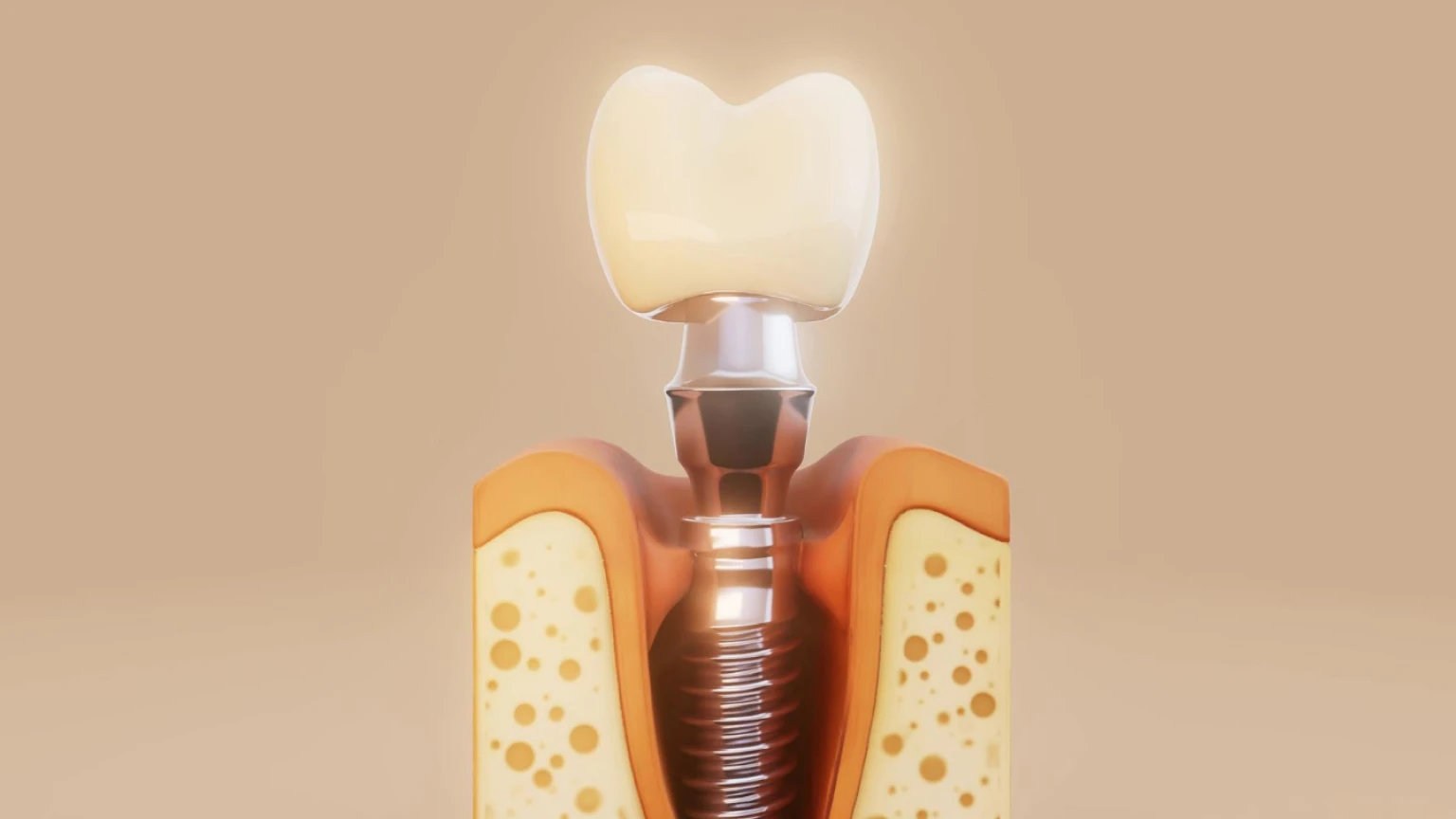
Having placed hundreds of dental implants, Dr. Shuaipaj at Dentique Dental Care has guided patients through every stage of the process — from the first 3D scan to the moment the final crown settles into place. In this guide, you will learn exactly what happens at each step of the dental implant process, how long each stage takes, what it feels like, and what Dentique’s all-inclusive $6,000 fee actually covers.
| The dental implant process replaces a missing tooth root with a titanium post that fuses permanently to the jawbone. Over 3 million Americans now have dental implants, according to the American Academy of Implant Dentistry, with long-term studies showing success rates of 95 to 98 percent at 10 years. At Dentique Dental Care in Downers Grove and Lemont, the process follows five stages from consultation to final crown. |
Why the Dental Implant Process Takes Longer Than You Might Expect – and Why That Is a Good Thing
One of the most common questions patients ask is: why does the implant timeline stretch three to six months? The answer is also why implants succeed where other tooth replacements fall short.
After a tooth is lost, the jawbone beneath it begins to shrink — a process called resorption. It starts almost immediately. Patients who delay implant treatment sometimes find that bone loss has advanced to the point where additional procedures are needed, adding both time and cost. Starting the dental implant process sooner rather than later protects the bone you still have.
The three-to-six month healing window is not waiting time — it is working time. During this period, your bone is growing around and fusing to the titanium post at a cellular level. This process, called osseointegration, is what gives the implant its permanent hold. You cannot rush bone biology, and you would not want to. According to a long-term study published by Wiley Clinical Implant Dentistry, implants placed at the Brånemark Clinic maintained a 95.6 percent survival rate over 38 to 40 years — proof that a little patience up front pays dividends for decades.
You are far from alone in this. About 178 million Americans are missing at least one tooth, according to the American College of Prosthodontists, and roughly 500,000 new patients begin the implant process every year. This is a well-traveled path.
| Key Fact: 3–6 months for osseointegrationThe healing window is not downtime — it is when your bone permanently bonds to the titanium post. This is what makes implants last 25+ years. |
The Dental Implant Process Step by Step: 5 Stages From Consultation to Crown
The dental implant step by step process can feel like a lot to take in, so here is each stage broken down plainly — what physically happens, how long it takes, and what you will experience.
Step 1: Consultation and 3D Imaging
Your first appointment is a comprehensive evaluation. Dr. Shuaipaj uses a 3D cone-beam scan — not a standard X-ray — to assess bone density, jaw anatomy, and the exact position for the implant. This appointment also determines whether preparatory work, such as a bone graft, is needed. Expect the consultation to take one to two hours; the 3D scan takes just minutes but the information it provides shapes the entire treatment plan.
Step 2: Preparatory Work (Bone Graft If Needed)
Not every patient needs a bone graft, but if your jaw lacks sufficient bone density to anchor the implant securely, a graft is placed first. The graft material — often synthetic or donor bone — integrates with your own jaw over approximately four months. This stage adds time but is essential for long-term implant stability. If no graft is needed, you move directly to Step 3.
Step 3: Implant Placement Surgery
During placement surgery, the titanium post is inserted directly into the jawbone. The procedure is performed under local anesthesia, so you feel pressure but not pain. For patients who experience anxiety about surgery, sedation options are available at Dentique — including nitrous oxide and oral sedation — to keep the experience comfortable from start to finish. Most patients are surprised by how manageable the procedure is. Surgery itself typically takes one to two hours, and the majority of patients return to normal activity within one to three days.
Step 4: Healing and Osseointegration
This is the longest stage, and it happens largely without any action required from you. Over the next three to six months, your jawbone gradually grows around and fuses to the titanium post. Initial soft tissue heals within one to two weeks; mature bone integration takes longer. A 20-year meta-analysis published in Springer Clinical Oral Investigations found a mean implant survival rate of 92 percent across prospective studies — a testament to how reliably osseointegration works when given time to complete.
| Osseointegration — the process by which your jawbone grows around and fuses to the titanium implant — typically takes 3 to 6 months. During this period, most patients experience no discomfort; the biological work happens entirely below the surface. A 2025 long-term study tracking implants over 38 years found a 95.6 percent cumulative implant survival rate, confirming that patience during healing pays off for decades. |
Step 5: Abutment and Final Crown Placement
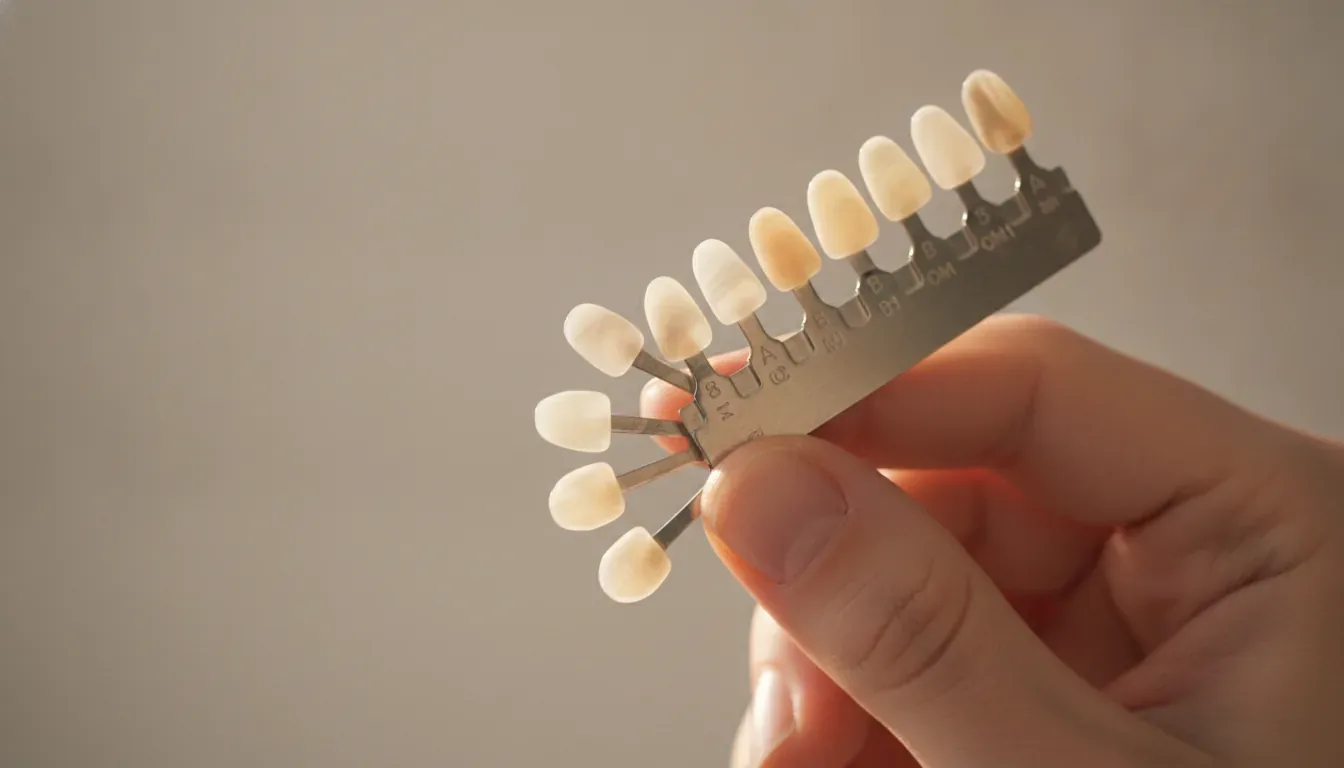
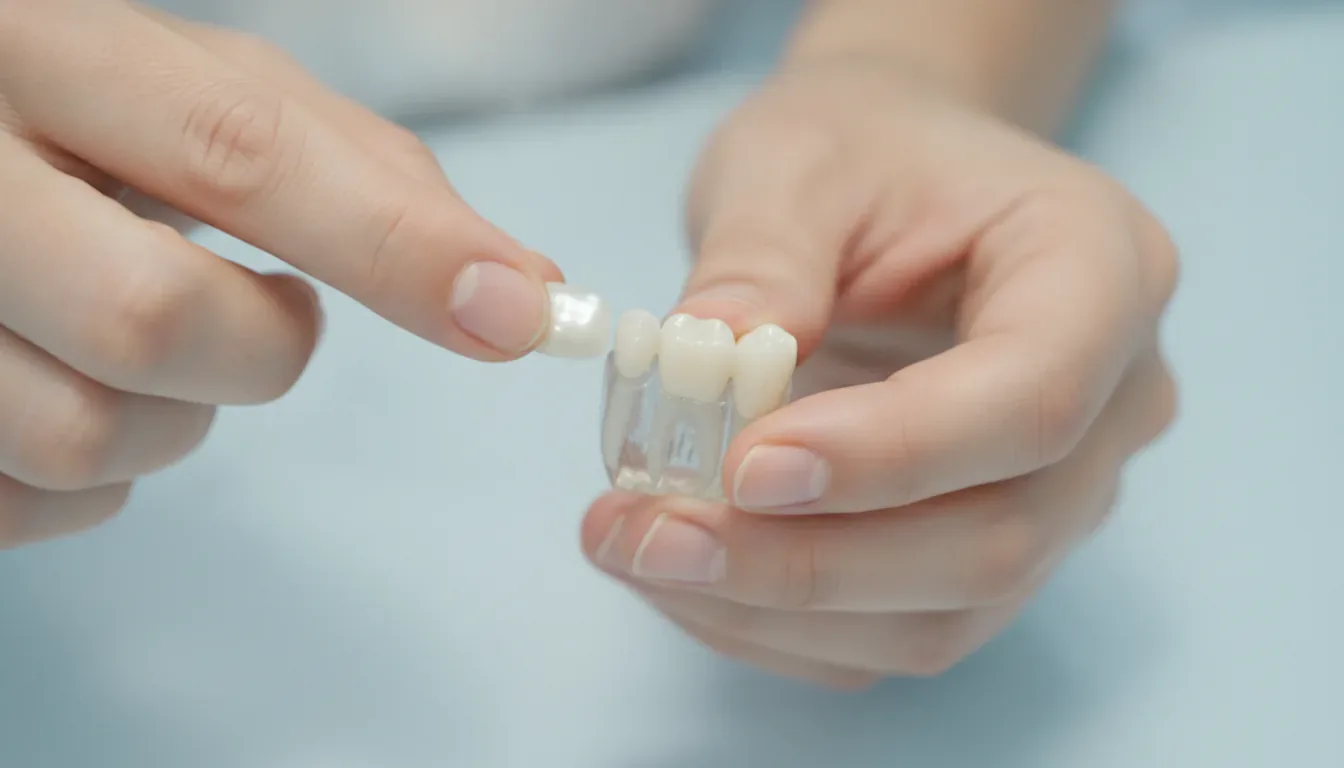
Once osseointegration is confirmed, a small connector piece called an abutment is attached to the implant post. Your gums are given two to three weeks to heal around it. Then the final custom crown — shaped and color-matched to your natural teeth — is secured in place. This is the moment the process becomes visible: a permanent, natural-looking tooth that functions exactly like the one it replaced.
Your Dental Implant Healing Timeline: What to Expect Week by Week and Month by Month
The implant timeline is often the part that surprises patients most. Below is what actually happens at each phase — including the question many people are too embarrassed to ask directly: will you have a tooth in the gap while you wait?
Week 1–2: Surgical Recovery
The first 48 to 72 hours are the most active for your body. Mild swelling and tenderness are normal; they peak on day two and resolve for most patients within a week. A soft diet is recommended for the first few days. Most patients return to desk work and normal daily activity within one to three days of surgery — not one to three weeks.
Weeks 3–12: Early Osseointegration
From the outside, nothing appears to be happening. You will feel no discomfort, and you will not notice any change day to day. Below the surface, however, your bone is actively integrating with the titanium post. Initial osseointegration — the stage at which the peri-implant interface is replaced by maturing bone — is typically complete between eight and twelve weeks.
Months 3–6: Full Bone Integration
Mature bone remodeling continues through months three to six. By the end of this phase, the implant is permanently anchored in your jaw. This is the most common point for Dr. Shuaipaj to confirm osseointegration is complete and schedule the abutment appointment.
Month 6+: Crown Placement and Final Result
The abutment is placed, gums heal over two to three weeks, and the final crown is attached. From this point forward, you care for the implant just like a natural tooth.
| Will you have a tooth while waiting?In most cases, yes. A temporary crown, flipper, or partial denture is typically provided during the healing period so you are never without a tooth in the gap. Your specific plan is determined during your consultation. |
If a bone graft was needed, add approximately four months to your timeline. The total tooth extraction and implant timeline — from extraction through final crown — ranges from six to twelve months for most patients, though the active recovery period within that is just a fraction of the time.
What to Expect When You Choose Dentique for Your Dental Implant
All-Inclusive $6,000 Pricing — No Line-Item Surprises
We know the phrase “sticker shock” gets used a lot with implant pricing, and for good reason. The national average quoted for a single implant post alone is $2,143 — but that figure does not include the abutment or the crown. The realistic all-in national range for a complete single-tooth implant is $3,000 to $6,000, according to MetLife and MainStreet Dental.
At Dentique, our single-implant fee is $6,000. That fee covers the titanium implant, the abutment, and the custom crown — everything. There are no line items added at the end, no separate crown billing, no sticker shock from an itemized invoice. Our $6,000 is at the top of the national range, but it is also the complete picture.
We consider implants an investment rather than an expense — one that, with proper care, is designed to last a lifetime. For patients who need help managing the cost, a payment plan is available through CareCredit and other financing partners. Learn more about your dental financing options at Dentique.
| $6,000 all-inclusive — implant + abutment + crown No add-ons. No hidden line items. One transparent fee covers the complete single-tooth restoration. |
Sedation Available for Your Comfort
The placement surgery is typically far more comfortable than patients expect — local anesthesia means you feel pressure, not pain. For patients who feel nervous about the procedure, Dentique offers sedation to make the experience easier. Options include nitrous oxide (laughing gas) for mild anxiety and oral sedation for deeper relaxation. Your comfort is part of our process, not an afterthought. Learn more about our sedation options at Dentique.
Downers Grove and Lemont Locations
Dentique serves implant patients across the western suburbs of Chicago from two convenient locations. We offer Downers Grove implants at our primary practice and the same comprehensive care from our Lemont office — same team, same technology, same transparent pricing. Call us at (630) 963-6003 to find out which location works best for you.
What Dr. Shuaipaj Wants You to Know Before Getting a Dental Implant
Dr. Shuaipaj, General & Sedation Dentist at Dentique, shares what he sees most often in patients considering implants:
| The patients who delay the most — usually because they’re uncertain about the process or the cost — are often the ones who face more complex treatment later. Bone loss doesn’t pause while you’re thinking about it. My strongest advice: come in for a consultation first. You’ll know exactly where you stand and what’s involved before making any decision. A few things Dr. Shuaipaj wants implant candidates to understand: 1. The surgery itself is gentler than you expect. Most patients describe post-op discomfort, not pain during the procedure. Local anesthesia does its job. 2. Bone loss is the real urgency — not the timeline. A 3-month healing window beats a 12-month bone-grafting detour caused by delay. 3. “I wish I had gone sooner” is the most common thing our completed implant patients say. The process felt bigger before it started than it did living through it. 4. Questions about whether you are a candidate, whether sedation is right for you, or what the fee covers — all of those are answered at the initial consultation, with no obligation to proceed. |
5 Dental Implant Myths That Scare Patients Away
Fear is often based on things that are not quite accurate. Here are the most common myths we hear — and what the evidence actually shows.
Myth 1: The Surgery Is Extremely Painful
Truth: The idea of the surgery is often worse than the surgery itself. The procedure is performed under local anesthesia, meaning you feel pressure but not pain. Active recovery — swelling and soreness — peaks at 48 to 72 hours and resolves for most patients within a week. Most people are back to work within one to three days.
Myth 2: The Healing Process Takes Over Your Life
Truth: The healing timeline spans three to six months, but you are living normally for nearly all of it. After the first week, most patients report zero daily disruption from the implant healing process. The three-to-six month window is mostly passive.
Myth 3: Implants Frequently Fail
Truth: Clinical studies consistently show 95 to 98 percent success rates at 10 years. The 38-year Brånemark Clinic data shows a 95.6 percent cumulative survival rate. When implants are properly placed and cared for, failure is the exception, not the norm.
Myth 4: Implants Are Only for Younger Patients
Truth: There is no upper age limit for dental implants. Candidacy is based on bone density, general health, and healing capacity — not age. Many of our patients at Dentique are in their 60s and 70s. A consultation determines candidacy; age alone does not disqualify anyone.
Myth 5: Implants Are Always Much More Expensive Than Alternatives
Truth: The national all-in range for a complete single-tooth implant is $3,000 to $6,000. Dentique’s $6,000 all-inclusive fee sits at the top of that range but includes everything: implant, abutment, and custom crown. Quotes that start lower often separate out crown costs, creating the same total — or higher — once everything is added. For long-term value, implants compare favorably to alternatives that require replacement every 5 to 15 years. Patients considering implants in the western suburbs can see the specifics for dental implants in Downers Grove at our practice page.
Frequently Asked Questions About the Dental Implant Process
How long does the dental implant process take from start to finish?
The full dental implant process takes 3 to 6 months on average, though this can extend to 9 to 12 months if bone grafting is needed first. The timeline breaks down roughly like this: consultation and 3D imaging (1–2 weeks); placement surgery and early healing (1–2 weeks active recovery, then passive osseointegration over 3–6 months) and abutment plus final crown placement (3–5 weeks at the end). Most of the time in the middle is passive — you are living normally while your bone integrates with the implant.
What are the steps of getting a dental implant?
The dental implant process step by step involves five stages:
1. Consultation and 3D imaging to assess bone and map the implant site.
2. Preparatory work, such as a bone graft, if needed.
3. Placement surgery, where the titanium post is inserted into the jawbone under local anesthesia.
4. Healing and osseointegration — 3 to 6 months for your bone to fuse permanently to the post.
5. Abutment attachment and final custom crown placement. Each stage is planned and confirmed before moving to the next.
Is the dental implant procedure painful?
The procedure itself is done under local anesthesia — most patients report feeling pressure but not pain during surgery. Post-op: mild soreness and swelling peak at 48 to 72 hours and resolve within a week for the majority of patients. Most people manage with over-the-counter pain relief. For patients who feel anxious about the procedure, nitrous oxide or oral sedation is available at Dentique to make the experience more comfortable from start to finish.
What is the most painful part of getting a dental implant?
For most patients, the first 48 to 72 hours after placement surgery are the most uncomfortable — not the surgery itself, which is numbed. The idea of the procedure tends to be more anxiety-provoking than the reality. Patients consistently describe the post-operative soreness as manageable, comparable to a tooth extraction. The anticipation phase — the days or weeks before the appointment — is frequently reported as harder than the procedure itself.
Do you have teeth while waiting for the implant to heal?
In most cases, yes. A temporary crown, flipper, or partial denture is typically provided during the 3 to 6 month healing period so you are never without a tooth in the gap. The specific temporary solution depends on the location of the implant, your bite, and your individual treatment plan — your options are discussed during the consultation. You will not be left with a visible gap in normal circumstances.
Ready to Find Out If Dental Implants Are Right for You?
The implant process can feel like a lot before you understand it. After reading this guide, you have the full picture: what happens at each stage, how long it takes, what to expect during healing, and exactly what Dentique’s all-inclusive fee covers.
The next step is not a commitment to anything. It is a consultation and a 3D scan that tells you whether you are a candidate, whether bone grafting is needed, and what your specific timeline and fee would be. Many patients tell us afterward that they wish they had come in sooner. If you are ready to take that first step, we would be glad to help — at our Downers Grove or Lemont location, whichever works best for you.
| Schedule a Consultation → visit : https://dentiquedentalcare.com/ |
Starting a conversation about your options is a life-changing decision — we just want to make sure you have the full picture first. Learn about dental implants at Dentique to see if this is right for you, or schedule a consultation to get your 3D scan and personalized treatment plan.