
For anyone with bleeding gums or who has put off the dentist: calm, judgment-free care with sedation options. Sore, bleeding, or neglected gums are common, and they are treatable. If your gums bleed when you brush, or you have put off the dentist for years, you can start here at your own pace, with no pressure.
Downers Grove (630) 454-9299
Lemont (630) 685-0017
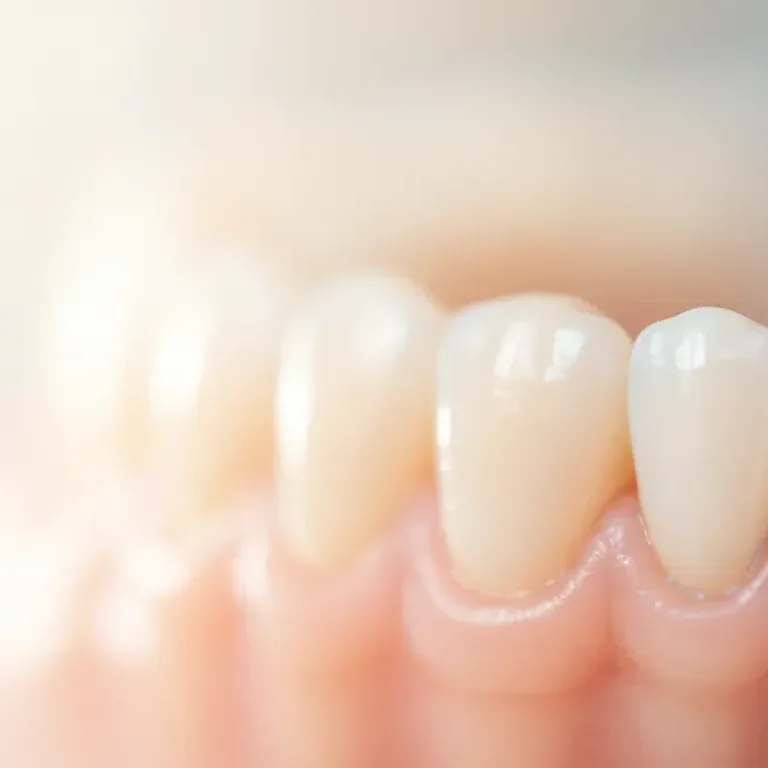
Gum disease is a common, treatable infection of the gums and the bone around your teeth. It can be treated, and early stages can often be reversed. In its early form it is called gingivitis; when it advances and affects the bone it is called periodontitis. Most cases are managed without surgery, starting with a deep cleaning called scaling and root planing, and it can be done gently, with sedation options for anxious patients.
Gum disease, also called periodontal disease, is an infection of the gums and the bone that holds your teeth in place, caused by plaque bacteria that build up on the teeth and gumline. In its mild, early form it is called gingivitis; when it advances and starts to damage the bone, it is called periodontitis. The difference matters because it points to what to do next.
Early, reversible
Advanced, manageable
Gingivitis can often be turned around; periodontitis is managed and kept under control (Mayo Clinic).
The most common warning signs of gum disease are gums that bleed when you brush or floss, swollen or tender gums, persistent bad breath, and gums that pull away from your teeth. Other signs include receding gums that make teeth look longer, loose teeth, and tenderness when you chew (Mayo Clinic).
When you brush or floss.
Sore or puffy gum tissue.
That does not clear up.
Teeth start to look longer.
Teeth that feel loose.
Discomfort as you bite.
Bringing these in early is the point, not a reason for embarrassment.
Periodontal treatment is for anyone with signs of gum disease, and for anyone who has been told they need a deep cleaning. That includes people who have put off the dentist for years, and people at higher risk, such as those with diabetes or who smoke. If you have avoided the dentist for a long time, you are still welcome here, without judgment. That is who Dentique is built for.
Most gum disease is treated without surgery. It usually starts with a deep cleaning called scaling and root planing, a non-surgical cleaning of the tooth root and below the gumline that removes plaque and tartar from the gum pockets (CDC). After that comes a periodontal maintenance plan to keep it under control. None of this is a cure or a guarantee; it is steady control of an infection.
We measure the gum pockets and assess the stage.
Scaling and root planing below the gumline.
Sometimes with antibiotics, where it helps.
Regular cleanings on a schedule to keep it stable.
For severe cases, advanced or surgical care may be needed. Whether that is performed in-house or co-managed with a specialist is confirmed for you before any plan begins.
A deep cleaning is done with the area fully numbed, and it can be done with sedation for added comfort. A local anesthetic numbs the area, so the cleaning itself stays comfortable, and sedation here is a routine option for anxious patients, not an upsell. We go at your pace, with no judgment and no pressure.
A local anesthetic numbs the area, so the cleaning stays comfortable.
Nitrous oxide, a light option that wears off quickly, to help you relax.
A pill that helps anxious patients stay calm through the visit.
The cost of a deep cleaning, or scaling and root planing, varies by how many areas of the mouth need treatment. Nationally it commonly runs about $150 to $450 per quadrant, and roughly $600 to $1,200 for a full mouth. This is a national range, not Dentique’s price, and your Dentique price is confirmed in writing at your consultation, before any treatment begins.
Per quadrant for a deep cleaning, and roughly $600 to $1,200 for a full mouth. Sources include Delta Dental ($150 to $260 per quadrant), CareCredit (average $242), and Humana ($235 to $303 per quadrant).
Confirmed in writing at your consultation, before any treatment begins.
Insurance: we work with most major PPO plans, including Delta Dental, MetLife, Cigna, Aetna, Blue Cross Blue Shield of Illinois, UnitedHealthcare, Guardian, and Humana. Financing: CareCredit, Cherry, and Sunbit.
Local Dentique fees for periodontal deep cleaning and maintenance are supplied by the client and shown here before publish.
Dr. Xhelo Shuaipaj DDS FDOCS FICOI has practiced dentistry for more than 30 years, and treats every patient personally at both the Downers Grove and Lemont offices, with a judgment-free, no-pressure approach. Patients often mention that they were not upsold, and that treatment planning was explained without pressure. You are cared for by one experienced dentist you get to know, over many years, not a rotating roster.
The same dentist treats you personally.
Rated 4.9 on Google.
No-pressure treatment planning.
Downers Grove and Lemont.
Gum care covers several related topics, and these guides go deeper on the questions people ask most about gum disease, gingivitis, treatment options, and the process.
The early, reversible stage of gum disease, and how it is treated.
Read the guide
How to tell if you have gum disease, from bleeding gums to loose teeth.
Read the guide
Deep cleaning, maintenance, and advanced care, side by side.
Read the guide
The gum disease treatment process, from first exam to maintenance.
Read the guide
Early gum disease, called gingivitis, can often be reversed with good daily brushing and flossing (NIDCR). Once it advances to periodontitis, it is not curable, but it can be controlled and kept stable with treatment and regular maintenance (Cleveland Clinic).
Periodontal maintenance, the regular cleaning after scaling and root planing, is usually recommended every 3 to 4 months once you have had gum disease, more often than a standard cleaning, to keep it stable. We confirm the interval that fits you.
A deep cleaning is done with the area fully numbed, so it stays comfortable, and sedation options are available if you feel anxious. We offer laughing gas (nitrous oxide) and oral conscious sedation.
Most major PPO plans help with periodontal treatment. Dentique works with most major PPO plans, including Delta Dental, MetLife, Cigna, Aetna, Blue Cross Blue Shield of Illinois, UnitedHealthcare, Guardian, and Humana, and confirms your price in writing before treatment.
It is rarely too late to treat gum disease. Even advanced periodontitis can usually be controlled and stabilised, though gum tissue and bone already lost do not grow back on their own. Treatment stops further loss.
Gum tissue does not grow back on its own after it has receded. Treatment stops further loss and keeps the infection under control. This is control, not a cure.
Dr. Xhelo Shuaipaj DDS FDOCS FICOI has practiced dentistry for more than 30 years and holds fellowships in sedation and implantology, and reviewed this page for accuracy. His credentials are DDS; FDOCS, Fellow of DOCS Education (sedation); and FICOI, Fellow of the International Congress of Oral Implantologists. The medical information here draws on the CDC, Mayo Clinic, NIDCR, Cleveland Clinic, and the American Academy of Periodontology. Clinician-reviewed and last updated [date added before publish].
Booking a consultation is a no-pressure first step. We will look at your gums, answer your questions, and confirm your price in writing before any treatment begins. Care is judgment-free, sedation options are available, and we will greet you by name. Call the office closest to you, and if we cannot pick up, we will call you back.
Downers Grove (630) 454-9299
Lemont (630) 685-0017
Judgment-free, sedation available, your price confirmed in writing.
Get the smile you deserve today!