For most adults, Invisalign is the better fit: it is discreet, removable, and works around your professional and social life. But braces still win for complex bite issues. This comparison breaks down visibility, comfort, treatment time, cost, and the specific situations where each option makes sense so you can choose the right path with confidence.
Invisalign vs Braces for Adults: Side-by-Side
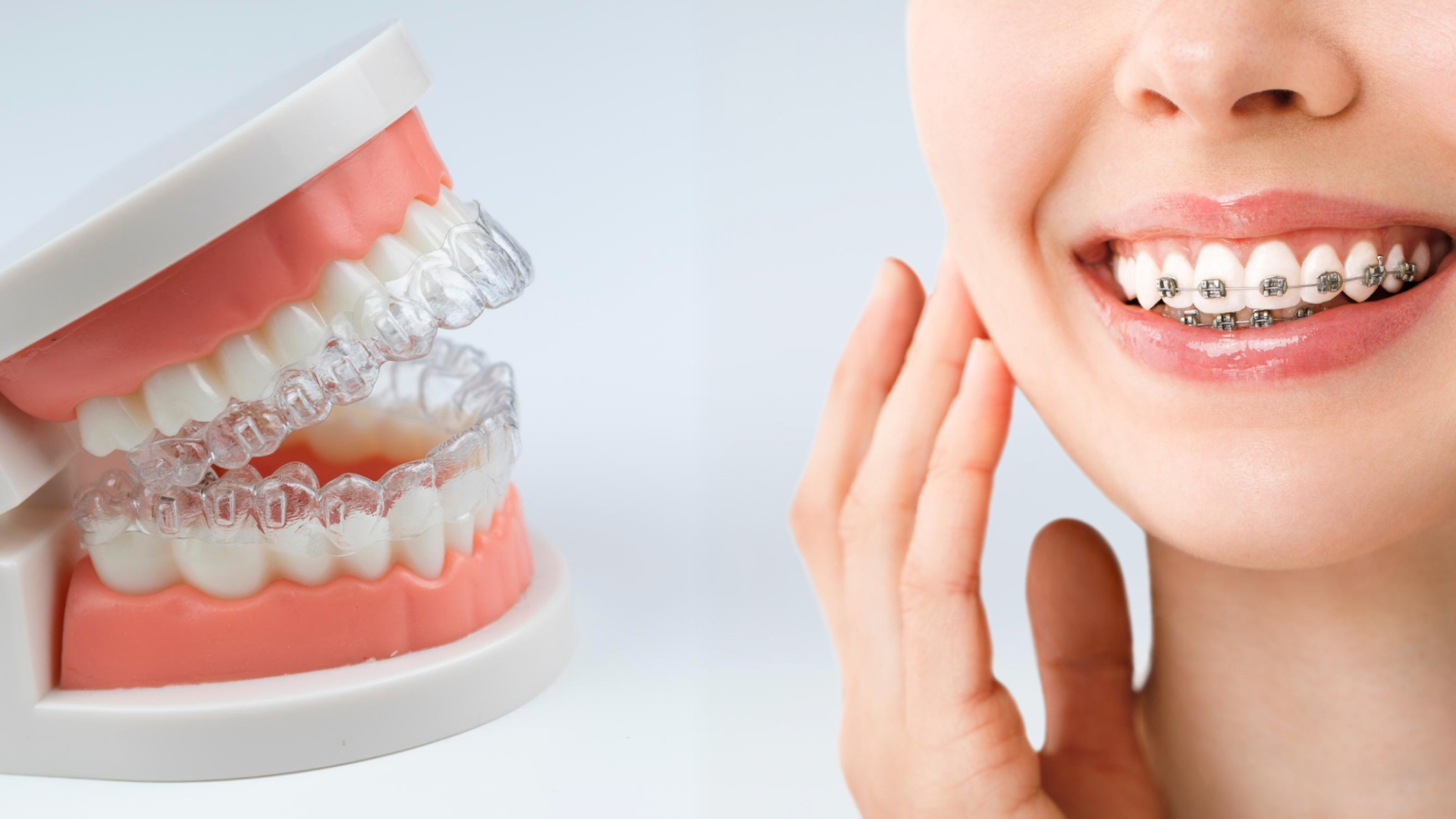
Invisalign uses clear, removable aligners changed every one to two weeks, while traditional braces use fixed metal brackets and wires adjusted monthly. Both correct crowding, spacing, and bite issues, but they differ in visibility, lifestyle impact, compliance requirements, and the types of cases they handle best.
Here is how the two options compare across the factors that matter most to adults:
| Criteria | Invisalign | Traditional Braces |
| Visibility | Nearly invisible clear trays | Visible metal brackets and wires |
| Removable? | Yes (for eating and brushing) | No (fixed for full treatment) |
| Comfort | Smooth plastic, mild pressure each new tray | Brackets may irritate cheeks and lips |
| Avg. Treatment Time | 12 to 18 months | 18 to 24 months |
| Best For | Mild to moderate alignment; adults who want discretion | Severe crowding; complex bite correction |
| Cost Range (National) | $3,500 to $8,000 | $3,000 to $7,000 |
| Compliance Factor | Must wear 20 to 22 hours per day | No compliance needed (always on) |
| Food Restrictions | None (remove aligners to eat) | Yes (no hard or sticky foods) |
Explore Invisalign clear aligners for a detailed look at how clear aligner treatment works at Dentique.
How Invisalign Works for Adults
Invisalign straightens teeth through a series of custom-fabricated clear aligners, each designed to shift specific teeth by small increments over one to two weeks. Adults with mild to moderate crowding, gaps, or minor bite misalignment typically finish treatment in 12 to 18 months.
Your dentist takes digital scans of your teeth and maps a full treatment plan showing the projected movement from start to finish. You receive a series of aligner trays, each worn for one to two weeks before swapping to the next set. Check-in appointments happen every six to eight weeks to monitor progress.
Advantages for adults. The trays are nearly invisible. Patients consistently say “no one could tell” they were in treatment, which matters when you are in client meetings, presenting to a team, or appearing on camera. You remove aligners to eat and brush, so there are no food restrictions and oral hygiene stays simple. Treatment time averages 12 to 18 months, though mild cases may finish even faster.
What to know before starting. Invisalign requires 20 to 22 hours of daily wear. That compliance is the single biggest factor in whether treatment stays on schedule. If you travel frequently or tend to forget, the discipline is real. Complex cases involving severe crowding or significant bite correction may not respond well to aligners alone, and your dentist should be upfront about that.
Dentique also offers nitrous oxide and oral sedation for patients who feel anxious about dental work, including orthodontic appointments. Explore DG clear aligners to learn how Invisalign treatment works at our Downers Grove location.
How Traditional Braces Work (And When They’re Still the Better Choice)
Traditional metal braces use brackets bonded to each tooth and connected by an archwire that an orthodontist tightens at regular appointments. Braces remain the gold standard for severe crowding, significant overbites, underbites, and complex rotations that aligners cannot correct predictably.
Braces apply constant, controlled force to teeth without requiring any daily effort from you. There is no compliance factor: the hardware does the work 24 hours a day. An orthodontist adjusts the wires at each visit, guiding teeth into position over the course of treatment.
When braces make more sense. If your case involves significant skeletal bite correction, multi-directional tooth movement, or severe crowding that requires precise bracket placement, braces give the orthodontist more control. According to the ADA guide to orthodontics fixed appliances remain the recommended approach for complex orthodontic needs.
The trade-offs for adults. Braces are visible for the full treatment period, typically 18 to 24 months. They restrict certain foods, make brushing and flossing more involved, and can cause irritation from brackets and wires against the cheeks and lips. For adults who are self-conscious about appearance during treatment, this visibility is often the deciding factor in choosing aligners instead.
A note about Dentique. We specialize in Invisalign for adult patients because it fits the lifestyle and goals of most adults who walk through our doors. We do not offer traditional braces. If your case requires braces, Dr. Shuaipaj will tell you directly and refer you to a trusted orthodontist in the Downers Grove and Lemont area. Honesty about what we offer (and what we do not) is part of how we earn trust.
Which Option Fits Your Life?
The right choice depends on three things: your case complexity, your daily lifestyle, and your budget. Here is the breakdown by situation:
If you want discreet treatment for mild to moderate alignment issues, choose Invisalign. You will straighten your teeth without coworkers, clients, or friends noticing. Most patients say the confidence boost alone made it “worth the cost.”
If you have complex bite issues requiring precise orthodontic control, consider braces. We will refer you to a trusted local orthodontist who specializes in the type of correction you need.
If dental anxiety is keeping you from starting either option, know that Dentique offers nitrous oxide and oral sedation alongside Invisalign treatment. Anxiety does not have to be the reason you keep waiting.
Dr. Shuaipaj has helped hundreds of adults through Invisalign treatment and will give you an honest recommendation based on your specific case. No pressure, no upsell. If Invisalign is not the right fit, he will tell you.
Invisalign vs Braces: What Adults Actually Pay
Invisalign for adults at Dentique Dental Care costs $5,400 to $6,000 all-in, including scans, aligners, refinements, and retainers. The national average for Invisalign ranges from $3,500 to $8,000, while traditional braces range from $3,000 to $7,000 depending on case complexity.
| Treatment | Dentique Price | National Average |
| Invisalign | $5,400 to $6,000 (all-in) | $3,500 to $8,000 |
| Traditional Braces | Not offered | $3,000 to $7,000 |
Most dental insurance plans that cover orthodontics apply the same benefit to Invisalign as they do to braces. The typical lifetime orthodontic benefit ranges from $1,000 to $2,000. Check your dental insurance coverage to see what your plan includes.
Dentique also offers monthly payment options so the cost of Invisalign fits your budget without a large upfront payment.
Invisalign and Braces Questions Adults Ask Most
Do you really have to wear Invisalign 22 hours a day?
Yes. Invisalign works only when the aligners are in your mouth. The 20 to 22 hour daily wear requirement is the minimum needed for your teeth to track with the treatment plan. You remove them to eat, drink anything besides water, and brush your teeth. Most patients build the habit within the first week and find the routine manageable. Skipping hours consistently can delay treatment or require additional aligners.
Will insurance cover Invisalign?
Most dental insurance plans that include orthodontic benefits apply the same coverage to Invisalign as they do to braces. The typical lifetime orthodontic benefit is $1,000 to $2,000. Dentique verifies your insurance benefits before treatment begins so you know your out-of-pocket cost upfront with no surprises.
Is $5,000 a lot for Invisalign?
The national average for Invisalign ranges from $3,500 to $8,000, so $5,000 falls in the mid-range. Dentique’s published price of $5,400 to $6,000 includes scans, all aligner trays, refinements, and retainers. Many patients say the investment was “worth the cost” once treatment was complete. Financing options can bring the monthly cost below $150.
What is the hardest week of Invisalign?
Most patients find the first three to five days with each new set of trays the most uncomfortable, with the very first set being the most noticeable. The pressure is a sign the aligners are moving your teeth. After the initial adjustment period, each new set feels less intense. Over-the-counter pain relievers and switching to a new tray at bedtime can help ease the transition.
Am I too old for Invisalign?
No. There is no upper age limit for Invisalign or orthodontic treatment in general. According to AAO orthodontic patient data, adults over 40 represent one of the fastest-growing segments of orthodontic patients. Healthy teeth and gums are the only clinical requirements. Patients in their 50s, 60s, and beyond regularly start and complete Invisalign for adults over 40 with excellent results.
See If Invisalign Is Right for You
Schedule a free Invisalign consultation at Dentique Dental Care. Dr. Shuaipaj will evaluate your teeth, explain whether Invisalign fits your case, and give you a clear cost estimate. No pressure, no obligation. Nitrous oxide and oral sedation are available if anxiety has been holding you back.Learn more about Invisalign clear aligners or explore DG clear aligners at our Downers Grove office.