
If sitting in a dental chair makes your chest tighten, you are part of the majority, not the exception. Tens of millions of adults share exactly this fear, and most of them have never told their dentist about it.
So: what does sedation dentistry feel like? The short answer is that it depends on the level, but every option shares one quality: you stop dreading the appointment and start getting the care your teeth need.
A 2025 census-matched survey published in the Journal of the American Dental Association found that 72.6% of US adults report dental fear, with 26.8% describing it as severe. Your anxiety about the dentist is not a character flaw. It is a widely shared human experience, and sedation dentistry was built for exactly this situation.
Dental fear is not rare, and it is not irrational. Research shows that between 5% and 15% of people avoid dental visits entirely because of it, which means small problems grow into expensive ones. The cycle is familiar: fear leads to avoidance, avoidance leads to worse teeth, worse teeth lead to more complex treatment, and more complex treatment feels even more frightening.
The question “what does it actually feel like” is the first honest question a fearful patient asks. It is not about booking an appointment. It is about doing safe reconnaissance before deciding whether sedation dentistry is a real option for you. At Dentique, there are two levels of sedation available: nitrous oxide and oral sedation. Each creates a genuinely different experience, which means there is an option calibrated to how anxious you actually are. To learn how each level is used, visit sedation dentistry at Dentique.
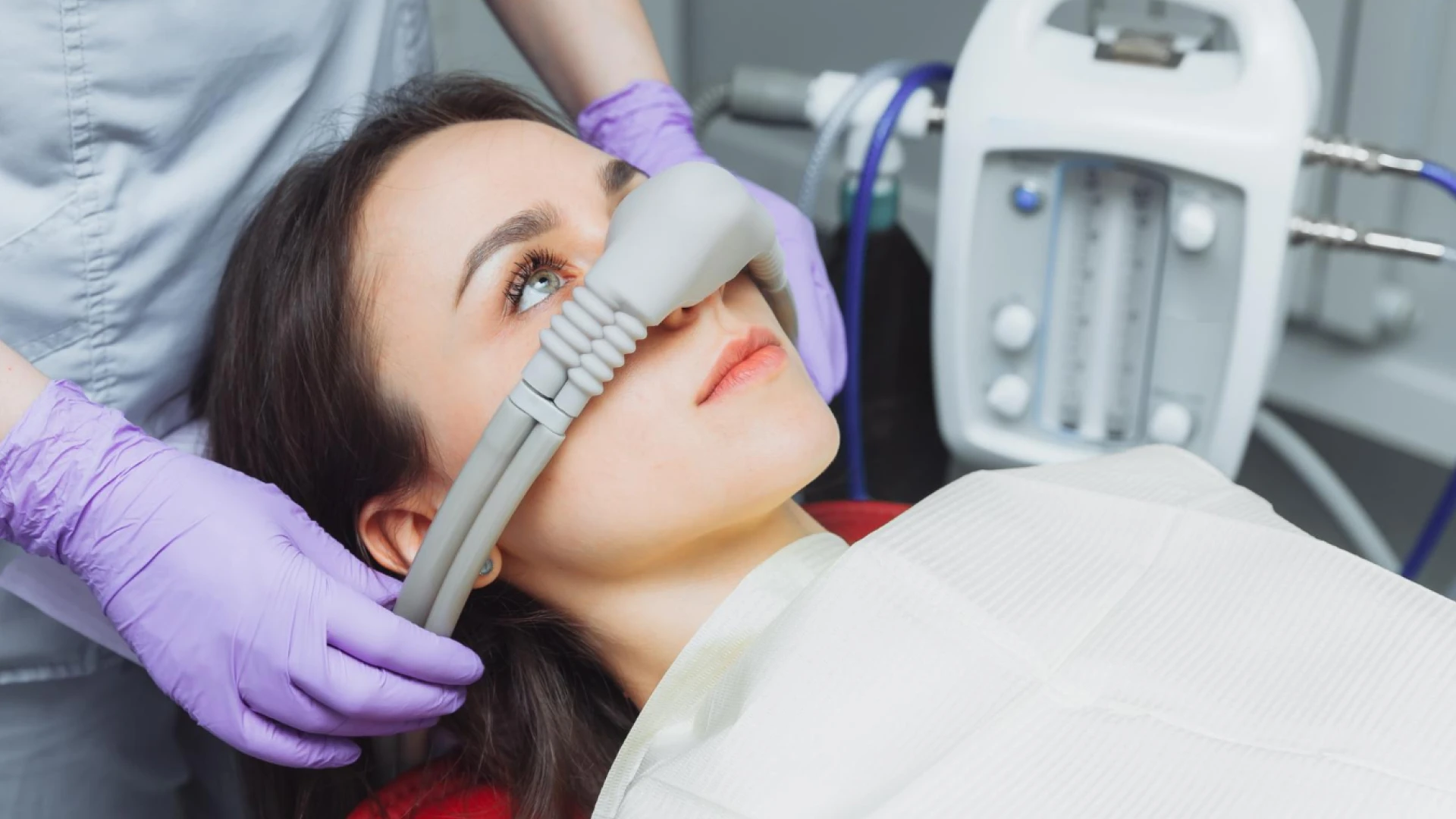
Nitrous oxide begins working within three to five minutes of inhalation and leaves the body within minutes of stopping, making it the only sedation option where patients can typically drive themselves home afterward. According to the Cleveland Clinic, it creates a state of relaxed awareness, with patients able to respond to their dentist throughout the entire procedure.
The process starts with a small, soft mask placed over your nose. Within three to five minutes, most people notice a tingling sensation spreading through their arms and legs, followed by a gentle warmth. Some people describe it as floating, others call it a mild euphoria, similar to the feeling after a glass of wine but without any clouding of thought.
You stay fully conscious throughout. You can hear your dentist, answer questions, and signal if anything is wrong. The difference is that the white-knuckle grip on the armrests tends to disappear. The clinical sounds in the room become less sharp. The anticipation, which is often far worse than the procedure itself, fades into the background.
When the gas stops, pure oxygen is administered for a few minutes and the effects clear completely, typically within five to ten minutes. There is no grogginess afterward. You can drive home on your own, go back to work, and continue your day as normal. That recovery profile makes nitrous oxide at Dentique the go-to option for patients with mild to moderate anxiety or those having shorter procedures.
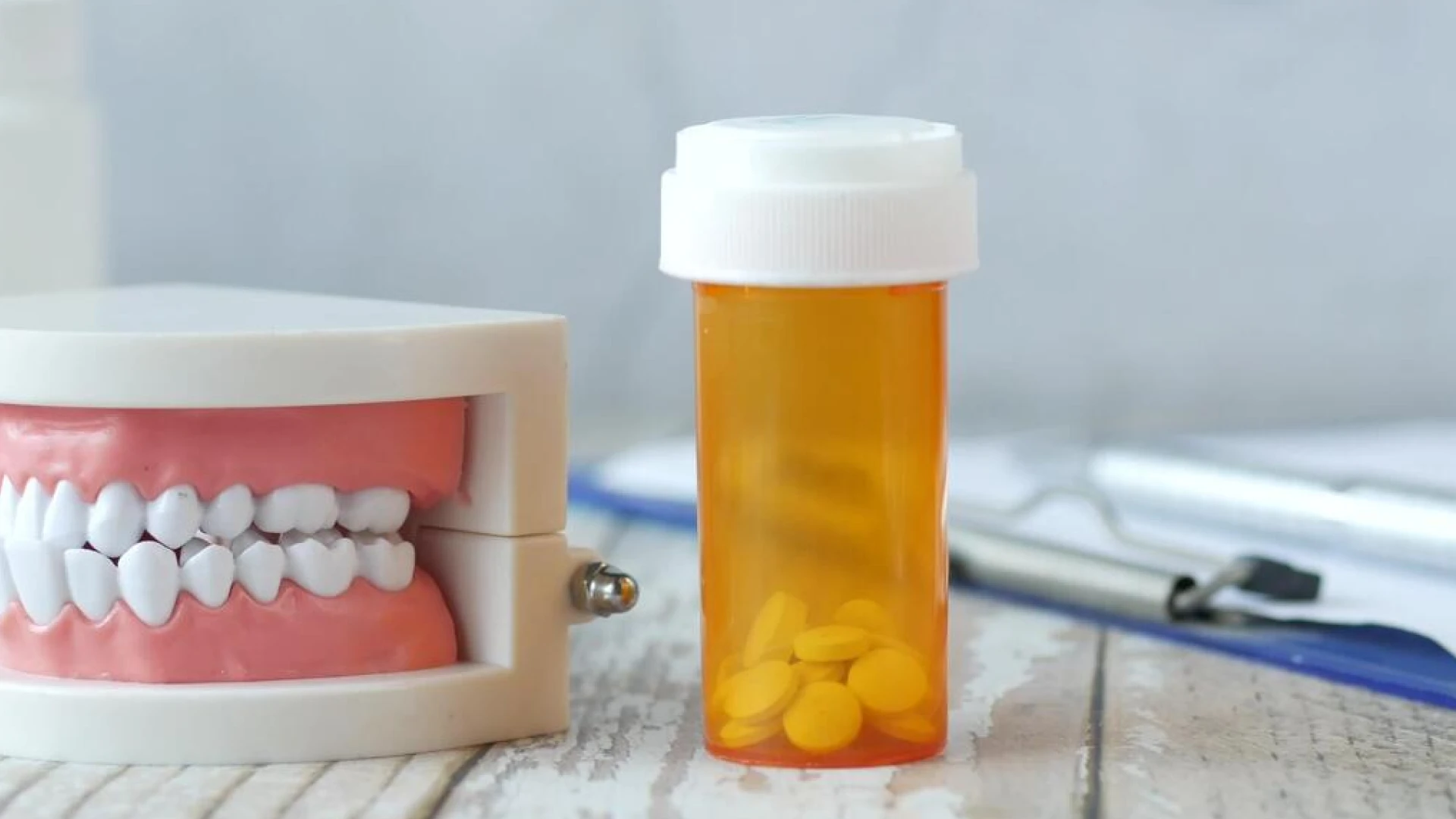
Oral conscious sedation, typically a benzodiazepine taken by pill one hour before your appointment, creates a state of deep relaxation without putting patients to sleep. Most people describe feeling heavy, drowsy, and as though time is moving much faster. Memory of the procedure is often incomplete or absent, which many patients find to be the most valuable aspect of this option.
The experience of oral sedation begins before you even sit in the chair. You fill a prescription in advance, take the pill at home approximately one hour before your appointment, and then arrange for someone to drive you in. By the time you arrive at the practice, the sedative is already doing its work. Most patients describe feeling like they have had a couple of drinks: aware of where they are, but pleasantly unconcerned about it.
Once in the chair, limbs feel heavy. Time compresses. A procedure that takes ninety minutes can feel like it lasted fifteen. That time distortion is one of the most consistent things patients report, and for someone who has spent years dreading every minute of a dental appointment, it changes the entire equation.
The memory piece is significant. Many patients have little to no recollection of the procedure itself. Not remembering your appointment is often the biggest relief of all, particularly for patients whose previous dental experiences were traumatic. One patient described it as “woke up and it was done.” Another said “didn’t remember a thing.” Those descriptions are not exaggerations.
Because the medication stays in your system for several hours, you cannot drive for the rest of the day and should plan to rest. A companion is required for the appointment and for getting home safely. Those logistics aside, the oral sedation option is often the choice for patients with moderate to severe anxiety or anyone undergoing a longer procedure.
Below is a side-by-side comparison of the two sedation options available at Dentique. Use it to match the experience to how anxious you actually are and to the procedure you are scheduled for.
If you are still not sure which option fits, a short phone call with our team is usually enough to point you in the right direction. No appointment pressure, no pre-commitment.
| Feature | Nitrous Oxide (Laughing Gas) | Oral Sedation (Pill) |
|---|---|---|
| Depth of Relaxation | Mild to moderate | Moderate to deep |
| Onset Time | 3 to 5 minutes | 30 to 60 minutes (taken 1 hour before) |
| Duration | Clears within minutes of stopping | Several hours |
| Memory of Procedure | Fully intact | Partial to none |
| Can Drive Home? | Yes | No; driver required |
| Best For | Mild anxiety, short procedures, gag reflex | Moderate to severe anxiety, longer procedures |
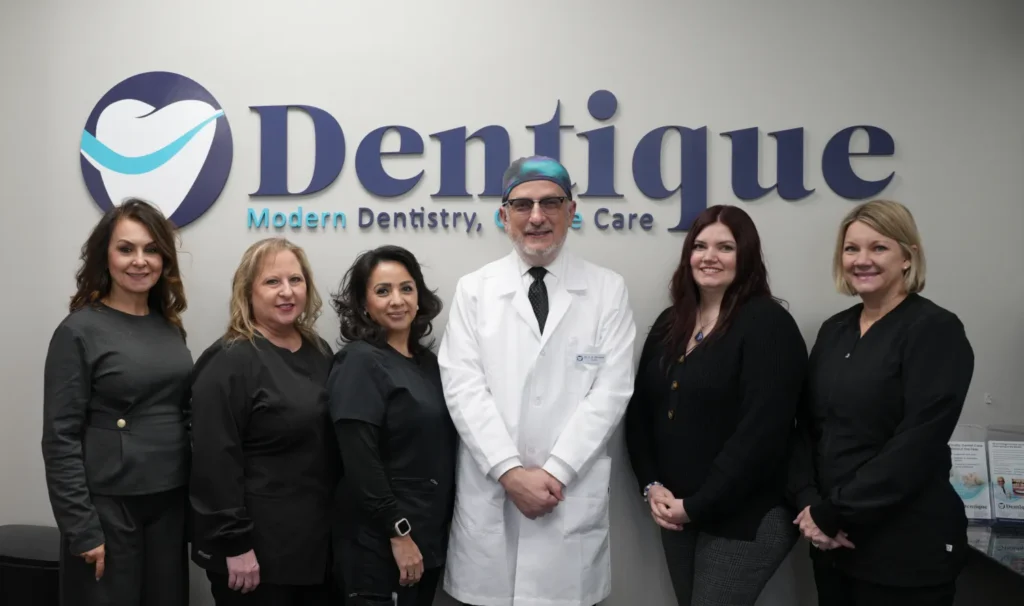
DDS, FDOCS, FICOI | Sedation Dentist
Dr. Xhelo Shuaipaj DDS, FDOCS, FICOI has worked with anxious dental patients throughout his career. The credentials behind his name are not just titles: FDOCS (Fellow of the Dental Organization for Conscious Sedation) and FICOI (Fellow of the International Congress of Oral Implantologists) represent specific, assessed training in the delivery of sedation and complex dental care.
“Every patient who has tried sedation at Dentique tells me the same thing: ‘I wish I had done this sooner.’ The fear before the appointment is almost always worse than the experience itself. My job is to make sure that gap is obvious from the moment you walk in.”
— Dr. Xhelo Shuaipaj DDS, FDOCS, FICOI
Patients who have felt scared of being judged for neglecting their teeth or for the extent of their anxiety consistently describe the same experience at Dentique: they didn’t judge me. No lectures. No sighing. The appointment moves at your pace, and the sedation is calibrated to your level of anxiety, not a one-size approach. To read more about his philosophy and background, visit Dr. Shuaipaj’s approach to dental anxiety.
Fear of sedation is often built on misinformation. Here are the five myths that appear most often, and what is actually true.
If any of these concerns sound familiar, they are worth surfacing during your consultation. A one-on-one conversation is the fastest way to replace the myth with the real answer.
Conscious sedation keeps you aware but deeply relaxed. You are not under general anesthesia. You can respond to your dentist, signal discomfort, and follow basic instructions throughout the procedure. The sedation removes the anxiety; it does not remove your ability to communicate.
Benzodiazepines used in oral sedation have a reversal agent, flumazenil, that can counter effects within one to two minutes if needed. Vital signs are monitored throughout every sedation appointment. According to NIH StatPearls research on conscious sedation in dentistry, dental anxiety is the leading reason patients seek conscious sedation, and the safety record for properly administered conscious sedation is well established.
Local anesthesia is always used alongside sedation. The sedative handles your anxiety; the numbing handles pain. If you signal discomfort at any point, the medication is adjusted in real time. You will not feel pain, and you will never be unable to communicate.
Sedation is also used for patients with a strong gag reflex, for lengthy procedures that would be uncomfortable even for someone with no dental anxiety, and for patients who simply prefer a more comfortable experience. You do not need to be in a panic to benefit from it.
The "laughing gas" reputation is mostly overblown. The mild euphoria produced by nitrous oxide at dental doses creates relaxed awareness, not loss of inhibition. The giggly feeling some people experience is mild and passes quickly. You remain in control throughout.
It depends on the level. Nitrous oxide feels like calm euphoria: a floating, warm, slightly giggly sensation while remaining fully aware. Oral sedation feels like deep drowsiness: heavy limbs, time moving faster than it should, and a procedure that seems to have lasted minutes when it was actually much longer. Many patients describe oral sedation as feeling like a couple of drinks, with partial or complete amnesia of the appointment. In all cases, the anticipation is almost always far worse than the actual experience.
No. Sedation dentistry always includes local anesthesia alongside the sedative. The sedative manages your anxiety and awareness; the local anesthetic handles pain. The two work together. If you signal any discomfort at any point during the procedure, the medication is adjusted immediately. Pain during a sedation appointment is not something you need to plan for.
Usually yes, though you may not remember it. Conscious sedation, whether nitrous oxide or oral sedation, keeps you technically awake and able to respond to your dentist. What changes is your awareness of and anxiety about what is happening. Nitrous oxide patients are fully aware throughout. Oral sedation patients may drift in and out of a light sleep-like state, though they remain responsive. Neither is general anesthesia. For a broader explanation, visit sedation dentistry explained.
Yes, when administered by a credentialed provider. Dr. Shuaipaj holds FDOCS and FICOI certifications that include specific training in the safe delivery of conscious sedation. Oral sedation medications have reversal agents available. Vital signs are monitored throughout every sedation appointment. The safety record for conscious sedation in dentistry is well documented, and for the right patients, the risk of not treating dental disease outweighs the minimal risk of properly administered sedation.
Yes. Many patients at Dentique use nitrous oxide or oral sedation for routine cleanings, particularly if they have dental anxiety or a sensitive gag reflex. There is no threshold of procedure complexity required to qualify for sedation. If the thought of a cleaning is enough to keep you from booking, sedation is a practical and appropriate option.
You just read through what sedation dentistry actually feels like, not the clinical version, but the real one. That step matters. Most people who were once too anxious to go now say the anticipation was far worse than anything that happened in the chair.
When you are ready to explore which option fits your situation, visit our sedation options at Dentique for a full breakdown, or call the team to have a no-pressure conversation before booking anything.
Continue learning about each sedation option at Dentique, or reach out to talk through which one fits your situation.
Overview
Pill
Support
Get the smile you deserve today!